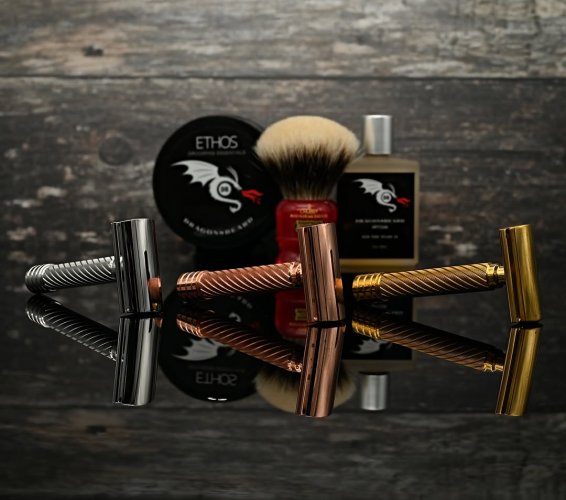

This review is about the Alpha Shaving Works The Guido

Introduction
Those familiar with my reviews know that I usually use the introduction to paint a picture of the razor I'm reviewing that week. I talk about the manufacturer or the person who designed it to place the razor within a specific style or linked to a certain design philosophy. This gives us an idea of what we can expect from the razor in question, both technically and aesthetically, within a particular stylistic framework.

In this case, we have before us the Alpha Shaving Works “The Guido.” A razor manufactured by Steve Tinter of Alpha in collaboration with John Venturino, who runs the YouTube channel “Stubble meets Steel.” John recounts in one of his videos how he contacted Steve to request a Cape Cod baseplate that he could use in his Shave Dad razor. These two razors were also manufactured by Steve in collaboration with others. During that conversation, the idea for a collaboration between Alpha and Stubble meets Steel was born. The result? The Guido.
Before continuing, I want to give a huge thank you to @Vitto for lending me this razor so I could review it. Thank you so much! It's a pleasure to review so many razors, but it's even more rewarding to know that there are such generous forum members.
John had used several of the razors Steve had created and knew what he liked and disliked about each one. He also had a few ideas about the design and, as he himself says, being quite demanding, he changed the specifications a few times to refine the design until he arrived at what he truly had in mind. All the while, he relied on Steve's practical, realistic, and professional advice.I'll tell you more about the razor's creation process when we're analyzing it, and I'll also elaborate a bit more on a very striking feature of this razor that we all know but perhaps don't know in detail. Put on your sunglasses because this razor shines, and not just because of its material.
Construction
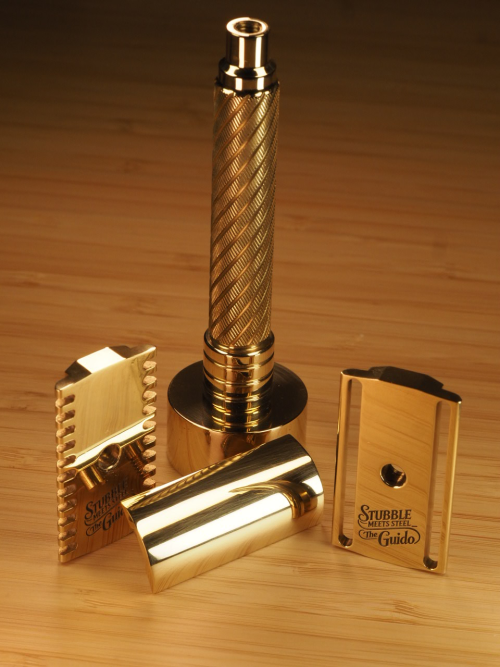
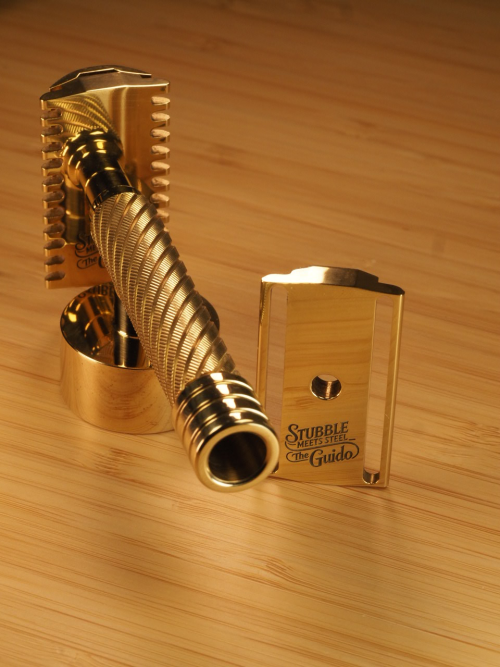
The Alpha The Guido is a three-piece DE razor manufactured from C360 brass using CNC machining. The set includes a 90mm "Steelheart" handle, a cap, a base plate with a closed comb, a base plate with an open comb and a stand. It's a very complete set that offers two different shaving options to suit the user's needs.
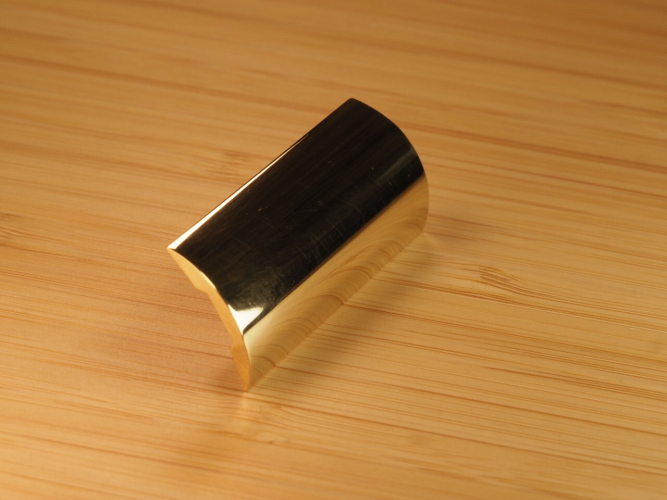
Looking at the top of the cap, we see a design very similar to the basic design of the Outlaw, but also to many other razors. The cap has a moderate curve, with no flattened areas.
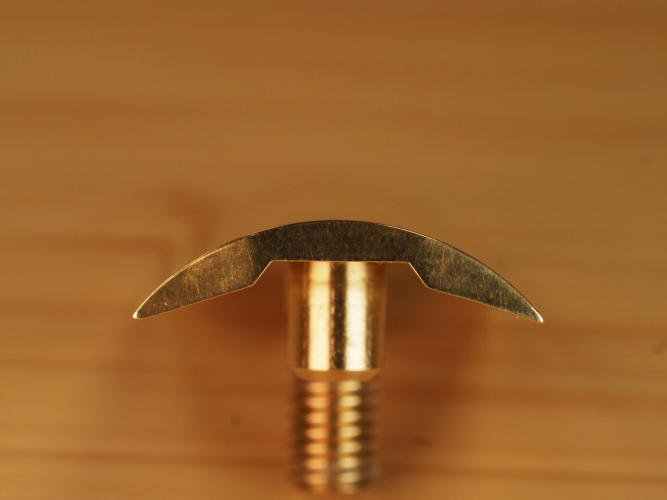
The profile of the cap shows the two "wedges" that create the cutting angle when they secure the blade in place. At first glance, the cap appears identical to the caps used on the two Outlaws razors and the collaboration razors Steve made in aluminum. But there is a difference.
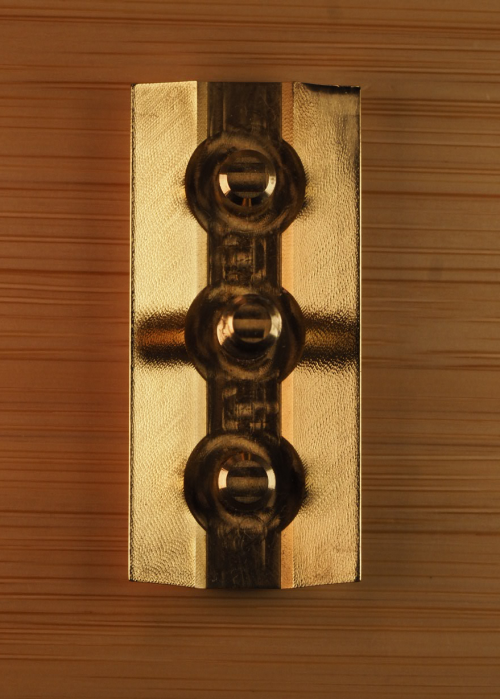
Looking at the cap from above, you can see that the short sides aren't straight but form a small angle with the central section. I should mention that the base plates have the same shape and fit perfectly with the cap. This modification, compared to the "base design" Steve used for all the collaborative razors, has several advantages.
The first one is that it reduces the amount of material in the head. Brass is a much denser material than aluminum, and if the same design used in the other razors had been used, this one would have weighed more. By eliminating the straight sides, some weight is saved in the head.
Another advantage is that the central section still covers the entire blade, but the sides next to the blade protrude less. This improves control over the cutting head and allows for more precise blade placement on hard-to-reach surfaces. With less material on the sides of the cutting edge, it's easier to pinpoint the end of the cutting edge.
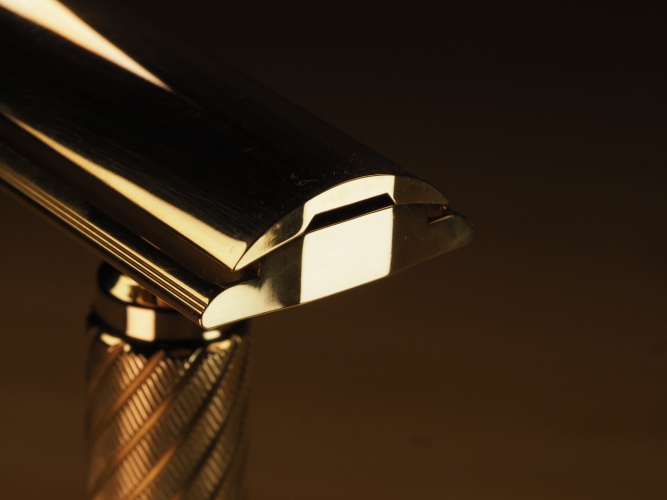
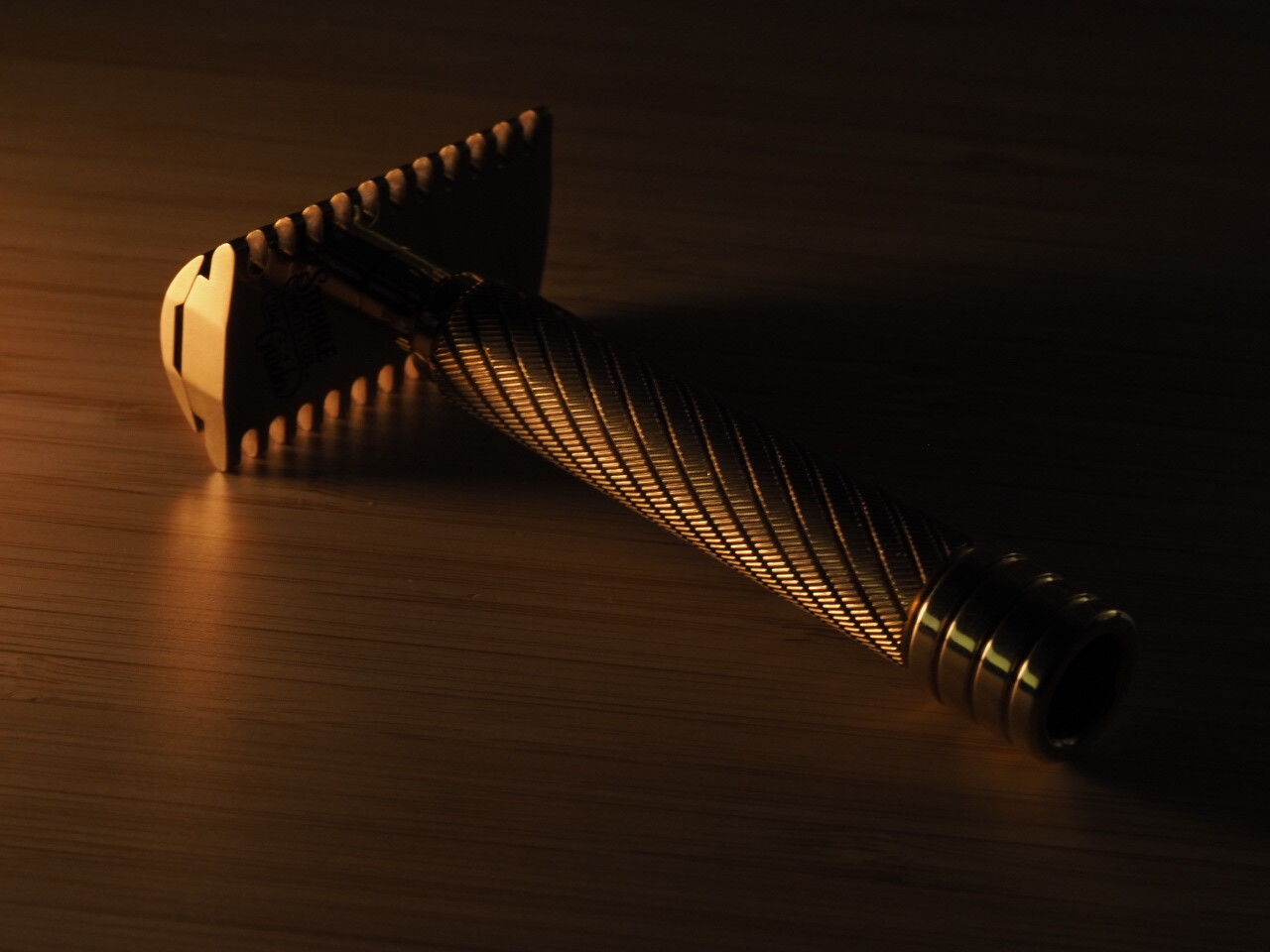
A third advantage, although this could be considered a subjective element, is that these angles on the sides create a more prominent play of light. The glossy material combined with surfaces positioned at different angles enhances the visual impact.

The last point I'll mention is about the cap's dimensions. This cap is also slightly wider (as is the Alpha Eclipse's) than the Outlaw Evolution's cap (approximately 1 mm). This means the cap covers more of the blade and hides it more from the skin. The result is a gentler cut, but also a slightly more concealed edge. The cap is also a bit taller than the Outlaw Evolution's cap. This creates a gentler cutting angle and offers a little more curvature for riding the cap if needed.
Material: Brass C360
Finish: Mirror polished
Handle length: 90 mm
Handle diameter: 13 mm (Knob: 14.95 mm)
Total length of the razor: 95 mm
Total weight: 102.5 gr (comb closed), 105 gr (comb open)
Head weight: 47.3 gr (comb closed), 49.8 gr (comb open)
Cap height: 4.93 mm
Lid width: 19.65 mm
Gap: 0.77 mm (both combs)
Exposure: neutral (both combs)
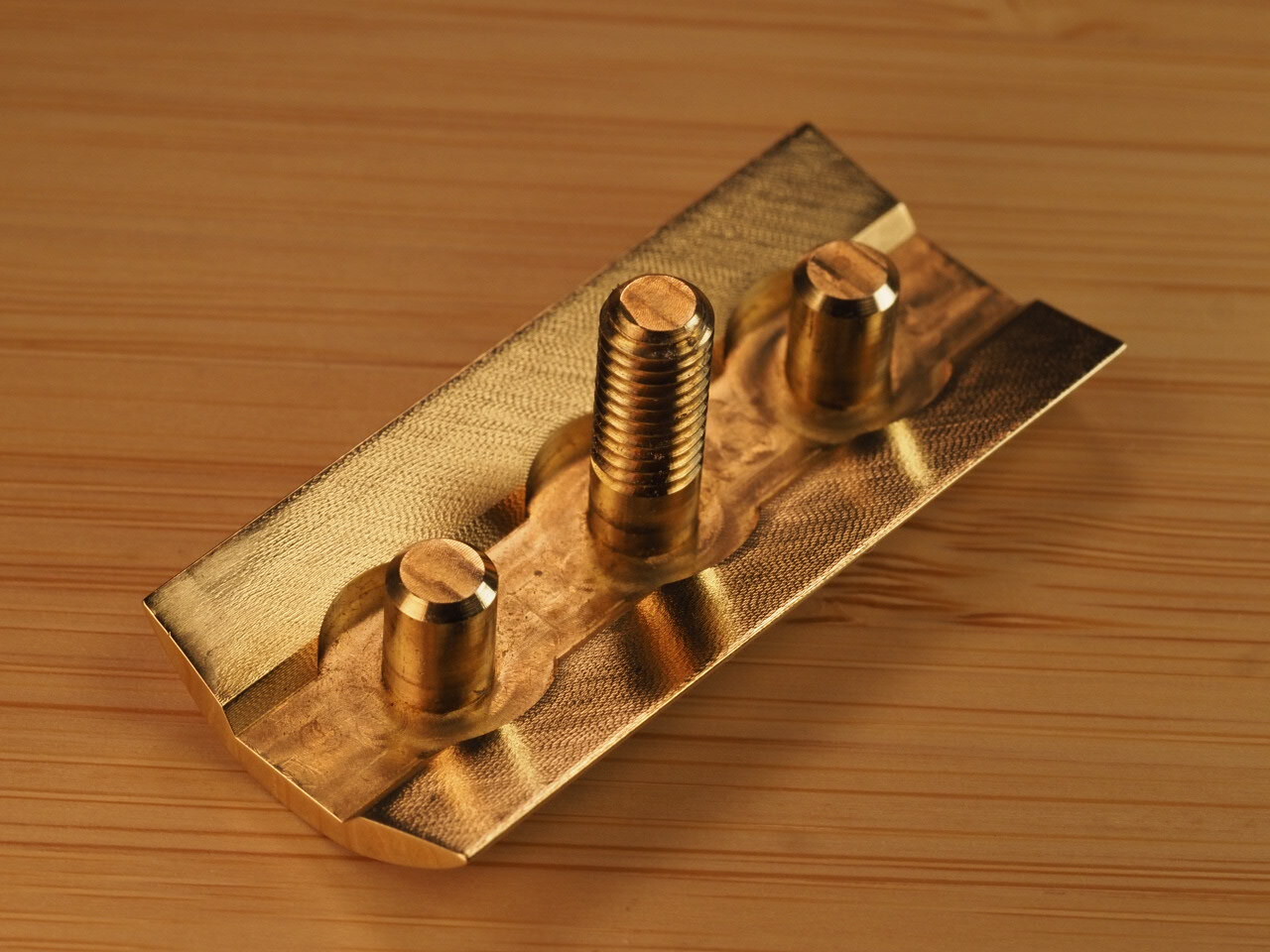
The inside of the cap reveals the central thread flanked by two cylindrical guides. The design is the same one that worked so well on the other razors as well. Two very large clamping surfaces create maximum contact with the blade, and three circles around the central thread and guides eliminate the need to change the CNC machine's bit that mills the central body. Now, that bit can start on one side and mill all the way to the other in one go, simply by curving around these posts. It's a trick used in dozens of designs and saves time.

The interior of the closed-comb motherboard is simple and efficient. We see the central body with three holes: one for the central thread and two more (blind holes) for the guides. The long sides of this central body are for the clamping surfaces. All these surfaces are mirror-polished, unlike the inside of the cap, which is machined and lightly polished.

The closed comb design is identical to that of the Eclipse. It features a comb mounted on two supports, creating a continuous rinsing channel that is slightly longer than the one used on the Outlaw Evolution. The comb also has two horizontal lines on the shaving plane.

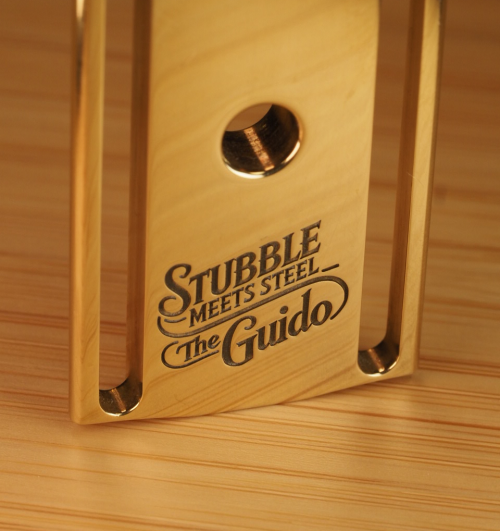
The underside of the closed comb plate is completely flat and smooth, featuring a beautiful engraving of "Stubble meets Steel" and the razor's name, "The Guido." The short sides also have the same angles as the cap. The open comb plate has the same design.
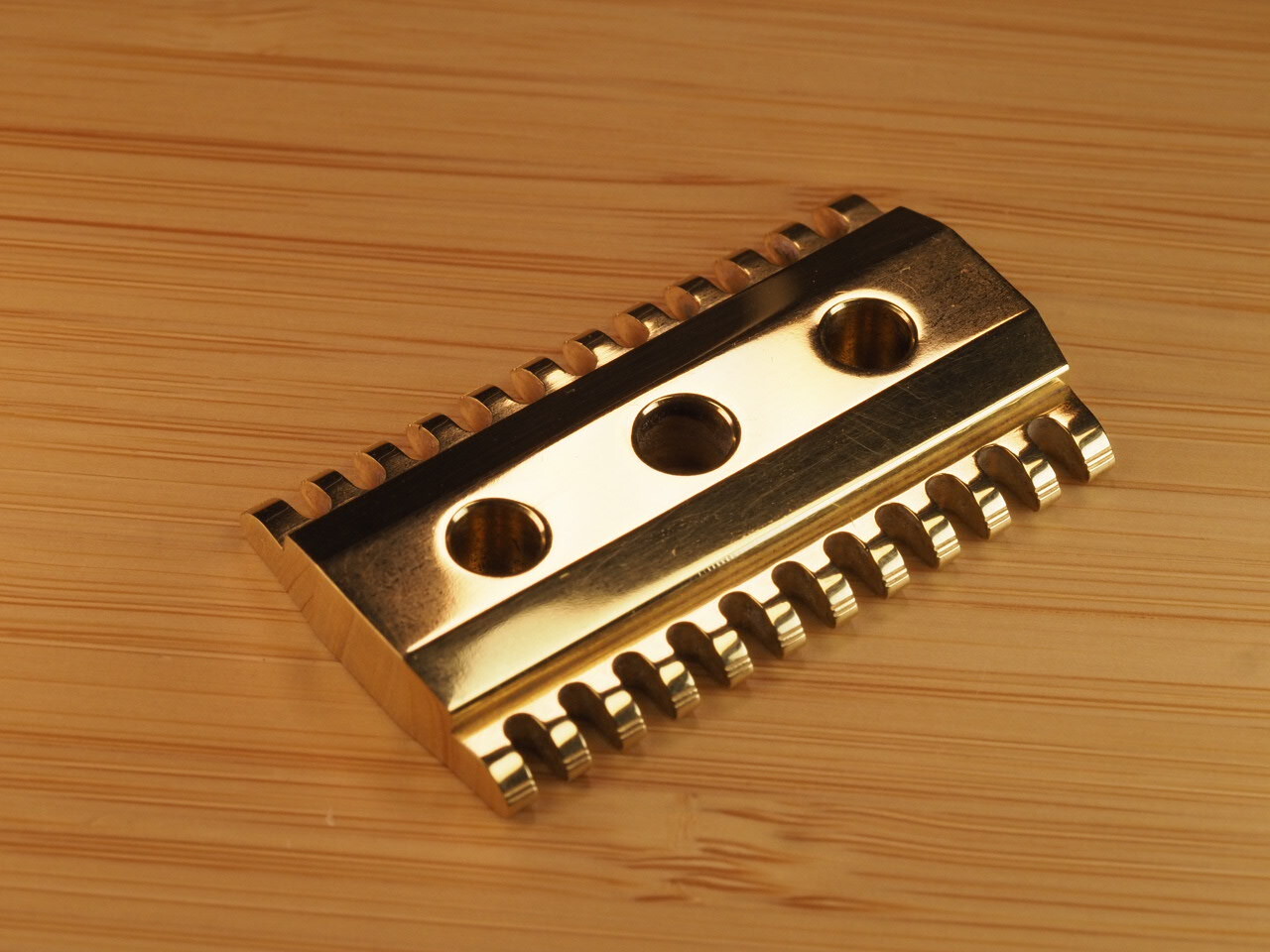
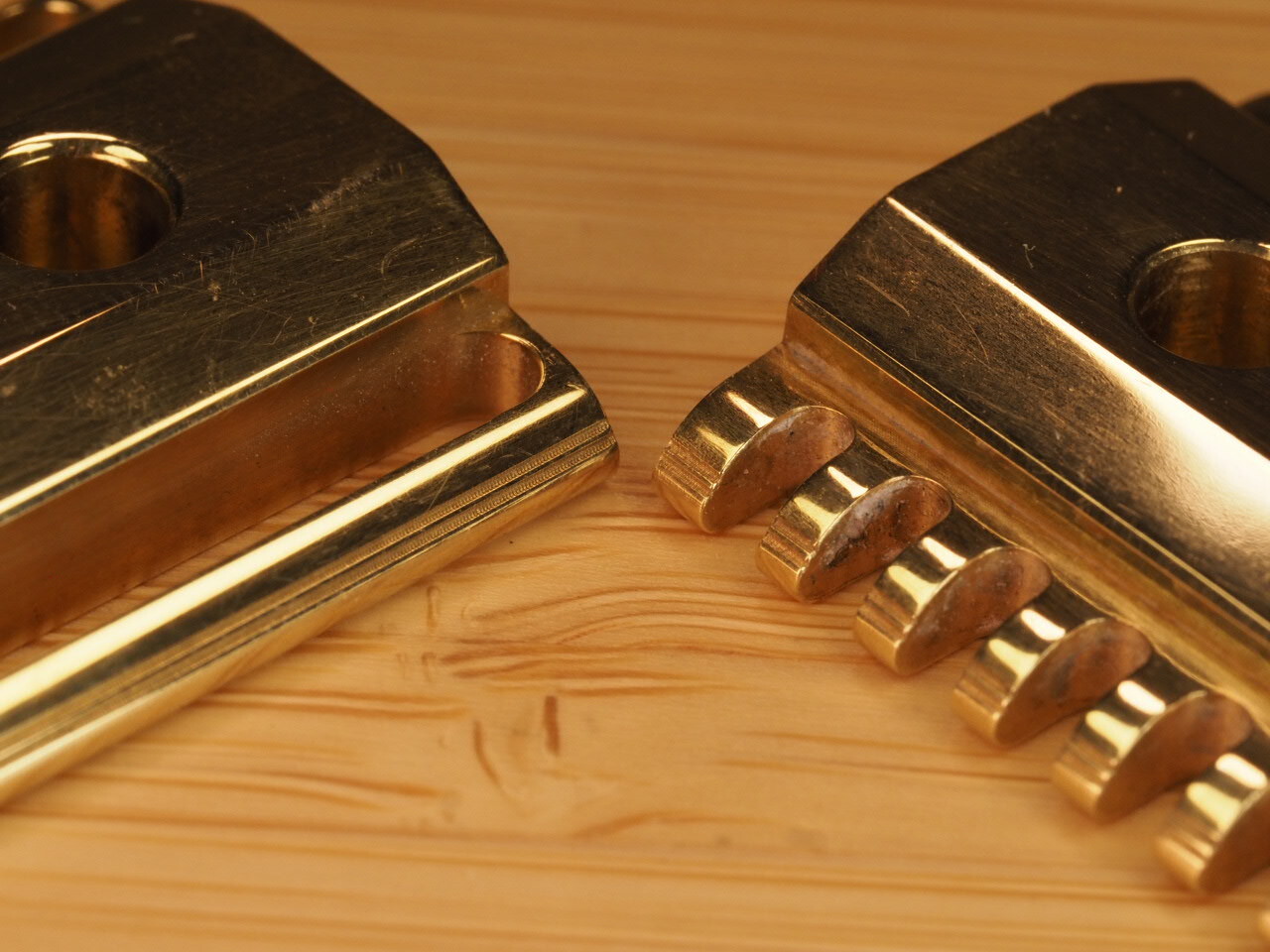
The interior of the open-comb baseplate is very similar to its closed-comb counterpart. The central body is identical. The difference lies in the comb. This is an open comb with 12 teeth that distributes the distance between teeth (1.55 mm wide) and between teeth (1.9 mm wide) almost equally. This results in a comfortable shaving surface due to the number and width of the combs, while also providing ample space for hairs to reach the cutting edge without obstruction. The teeth have the same horizontal lines as the closed-comb version.
The finish is excellent. All surfaces are mirror-polished except for the inside of the lid. There could be several reasons for this. The inside of the lid is the least visible part. Even with the head open, the blade is inside the lid and would cover its less polished interior. Another reason could be to maintain the lid's mounting tolerances. And yet another reason might be that this part is the most difficult to polish due to its three posts.
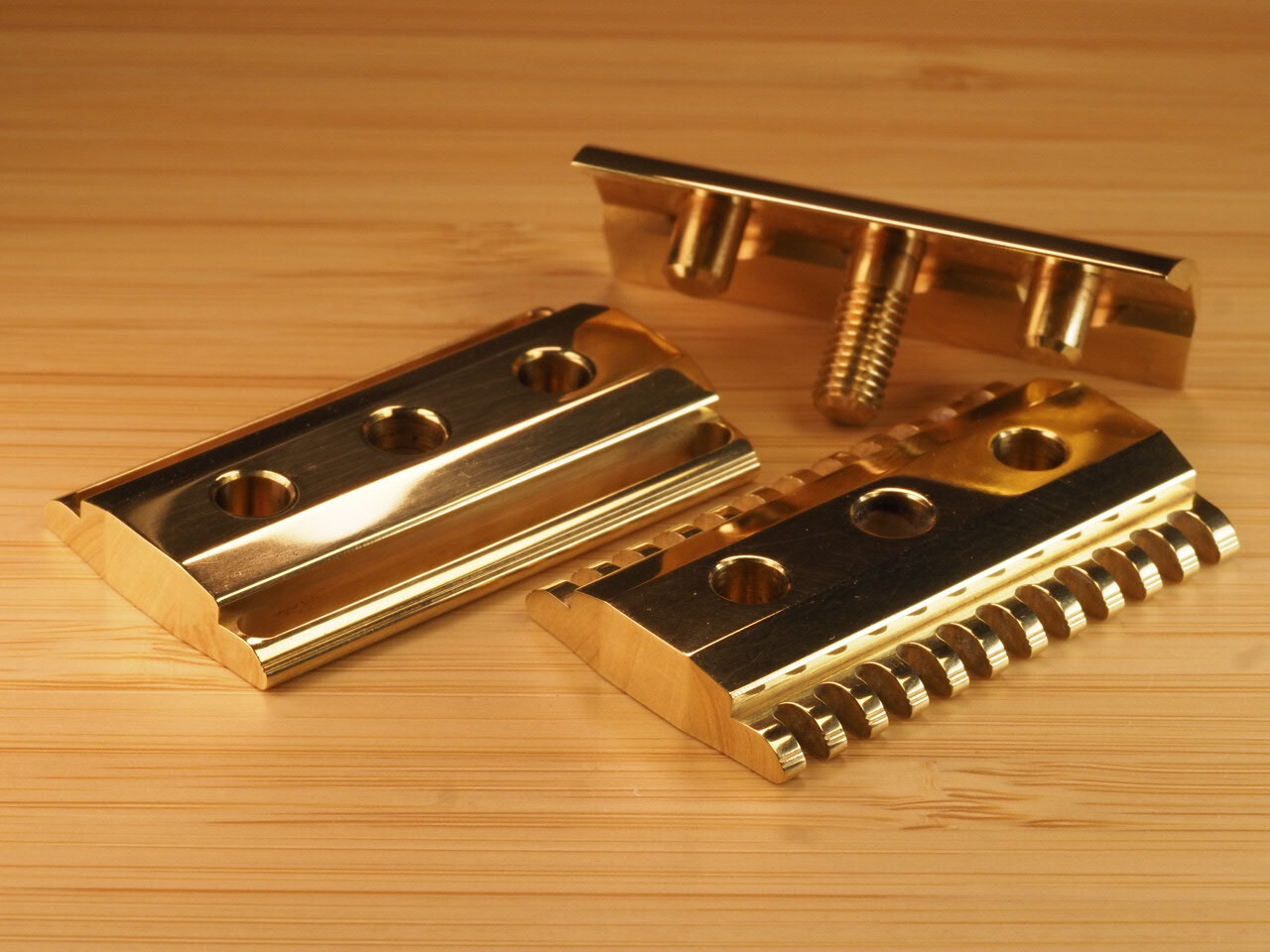
All edges are polished so they don't feel sharp. The only edge with maximum definition is the end of the cap that covers the blade. And that's precisely where you want maximum definition. It's not bothersome there because that edge doesn't come into contact with the skin, and you want the seal between the cap and the blade to be as tight as possible. Holes, guides, and a chamfered center thread; the center thread features square threads to ensure a firm connection and superb (un)threading action. There's a bit of space between the handle thread and the cap thread, but brass is a soft, pliable material, and the (un)threading is solid and smooth. Top-notch.
The tolerances are also extremely tight. As with the aluminum Alpha Eclipse, the cap fits perfectly onto the base plate of this razor. When assembled without the handle, there is no movement. The fit is perfect, demonstrating very tight tolerances. The threading also operates within very tight tolerances. You couldn't ask for more from a razor.

The shape of the head and its two combs is something many people will appreciate. Steve has been evolving the Outlaw's design since he created it. The first modifications were introduced in the Outlaw Evolution, which improved several aspects of the original design, particularly the blade clamping. With the aluminum razors from his collaborations, Steve added elements that modified the efficiency and/or smoothness of operation. He also manufactured plates with open combs and changed the gap compared to the closed-comb plate. This radically changes the shave a razor offers.
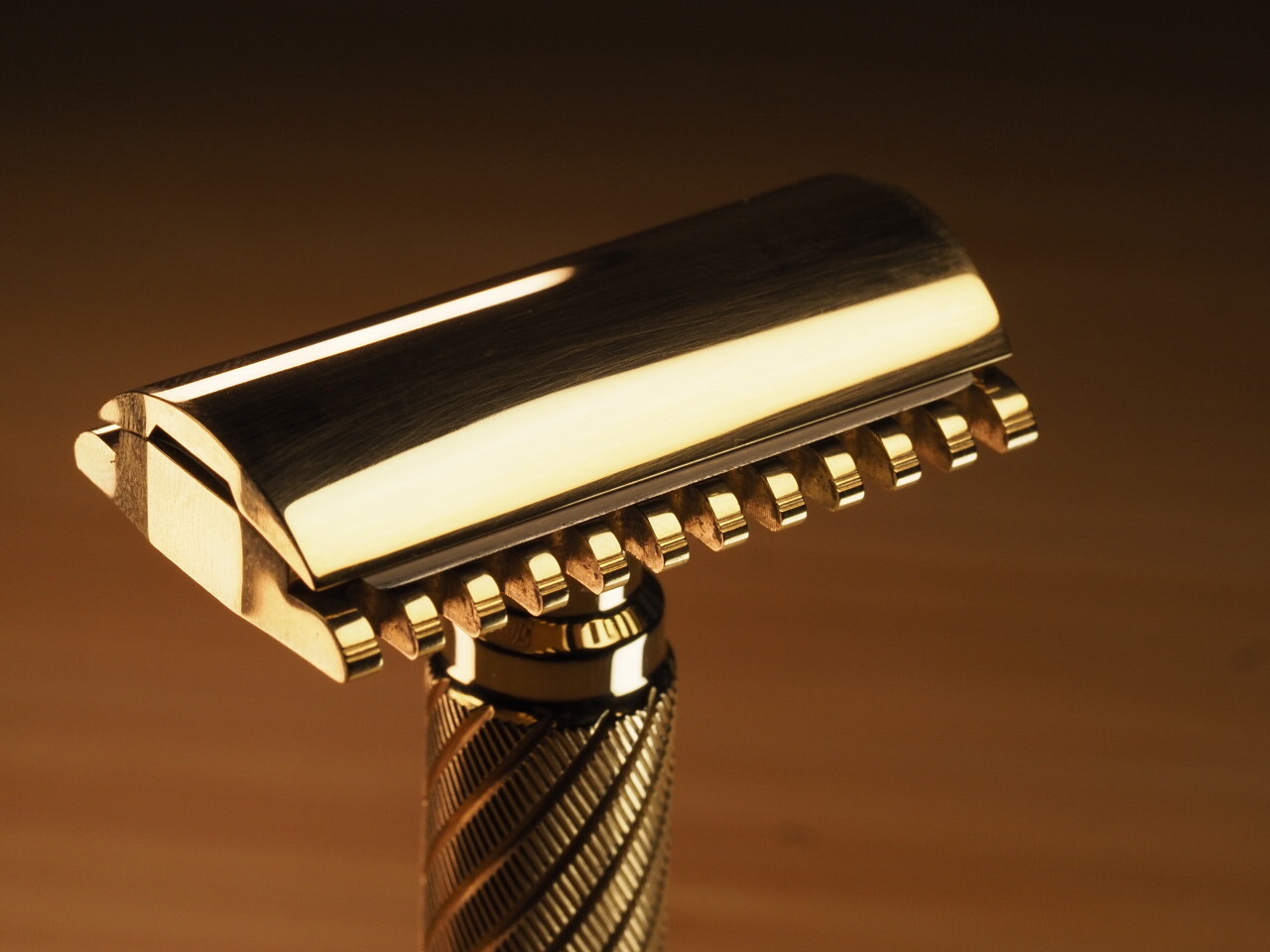
And with the Guido, I think they designed a razor that covers a lot of ground. The 0.77 mm gap, neutral exposure, moderate cutting angle, wide cap curvature and comfortable, versatile shaving plane mean this razor can be used in different ways because all of these features apply to both combs. The closed comb covers the gentler side, and the open comb covers the more efficient side. With these two heads, 80% of all users will be able to find a comfortable and efficient shave because neither head compromises on the other's strengths. The closed comb head is gentler but still efficient. And the open comb head is more efficient but still gentle. The best of both worlds, we could easily say.
Score: 19
Material: 4
Finish: 5
Tolerances: 5
Head/Comb Shape: 5
Grip
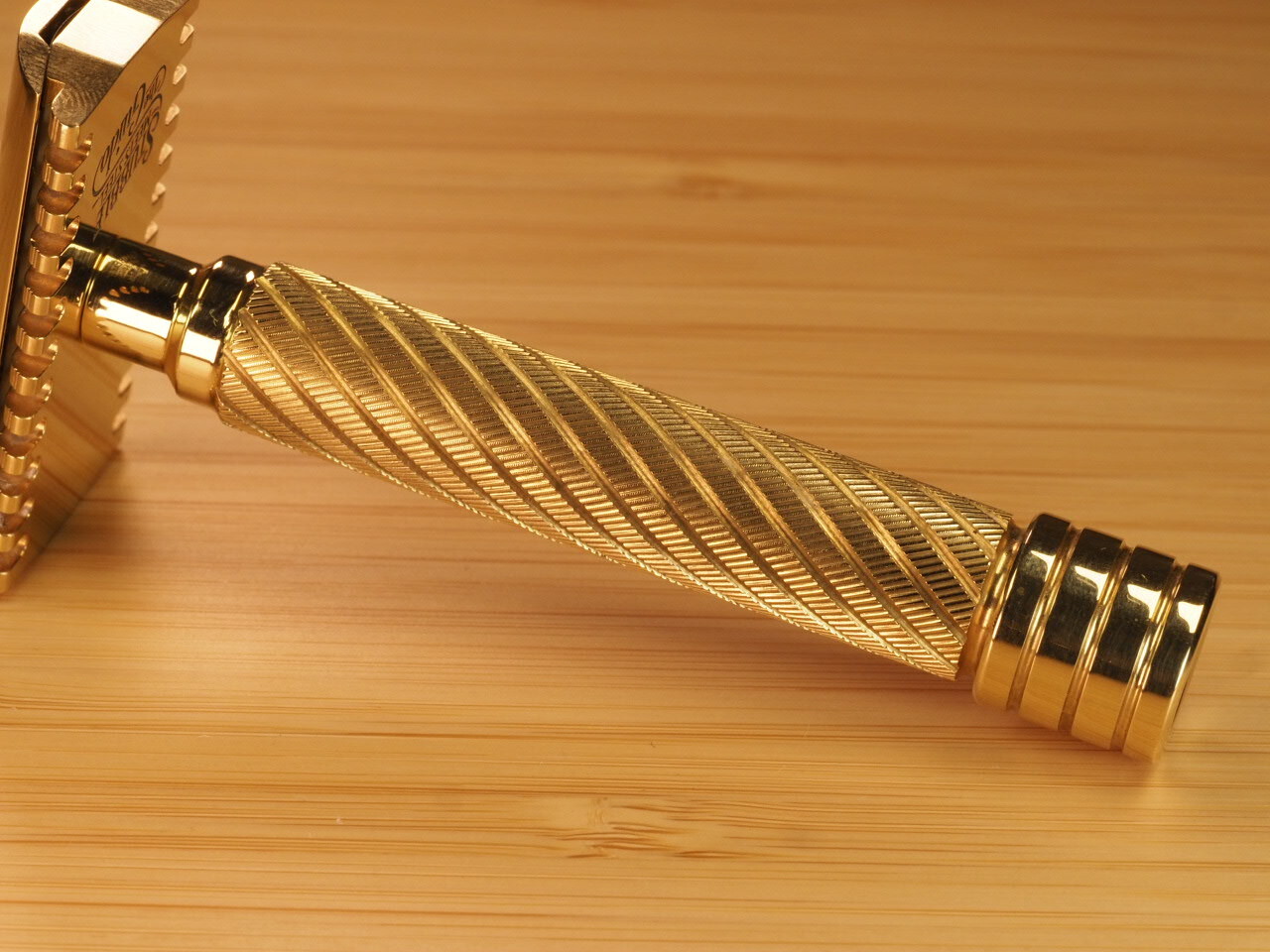
This handle is called Steelheart, but it's a classic barber pole handle. I want to tell you a little more about the history of the barber pole and its origins so you can better understand the design of this handle.

In medieval times, barbers not only cut hair but also performed "simple" procedures such as tooth extractions, leech application, and abscess drainage. The barber's pole was adorned with colored ribbons to indicate the procedures offered: red for bloodletting, white for teeth and bandaging, and blue for haircuts. Patients would grip this pole tightly, increasing blood flow and thus intensifying the effect of the leeches.


It is also speculated that these symbolic meanings arose because barber-surgeons hung used and unused bandages (red and white) on a pole to dry. The bandages would twist and turn on the pole in the wind, creating the specific helical pattern we know today.

The Caduceus also uses a staff with a helical pattern, a pattern that is still linked with the world of doctors even today and symbolized in the Rod of Asclepius, which contains a wingless snake instead of the two winged ones of the Caduceus.


Later, barbers focused on haircuts and abandoned bloodletting, dental work, and other procedures. The pole with its colorful ribbons remained in use due to its strong symbolic power and indicators were created with rotating cylinders inside to simulate the ribbons' movement. The symbol of the "Barber's Pole" continues to be recognized worldwide and remains a universal symbol.

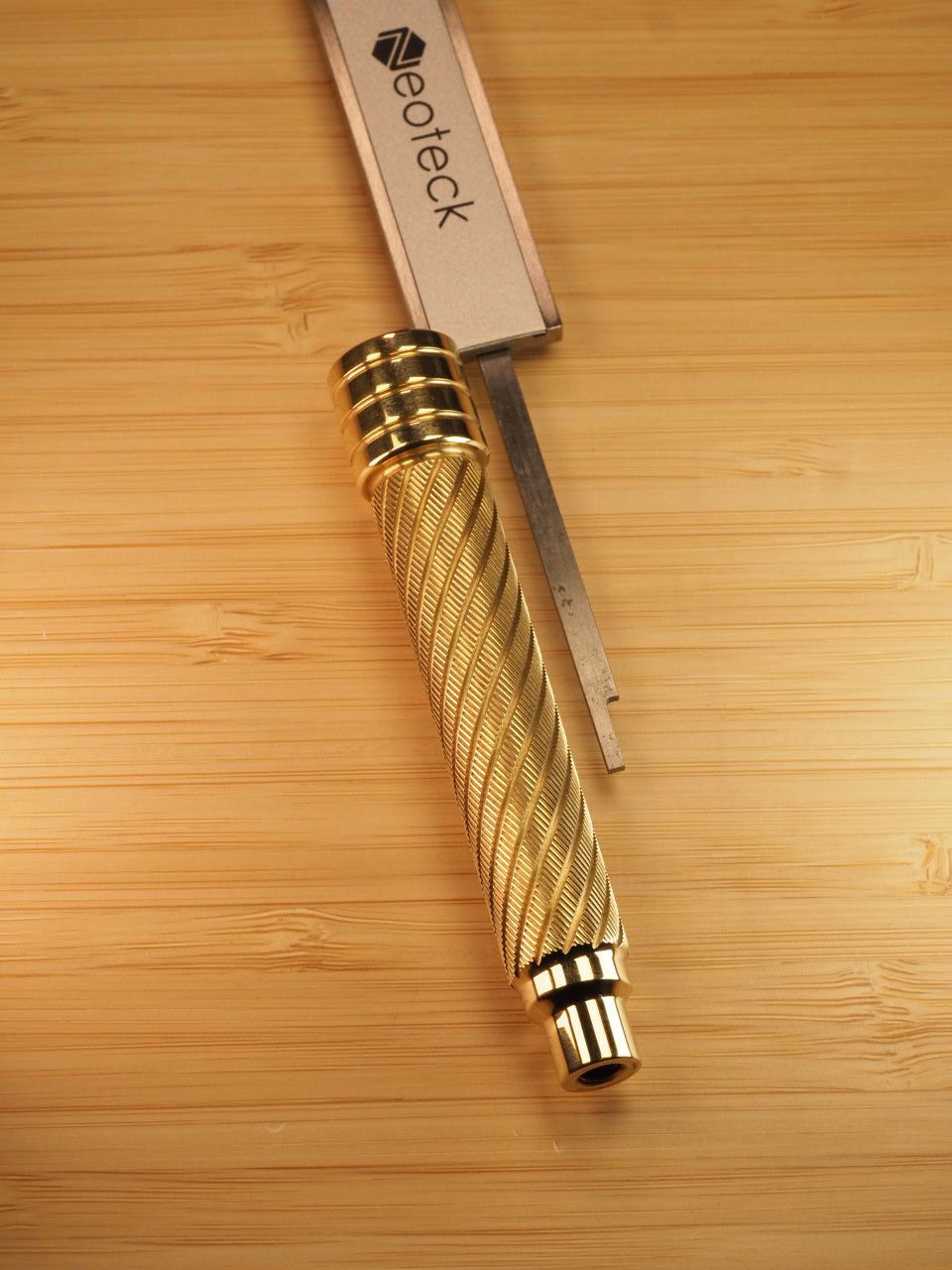
Returning to the handle, we can clearly see the design of the straps wrapping diagonally around the shaft. The surface of the straps is filled with grooves, creating lines that are perpendicular to the diagonal lines of the straps. This creates an opposing pattern that ensures a tremendously efficient yet incredibly comfortable grip. It's also extraordinarily beautiful.
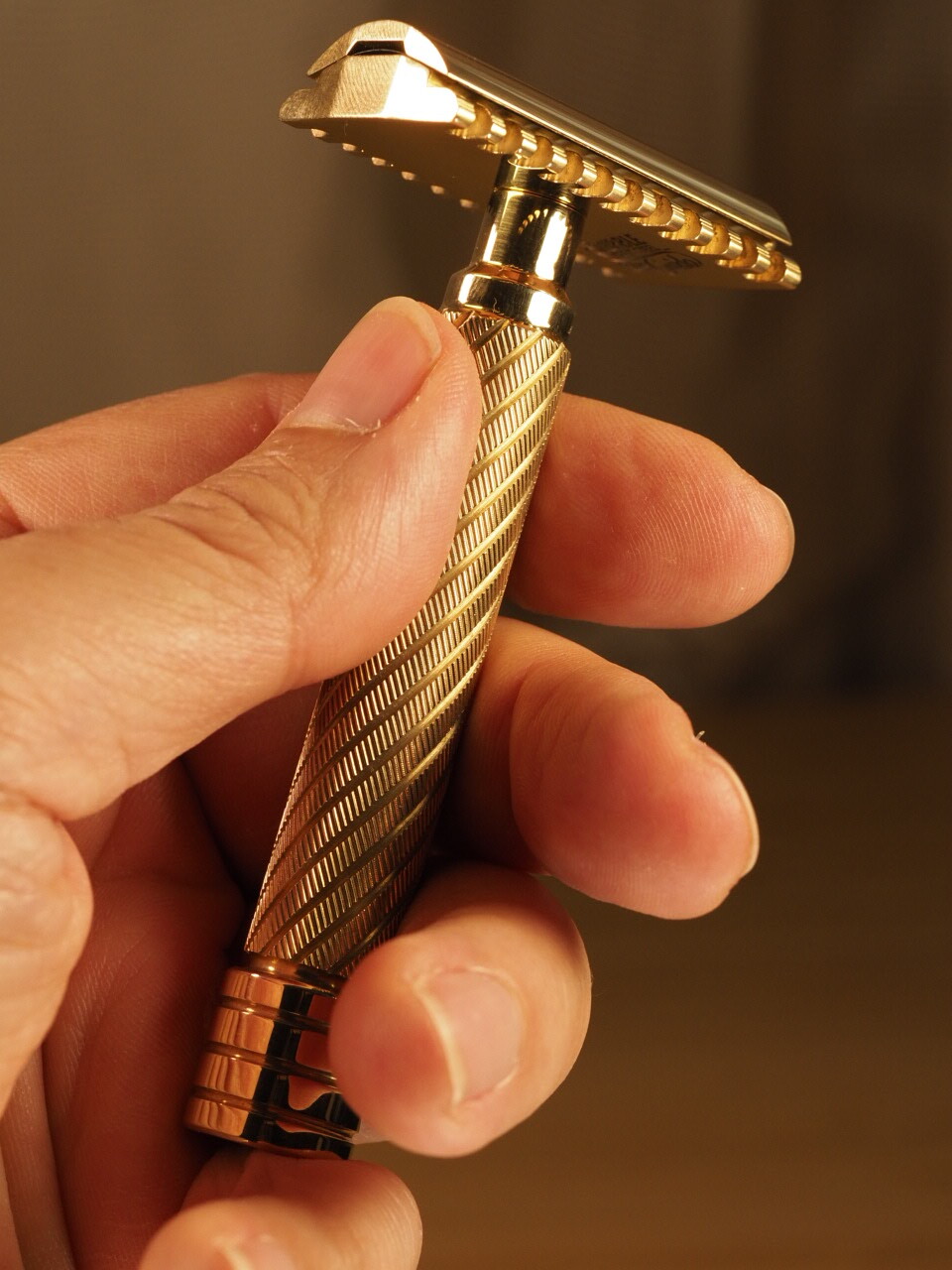

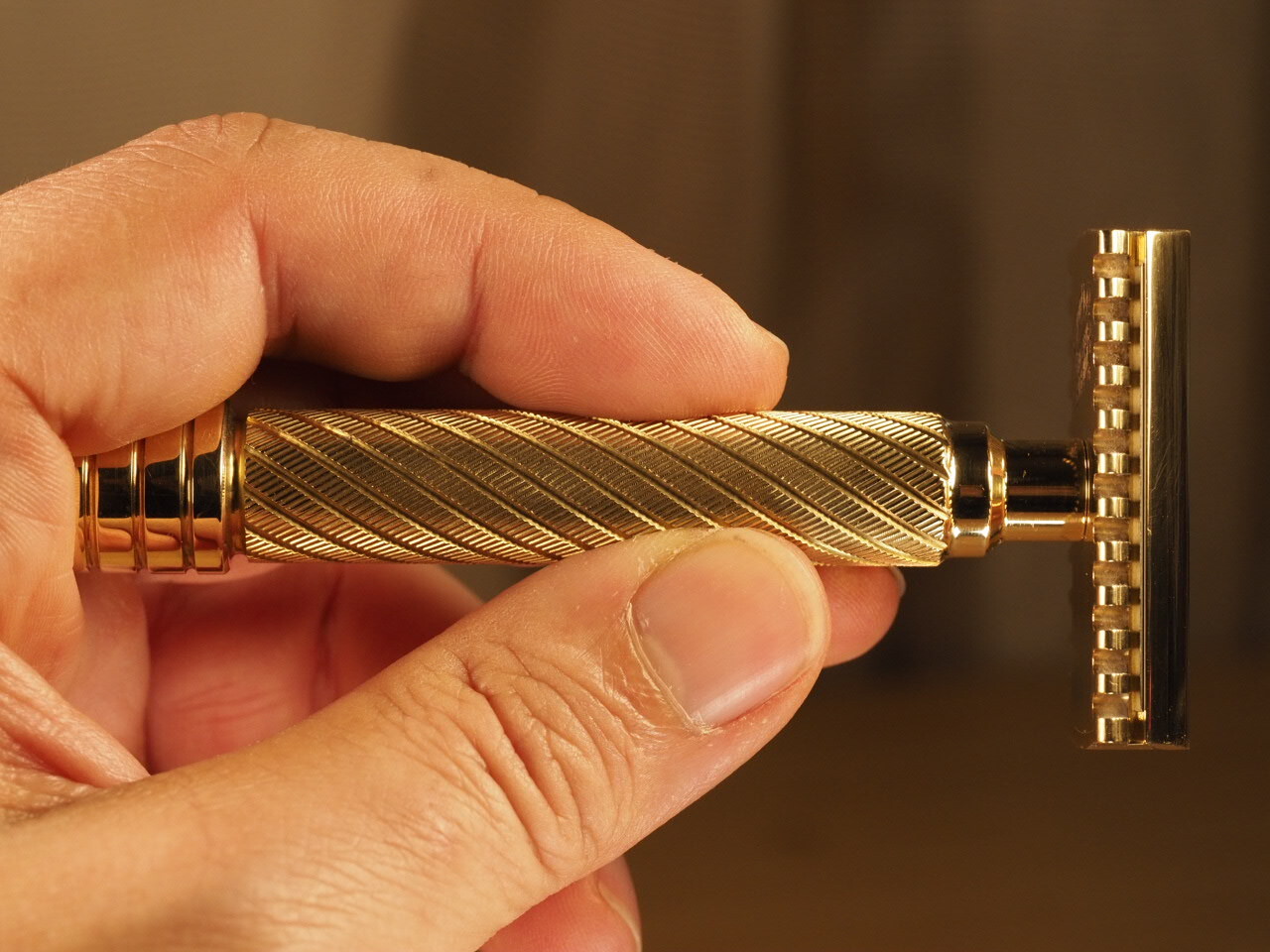
At the end of the handle we find a generously sized pommel, which on a barber's pole could represent the receptacle that collected blood while the patient held the pole. This entire assembly offers excellent grip in any position, whether conventional, inverted, or horizontal. The handle provides more than enough surface area for a conventional three-finger grip while resting on the pink. This grip gives us perfect control over the razor.
The razor head's glide has several features that enhance it. First, there's a grip that offers control and confidence. Second, the material itself glides well, and its polished finish makes it even better, adding a certain weight that helps ensure smooth movements. Third, there's a well-defined shaving plane that's easy to maintain. And fourth, the blade geometry allows for a (nearly) effortless glide thanks to its forgiving nature. A lot of good things combined.
Score: 20
Dry/Wet: 5
Comfort: 5
Control: 5
Head slide: 5
Handling
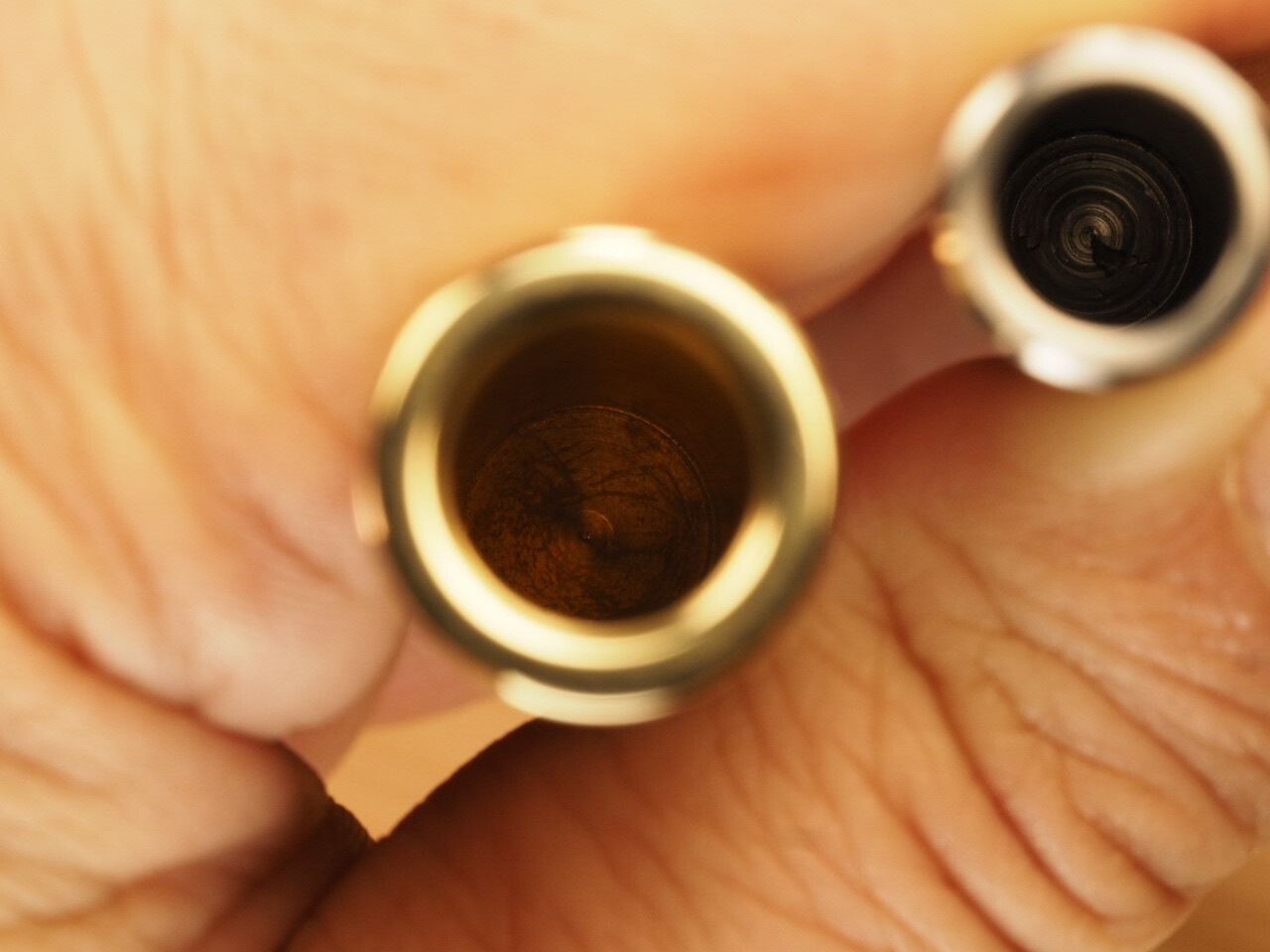
This razor is made from a high-density material. In its unmodified form, the razor would weigh about 150 grams. It would clearly be competing with some of the Rocnel razors that double as dumbbells. One solution could have been to make a thinner and/or shorter handle, but John didn't want to compromise on the handle. He wanted it this way. Steve suggested hollowing out the handle, as he had done on the Spirit, for example. That one weighs 1 gram less than the Blackland Vector, which already weighs nearly nothing.
With a solid head like the Guido's, the handle’s hollow part couldn't be too large, otherwise the razor would become head-heavy. Steve hollowed out the handle by 5 cm. This handle length, combined with the substantial material in the pommel and the hollowed-out design, creates a perfect balance at the intuitive grip point. Everything fits together perfectly in terms of balance when you grip the handle at that point. The weight is also very close to the "ideal" weight of 100 grams, at 105 grams.

Gripping the handle below that point tilts the balance to the razor’s head. This option can be used when you don't want to apply pressure to the stroke and want gravity to do the cutting. By modifying the grip, the head’s weight takes over and becomes the force that causes the cut. It's a smooth cut because the weight doesn't apply additional pressure. When changing the gravity vector (for example, a stroke against the grain), this trick doesn’t work because gravity works down and not up or horizontally.
Changing the blade in a three-piece razor always carries a certain risk because you have to get your fingers close to the blade to unscrew and disassemble the head. With this head, those operations are done comfortably without the blade moving inside the cap. In fact, the blade has occasionally gotten stuck in the head due to the extremely tight tolerances. I prefer a blade that doesn't move to one that won't stay put, and I see this as an advantage.
At the same time, it's also important to be careful when removing a blade that gets stuck in the head. I place the head with the threaded end facing down on a towel and insert a fingernail between the cap and the blade on a short side, away from the edge. That usually works perfectly and I’m able to nudge the blade loose.

Cleaning involves two things to keep in mind. One is obvious: this razor is no easier or harder to clean than any other three-piece razor with a similar design. The base plate with the comb closed is very easy to clean, but the open comb is not due to the amount of teeth. And the inside of the cap contains three obstacles. Nothing surprising.


But we also have to keep in mind that brass develops a patina, and we may need to polish the razor. It's not a difficult task and can be done relatively easily, but it does add to the effort of keeping the razor spotless. Plus, it has more parts to clean because it has two plates and a stand. The stand deserves to shine like the sun, too.
Score: 17
Balance: 5
Weight: 5
Model/Security: 4
Cleaning: 3
Shaving

As I mentioned before, this Guido razor offers a range of different shave options, both with its various attachments and the technique(s) we use. For a comfortable, quick, and satisfying shave, we use the closed comb and apply no pressure. For an even smoother shave, we proceed more slowly and carefully control the cutting angle by riding the cap. Conversely, by bringing the handle closer to the skin, we create a more efficient cutting angle while still maintaining a good distance between the blade and skin thanks to the closed comb.
We have the same options with the open comb, but with a greater emphasis on efficiency. A quick and comfortable shave is also possible with this comb. Riding the cap and riding the bar also work with this comb, but keep in mind that the open comb provides more direct access to the hairs at the blade. And with the hairs, you also get the skin closer to the blade. The combs on this razor are a quick and effective way to choose between a gentle or efficient shave, depending on your preference or needs.
That said, we can all achieve a perfect shave with this razor. We might need to experiment a bit with different razor settings and techniques, but it's entirely possible. Some will use the closed comb with some pressure, while others will use the open comb without pressure. And we could add or remove other elements as well. This razor offers a great deal of versatility without sacrificing either smoothness or efficiency. It's not for the 10% who prefer a silk glove or the 10% who prefer a razor-sharp katana, but for everyone else…it's a delight.
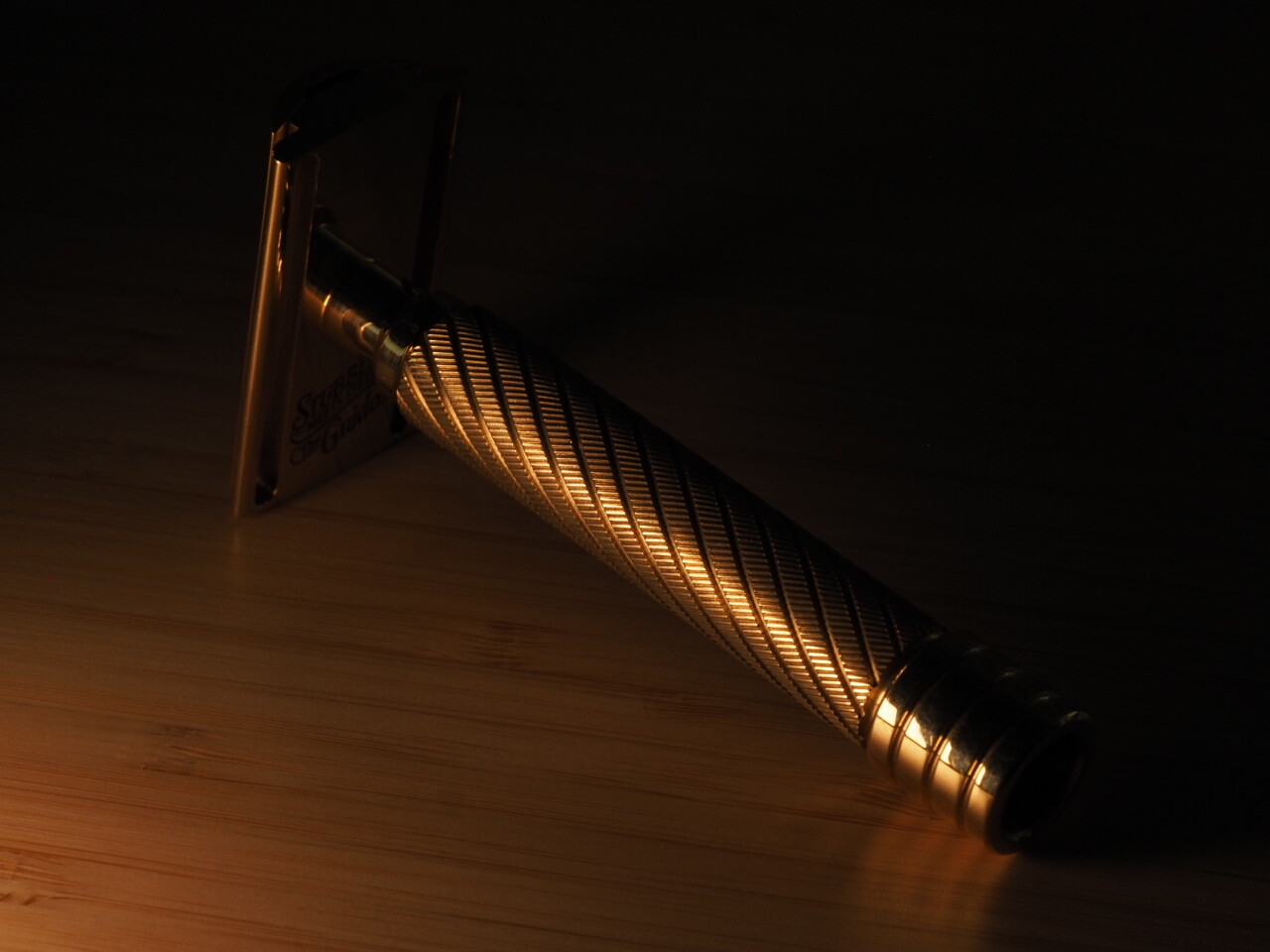
The razor head control is also excellent. All the corners are well polished or rounded, and although the cutting edge is somewhat obscured, it offers more than enough exposure to reach all the concave or hard-to-reach areas. It's not at all bothersome; the width of the opening where the blade emerges is small, and the cut always feels safe and secure.
What I did notice was some audible feedback. The original Outlaw was very vocal. The Outlaw Evolution less so. And this one is more or less vocal depending on the blade I use. Of course, I used it with a Derby blade to see if the razor would collapse when using a blade that doesn't work for me, but the razor performed well. The shave was similar to others I've experienced, comfortable and uneventful. But what I did notice is a different kind of vocal feedback compared to other blades. It seems that this geometry makes some blades sound different from others. I don't know if it's the material, the rinsing channel acting like a sound box, the Derby blade vibrating more because it cuts less effectively, or the distance the cap covers the blade, but there is some noise. It's not annoying, just as it wasn't with the other razors; on the contrary, that metallic sound of cutting hairs can be quite fun if the cause of the sound isn't causing any problems with the shave.

With its two plates and relatively smooth geometries, everyone can find a setting where this razor is gentle and forgiving. This razor proves you don't need six plates with different gaps or adjustable razors with complicated adjustment systems. All you need is a moderate gap with neutral exposure, a wide-curved cap, and one closed and one open comb. That will give you all the tools for any setting you need.
Score: 19
Score: 5
Head control: 5
Derby/blade test influences: 4
Indulgent: 5
Quality/Price
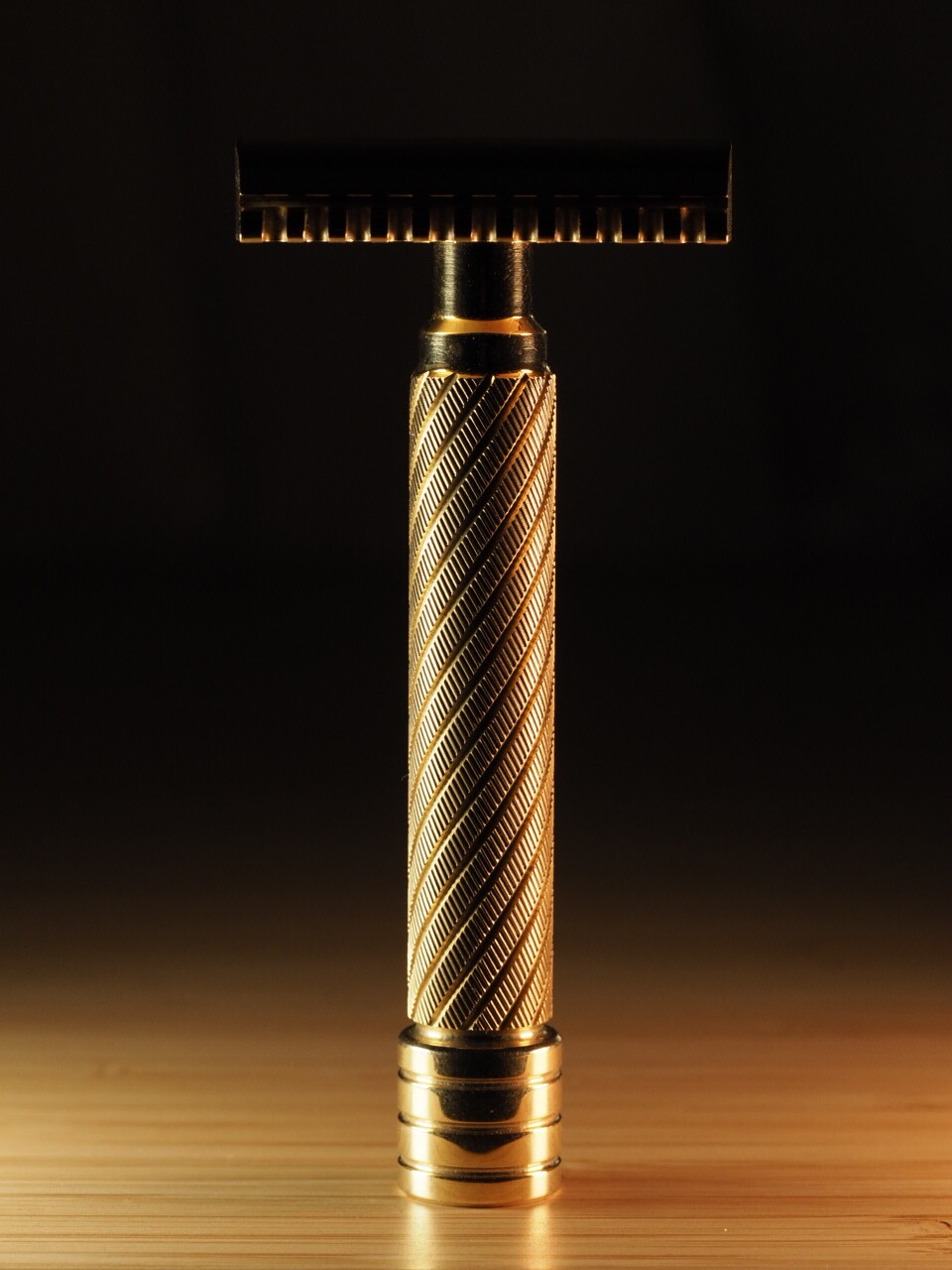
This The Guido razor, for me, possesses extraordinary beauty. The handle commands all the attention. It's gorgeous. The Barberpole pattern is sculpted like a work of art, and the length of the handle, the substantial knob, and the overall lightness only enhance its practical beauty when you hold it in your hand. Practical functionality combined with beautiful elements is something I'm passionate about in razors, and this one has me completely captivated.
The first batch of this razor went on sale for under $90. That's a steal. Forget Black Friday. That's a super reasonable price. The second batch cost just under $100 and is still a more than reasonable proposition. The versatility of the shaves and the fact that it has two different combs makes it even more desirable. This razor rewards you like few others can.
Even so, I don't think the value of these razors will skyrocket in the next 25 years. I don't see them as collector's items, although I'm sure they won't go down in price either. Around 90-100 Euros is more than a fair price for a set like this.

Those who know my tastes already know if I could live with this razor for the rest of my life, but for those who don't, here's a quick summary. Long handle, lightweight, open comb, efficient, functional and beautiful features. These are the things that make my heart race. And if it also shines like this, it makes my eyes pop. There's no doubt that living with only this razor for the rest of my life would be a pleasure.
Score: 18
Aesthetics: 5
Reward: 5
Value in 25: 3
Single razor: 5
Conclusion
Steve said that with the Eclipse he had brought together the best elements of all the collaborative razors he's made in aluminum. And I believe him. I think the Eclipse is a very well-balanced razor, and knowing the specs of the other razors, it's sure to be the one that will appeal most to a wide audience. But the Eclipse isn't the best.
I'm a fan of both the original Outlaw and the Outlaw Evolution. The original Outlaw is light, playful, and fun to use. It's a super fun razor. The Outlaw Evolution could be considered the grown-up version of the Outlaw. That one that has outgrown its teenage phase and now does everything with more composure and experience. Both offer excellent results, but in different ways.
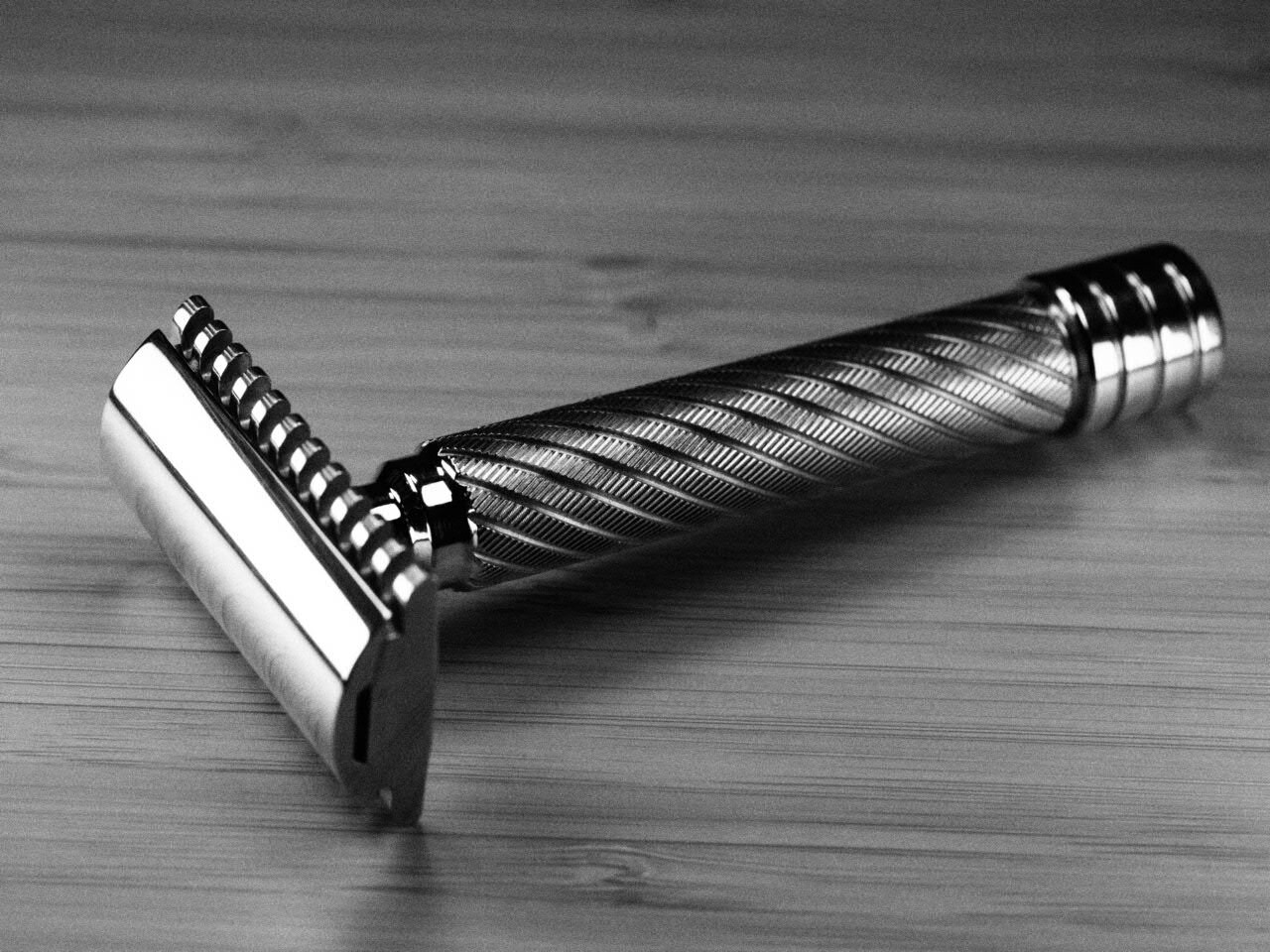
With the Alpha The Guido, Steve and John have created a razor that surpasses all others. It's not just one razor, it's actually two, which is why the comparison isn't entirely fair. The Guido has two plates, each with a distinct character, giving it a versatility unmatched by any previous razor.
And this, for me, makes the Guido the best razor from Alpha Shaving Works. And that's saying something because all of Steve's razors work very well. Having said that, and thinking about it, it was almost impossible for Steve to release a razor that didn't work well. Although I think that with The Guido, the overall package amplifies that excellent performance.

Steve has been refining his original Outlaw design to a level where it offers many different configurations. I think this Guido configuration is the best. Could the design be improved even further? I don't even want to think what would happen to my heart if Steve decided to make it in titanium… please Steve, don't make it in titanium, I already have plenty of razors… although I think if you did, I'd have to make room for it even more. I know myself.
Final score: 93 points
Introduction
Those familiar with my reviews know that I usually use the introduction to paint a picture of the razor I'm reviewing that week. I talk about the manufacturer or the person who designed it to place the razor within a specific style or linked to a certain design philosophy. This gives us an idea of what we can expect from the razor in question, both technically and aesthetically, within a particular stylistic framework.
In this case, we have before us the Alpha Shaving Works “The Guido.” A razor manufactured by Steve Tinter of Alpha in collaboration with John Venturino, who runs the YouTube channel “Stubble meets Steel.” John recounts in one of his videos how he contacted Steve to request a Cape Cod baseplate that he could use in his Shave Dad razor. These two razors were also manufactured by Steve in collaboration with others. During that conversation, the idea for a collaboration between Alpha and Stubble meets Steel was born. The result? The Guido.
Before continuing, I want to give a huge thank you to @Vitto for lending me this razor so I could review it. Thank you so much! It's a pleasure to review so many razors, but it's even more rewarding to know that there are such generous forum members.
John had used several of the razors Steve had created and knew what he liked and disliked about each one. He also had a few ideas about the design and, as he himself says, being quite demanding, he changed the specifications a few times to refine the design until he arrived at what he truly had in mind. All the while, he relied on Steve's practical, realistic, and professional advice.I'll tell you more about the razor's creation process when we're analyzing it, and I'll also elaborate a bit more on a very striking feature of this razor that we all know but perhaps don't know in detail. Put on your sunglasses because this razor shines, and not just because of its material.
Construction
The Alpha The Guido is a three-piece DE razor manufactured from C360 brass using CNC machining. The set includes a 90mm "Steelheart" handle, a cap, a base plate with a closed comb, a base plate with an open comb and a stand. It's a very complete set that offers two different shaving options to suit the user's needs.
Looking at the top of the cap, we see a design very similar to the basic design of the Outlaw, but also to many other razors. The cap has a moderate curve, with no flattened areas.
The profile of the cap shows the two "wedges" that create the cutting angle when they secure the blade in place. At first glance, the cap appears identical to the caps used on the two Outlaws razors and the collaboration razors Steve made in aluminum. But there is a difference.
Looking at the cap from above, you can see that the short sides aren't straight but form a small angle with the central section. I should mention that the base plates have the same shape and fit perfectly with the cap. This modification, compared to the "base design" Steve used for all the collaborative razors, has several advantages.
The first one is that it reduces the amount of material in the head. Brass is a much denser material than aluminum, and if the same design used in the other razors had been used, this one would have weighed more. By eliminating the straight sides, some weight is saved in the head.
Another advantage is that the central section still covers the entire blade, but the sides next to the blade protrude less. This improves control over the cutting head and allows for more precise blade placement on hard-to-reach surfaces. With less material on the sides of the cutting edge, it's easier to pinpoint the end of the cutting edge.
A third advantage, although this could be considered a subjective element, is that these angles on the sides create a more prominent play of light. The glossy material combined with surfaces positioned at different angles enhances the visual impact.
The last point I'll mention is about the cap's dimensions. This cap is also slightly wider (as is the Alpha Eclipse's) than the Outlaw Evolution's cap (approximately 1 mm). This means the cap covers more of the blade and hides it more from the skin. The result is a gentler cut, but also a slightly more concealed edge. The cap is also a bit taller than the Outlaw Evolution's cap. This creates a gentler cutting angle and offers a little more curvature for riding the cap if needed.
Material: Brass C360
Finish: Mirror polished
Handle length: 90 mm
Handle diameter: 13 mm (Knob: 14.95 mm)
Total length of the razor: 95 mm
Total weight: 102.5 gr (comb closed), 105 gr (comb open)
Head weight: 47.3 gr (comb closed), 49.8 gr (comb open)
Cap height: 4.93 mm
Lid width: 19.65 mm
Gap: 0.77 mm (both combs)
Exposure: neutral (both combs)
The inside of the cap reveals the central thread flanked by two cylindrical guides. The design is the same one that worked so well on the other razors as well. Two very large clamping surfaces create maximum contact with the blade, and three circles around the central thread and guides eliminate the need to change the CNC machine's bit that mills the central body. Now, that bit can start on one side and mill all the way to the other in one go, simply by curving around these posts. It's a trick used in dozens of designs and saves time.
The interior of the closed-comb motherboard is simple and efficient. We see the central body with three holes: one for the central thread and two more (blind holes) for the guides. The long sides of this central body are for the clamping surfaces. All these surfaces are mirror-polished, unlike the inside of the cap, which is machined and lightly polished.
The closed comb design is identical to that of the Eclipse. It features a comb mounted on two supports, creating a continuous rinsing channel that is slightly longer than the one used on the Outlaw Evolution. The comb also has two horizontal lines on the shaving plane.
The underside of the closed comb plate is completely flat and smooth, featuring a beautiful engraving of "Stubble meets Steel" and the razor's name, "The Guido." The short sides also have the same angles as the cap. The open comb plate has the same design.
The interior of the open-comb baseplate is very similar to its closed-comb counterpart. The central body is identical. The difference lies in the comb. This is an open comb with 12 teeth that distributes the distance between teeth (1.55 mm wide) and between teeth (1.9 mm wide) almost equally. This results in a comfortable shaving surface due to the number and width of the combs, while also providing ample space for hairs to reach the cutting edge without obstruction. The teeth have the same horizontal lines as the closed-comb version.
The finish is excellent. All surfaces are mirror-polished except for the inside of the lid. There could be several reasons for this. The inside of the lid is the least visible part. Even with the head open, the blade is inside the lid and would cover its less polished interior. Another reason could be to maintain the lid's mounting tolerances. And yet another reason might be that this part is the most difficult to polish due to its three posts.
All edges are polished so they don't feel sharp. The only edge with maximum definition is the end of the cap that covers the blade. And that's precisely where you want maximum definition. It's not bothersome there because that edge doesn't come into contact with the skin, and you want the seal between the cap and the blade to be as tight as possible. Holes, guides, and a chamfered center thread; the center thread features square threads to ensure a firm connection and superb (un)threading action. There's a bit of space between the handle thread and the cap thread, but brass is a soft, pliable material, and the (un)threading is solid and smooth. Top-notch.
The tolerances are also extremely tight. As with the aluminum Alpha Eclipse, the cap fits perfectly onto the base plate of this razor. When assembled without the handle, there is no movement. The fit is perfect, demonstrating very tight tolerances. The threading also operates within very tight tolerances. You couldn't ask for more from a razor.
The shape of the head and its two combs is something many people will appreciate. Steve has been evolving the Outlaw's design since he created it. The first modifications were introduced in the Outlaw Evolution, which improved several aspects of the original design, particularly the blade clamping. With the aluminum razors from his collaborations, Steve added elements that modified the efficiency and/or smoothness of operation. He also manufactured plates with open combs and changed the gap compared to the closed-comb plate. This radically changes the shave a razor offers.
And with the Guido, I think they designed a razor that covers a lot of ground. The 0.77 mm gap, neutral exposure, moderate cutting angle, wide cap curvature and comfortable, versatile shaving plane mean this razor can be used in different ways because all of these features apply to both combs. The closed comb covers the gentler side, and the open comb covers the more efficient side. With these two heads, 80% of all users will be able to find a comfortable and efficient shave because neither head compromises on the other's strengths. The closed comb head is gentler but still efficient. And the open comb head is more efficient but still gentle. The best of both worlds, we could easily say.
Score: 19
Material: 4
Finish: 5
Tolerances: 5
Head/Comb Shape: 5
Grip
This handle is called Steelheart, but it's a classic barber pole handle. I want to tell you a little more about the history of the barber pole and its origins so you can better understand the design of this handle.
In medieval times, barbers not only cut hair but also performed "simple" procedures such as tooth extractions, leech application, and abscess drainage. The barber's pole was adorned with colored ribbons to indicate the procedures offered: red for bloodletting, white for teeth and bandaging, and blue for haircuts. Patients would grip this pole tightly, increasing blood flow and thus intensifying the effect of the leeches.
It is also speculated that these symbolic meanings arose because barber-surgeons hung used and unused bandages (red and white) on a pole to dry. The bandages would twist and turn on the pole in the wind, creating the specific helical pattern we know today.
The Caduceus also uses a staff with a helical pattern, a pattern that is still linked with the world of doctors even today and symbolized in the Rod of Asclepius, which contains a wingless snake instead of the two winged ones of the Caduceus.
Later, barbers focused on haircuts and abandoned bloodletting, dental work, and other procedures. The pole with its colorful ribbons remained in use due to its strong symbolic power and indicators were created with rotating cylinders inside to simulate the ribbons' movement. The symbol of the "Barber's Pole" continues to be recognized worldwide and remains a universal symbol.
Returning to the handle, we can clearly see the design of the straps wrapping diagonally around the shaft. The surface of the straps is filled with grooves, creating lines that are perpendicular to the diagonal lines of the straps. This creates an opposing pattern that ensures a tremendously efficient yet incredibly comfortable grip. It's also extraordinarily beautiful.
At the end of the handle we find a generously sized pommel, which on a barber's pole could represent the receptacle that collected blood while the patient held the pole. This entire assembly offers excellent grip in any position, whether conventional, inverted, or horizontal. The handle provides more than enough surface area for a conventional three-finger grip while resting on the pink. This grip gives us perfect control over the razor.
The razor head's glide has several features that enhance it. First, there's a grip that offers control and confidence. Second, the material itself glides well, and its polished finish makes it even better, adding a certain weight that helps ensure smooth movements. Third, there's a well-defined shaving plane that's easy to maintain. And fourth, the blade geometry allows for a (nearly) effortless glide thanks to its forgiving nature. A lot of good things combined.
Score: 20
Dry/Wet: 5
Comfort: 5
Control: 5
Head slide: 5
Handling
This razor is made from a high-density material. In its unmodified form, the razor would weigh about 150 grams. It would clearly be competing with some of the Rocnel razors that double as dumbbells. One solution could have been to make a thinner and/or shorter handle, but John didn't want to compromise on the handle. He wanted it this way. Steve suggested hollowing out the handle, as he had done on the Spirit, for example. That one weighs 1 gram less than the Blackland Vector, which already weighs nearly nothing.
With a solid head like the Guido's, the handle’s hollow part couldn't be too large, otherwise the razor would become head-heavy. Steve hollowed out the handle by 5 cm. This handle length, combined with the substantial material in the pommel and the hollowed-out design, creates a perfect balance at the intuitive grip point. Everything fits together perfectly in terms of balance when you grip the handle at that point. The weight is also very close to the "ideal" weight of 100 grams, at 105 grams.
Gripping the handle below that point tilts the balance to the razor’s head. This option can be used when you don't want to apply pressure to the stroke and want gravity to do the cutting. By modifying the grip, the head’s weight takes over and becomes the force that causes the cut. It's a smooth cut because the weight doesn't apply additional pressure. When changing the gravity vector (for example, a stroke against the grain), this trick doesn’t work because gravity works down and not up or horizontally.
Changing the blade in a three-piece razor always carries a certain risk because you have to get your fingers close to the blade to unscrew and disassemble the head. With this head, those operations are done comfortably without the blade moving inside the cap. In fact, the blade has occasionally gotten stuck in the head due to the extremely tight tolerances. I prefer a blade that doesn't move to one that won't stay put, and I see this as an advantage.
At the same time, it's also important to be careful when removing a blade that gets stuck in the head. I place the head with the threaded end facing down on a towel and insert a fingernail between the cap and the blade on a short side, away from the edge. That usually works perfectly and I’m able to nudge the blade loose.
Cleaning involves two things to keep in mind. One is obvious: this razor is no easier or harder to clean than any other three-piece razor with a similar design. The base plate with the comb closed is very easy to clean, but the open comb is not due to the amount of teeth. And the inside of the cap contains three obstacles. Nothing surprising.
But we also have to keep in mind that brass develops a patina, and we may need to polish the razor. It's not a difficult task and can be done relatively easily, but it does add to the effort of keeping the razor spotless. Plus, it has more parts to clean because it has two plates and a stand. The stand deserves to shine like the sun, too.
Score: 17
Balance: 5
Weight: 5
Model/Security: 4
Cleaning: 3
Shaving
As I mentioned before, this Guido razor offers a range of different shave options, both with its various attachments and the technique(s) we use. For a comfortable, quick, and satisfying shave, we use the closed comb and apply no pressure. For an even smoother shave, we proceed more slowly and carefully control the cutting angle by riding the cap. Conversely, by bringing the handle closer to the skin, we create a more efficient cutting angle while still maintaining a good distance between the blade and skin thanks to the closed comb.
We have the same options with the open comb, but with a greater emphasis on efficiency. A quick and comfortable shave is also possible with this comb. Riding the cap and riding the bar also work with this comb, but keep in mind that the open comb provides more direct access to the hairs at the blade. And with the hairs, you also get the skin closer to the blade. The combs on this razor are a quick and effective way to choose between a gentle or efficient shave, depending on your preference or needs.
That said, we can all achieve a perfect shave with this razor. We might need to experiment a bit with different razor settings and techniques, but it's entirely possible. Some will use the closed comb with some pressure, while others will use the open comb without pressure. And we could add or remove other elements as well. This razor offers a great deal of versatility without sacrificing either smoothness or efficiency. It's not for the 10% who prefer a silk glove or the 10% who prefer a razor-sharp katana, but for everyone else…it's a delight.
The razor head control is also excellent. All the corners are well polished or rounded, and although the cutting edge is somewhat obscured, it offers more than enough exposure to reach all the concave or hard-to-reach areas. It's not at all bothersome; the width of the opening where the blade emerges is small, and the cut always feels safe and secure.
What I did notice was some audible feedback. The original Outlaw was very vocal. The Outlaw Evolution less so. And this one is more or less vocal depending on the blade I use. Of course, I used it with a Derby blade to see if the razor would collapse when using a blade that doesn't work for me, but the razor performed well. The shave was similar to others I've experienced, comfortable and uneventful. But what I did notice is a different kind of vocal feedback compared to other blades. It seems that this geometry makes some blades sound different from others. I don't know if it's the material, the rinsing channel acting like a sound box, the Derby blade vibrating more because it cuts less effectively, or the distance the cap covers the blade, but there is some noise. It's not annoying, just as it wasn't with the other razors; on the contrary, that metallic sound of cutting hairs can be quite fun if the cause of the sound isn't causing any problems with the shave.
With its two plates and relatively smooth geometries, everyone can find a setting where this razor is gentle and forgiving. This razor proves you don't need six plates with different gaps or adjustable razors with complicated adjustment systems. All you need is a moderate gap with neutral exposure, a wide-curved cap, and one closed and one open comb. That will give you all the tools for any setting you need.
Score: 19
Score: 5
Head control: 5
Derby/blade test influences: 4
Indulgent: 5
Quality/Price
This The Guido razor, for me, possesses extraordinary beauty. The handle commands all the attention. It's gorgeous. The Barberpole pattern is sculpted like a work of art, and the length of the handle, the substantial knob, and the overall lightness only enhance its practical beauty when you hold it in your hand. Practical functionality combined with beautiful elements is something I'm passionate about in razors, and this one has me completely captivated.
The first batch of this razor went on sale for under $90. That's a steal. Forget Black Friday. That's a super reasonable price. The second batch cost just under $100 and is still a more than reasonable proposition. The versatility of the shaves and the fact that it has two different combs makes it even more desirable. This razor rewards you like few others can.
Even so, I don't think the value of these razors will skyrocket in the next 25 years. I don't see them as collector's items, although I'm sure they won't go down in price either. Around 90-100 Euros is more than a fair price for a set like this.
Those who know my tastes already know if I could live with this razor for the rest of my life, but for those who don't, here's a quick summary. Long handle, lightweight, open comb, efficient, functional and beautiful features. These are the things that make my heart race. And if it also shines like this, it makes my eyes pop. There's no doubt that living with only this razor for the rest of my life would be a pleasure.
Score: 18
Aesthetics: 5
Reward: 5
Value in 25: 3
Single razor: 5
Conclusion
Steve said that with the Eclipse he had brought together the best elements of all the collaborative razors he's made in aluminum. And I believe him. I think the Eclipse is a very well-balanced razor, and knowing the specs of the other razors, it's sure to be the one that will appeal most to a wide audience. But the Eclipse isn't the best.
I'm a fan of both the original Outlaw and the Outlaw Evolution. The original Outlaw is light, playful, and fun to use. It's a super fun razor. The Outlaw Evolution could be considered the grown-up version of the Outlaw. That one that has outgrown its teenage phase and now does everything with more composure and experience. Both offer excellent results, but in different ways.
With the Alpha The Guido, Steve and John have created a razor that surpasses all others. It's not just one razor, it's actually two, which is why the comparison isn't entirely fair. The Guido has two plates, each with a distinct character, giving it a versatility unmatched by any previous razor.
And this, for me, makes the Guido the best razor from Alpha Shaving Works. And that's saying something because all of Steve's razors work very well. Having said that, and thinking about it, it was almost impossible for Steve to release a razor that didn't work well. Although I think that with The Guido, the overall package amplifies that excellent performance.
Steve has been refining his original Outlaw design to a level where it offers many different configurations. I think this Guido configuration is the best. Could the design be improved even further? I don't even want to think what would happen to my heart if Steve decided to make it in titanium… please Steve, don't make it in titanium, I already have plenty of razors… although I think if you did, I'd have to make room for it even more. I know myself.
Final score: 93 points
Last edited:


 Cheers..


 (How deep is your rabbit hole?)