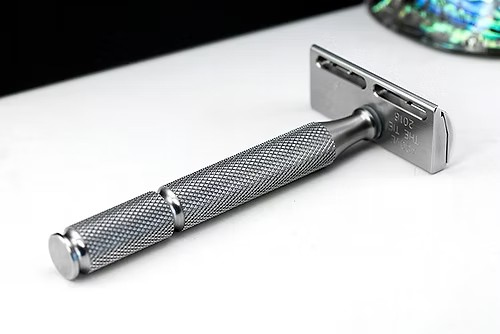
This review is about the Above the Tie Windsor Ti (R plate)

Introduction
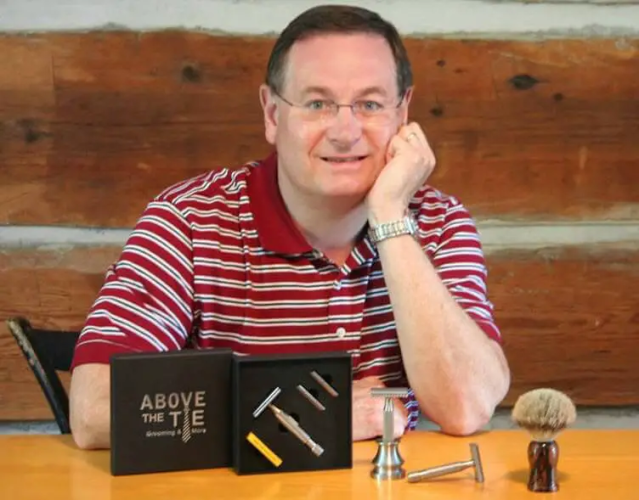
The Above the Tie brand was created in 2011 by Stan Hickam. To be more precise, the name was created by his son-in-law, Matt, but Stan had already conceived the business idea. Stan worked as a radiologist at a medical center and he and his wife, Lennea, have a daughter named Mariah. When Mariah moved out, Stan began searching for vintage Gillette razors to fully restore and resell on eBay.
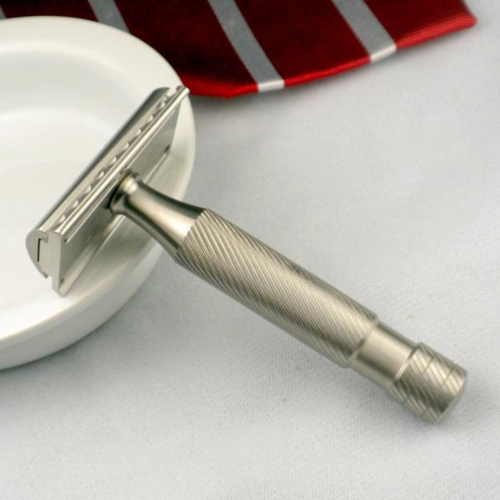
This continued for a while, but soon after, with his Above the Tie (AtT) brand already up and running, Stan also began offering brushes, soaps and other razors than Gillettes with rhodium plating. He wanted to offer high-quality tools to a broad audience. The next logical step was to design and produce his own razor and thus the Atlas was born.
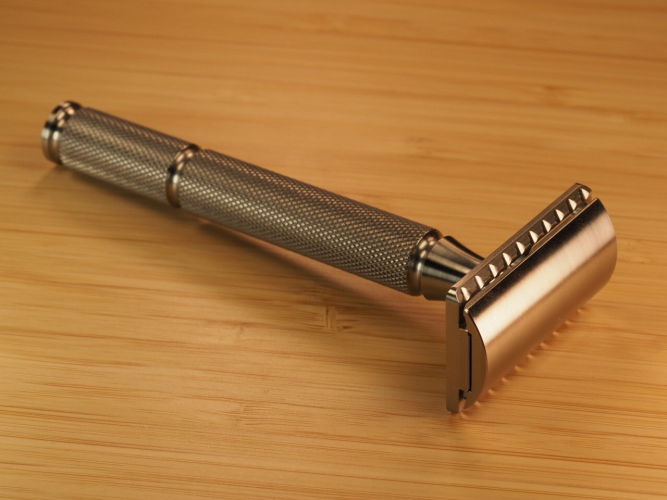
The design of AtT razors hasn't changed much throughout their history. They always use the basic design that we'll break down in more detail later. Today we have the honor of reviewing a razor that @J349 has lent me, the Windsor Ti with an R plate. Thank you very much buddy!

This razor is an AtT razor but made by our friends at Blackland. In 2023, they bought the brand and began refining the designs and manufacturing AtT razors. This Windsor and the S1 Slant are the two razors they've released so far and they're based on the original 2012 razor designs. The name "Windsor" came into use later, around 2017, but Blackland combined these two elements. How did AtT get to this point? We'll explore that during this razor review. Let's go!
Construction
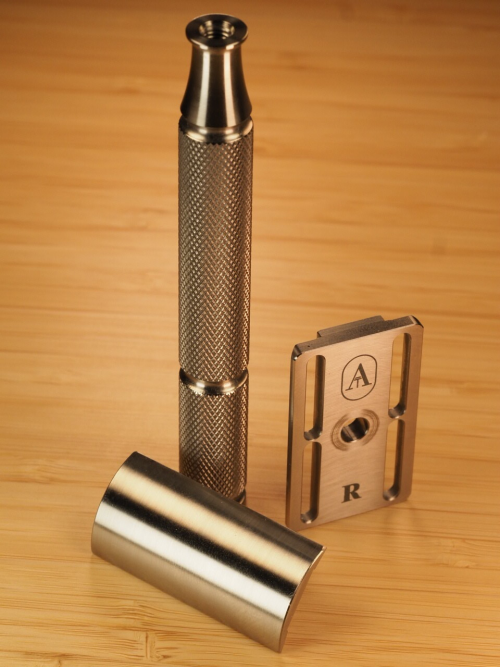
The AtT Windsor Ti is a three-piece DE razor made of Grade 5 titanium (Ti-6Al-4Va) and CNC machined. This titanium alloy contains 6% aluminum and 4% vanadium. AtT initially manufactured its razors using 303 stainless steel. Stan, who had a degree in business administration, explained that he used the 303 steel because it was easier to machine and in a razor, no one would notice the difference compared to 316 steel. The latter, while more resistant to everything, is also more resistant to machining and therefore more expensive to produce or has less of a profit margin. Depends on your perspective I suppose. AtT was one of the first brands to use machined stainless steel for its razor parts. At that time (2010-), it wasn't common to find razors made of steel. Modern manufacturing methods were increasingly offering the possibility of using more "exotic" materials for products. These materials had superior characteristics compared to those used previously, but also a higher cost.
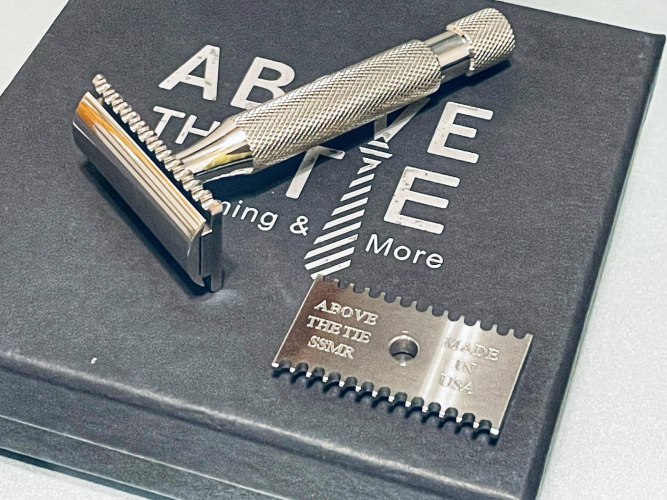
That's why AtT positioned itself in the market as a "premium" brand, offering functional design, high-quality materials and cutting-edge manufacturing and finishing. Furthermore, they manufactured everything in the USA to maintain a high level of quality. At the time, this description perfectly matched what the company offered and they began to achieve success with this model.
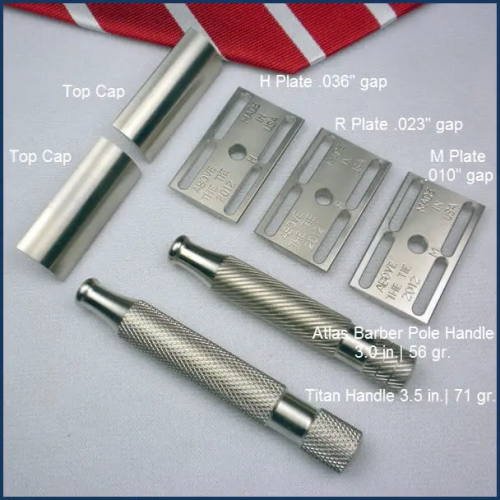
They gradually expanded their catalog without straying from the original design. They added different baseplates to offer varying levels of efficiency, introduced more handles and even combined their entire catalog into a complete package that included two caps, two different handles, three baseplates and a stand for $399. At the time, this was an enormous amount for a set like this, but there weren't many alternatives offering the same features.
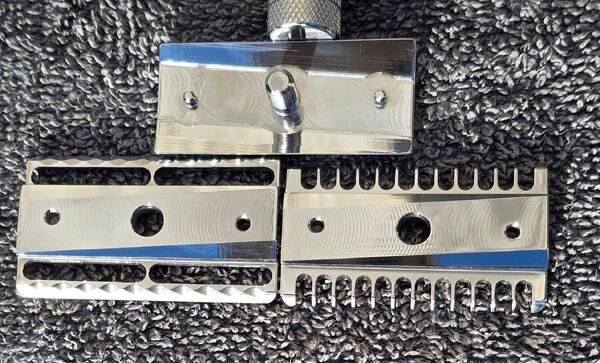
Continuing down this path, they also introduced an SE razor and the S1 Slant, the brand's most iconic model. Until then, slant razors had always been made with contorted base plates. The S1 Slant's base plate didn't follow that design. This plate was flat but had the attachment surfaces and combs angled to accommodate the blade at an angle that corresponds to the slant philosophy. We’ll continue the AtT story later.
Material: Titanium Gr5
Finish: Polished
Handle length: 102 mm (Colossus)
Handle diameter: 12.5 mm
Total length of the razor: 110 mm
Total weight: 62 gr
Head weight: 22.4 gr
Cap height: 4.7 mm
Gap: 0,58 mm
Exposure: neutral

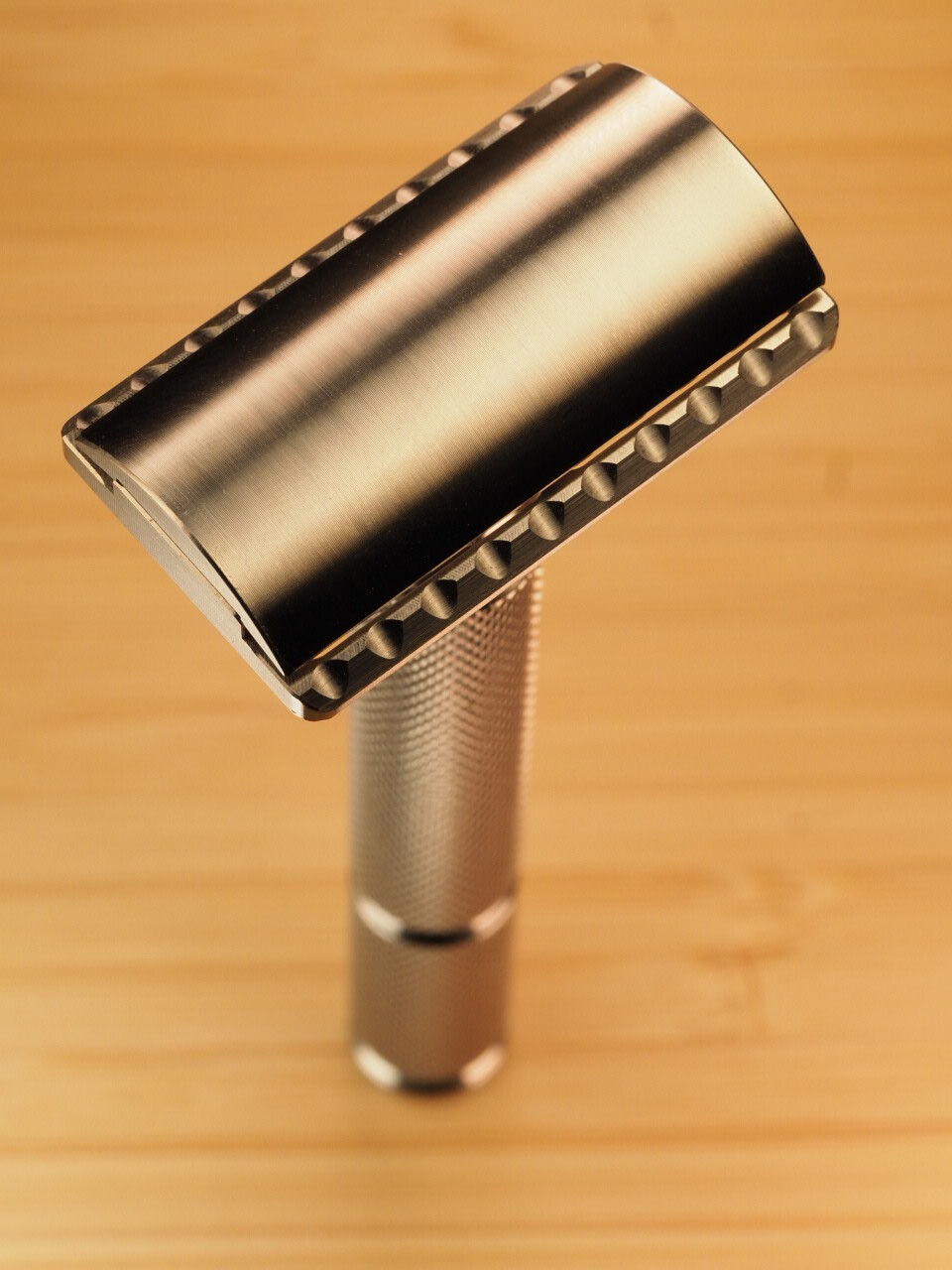
The first thing we notice when we look at the top of the cap is a very uniform finish with a bright polish. It's not a mirror polish, although AtT does offer that option. Because it's titanium, a mirror polish is about 30% more expensive. This polish is very well done and should provide a good glide.

The cap is 4.7 millimeters high and has a gentle outer curve. This allows for different cutting angles. The inner profile of the cap is not as curved as the outer part, which keeps the blade in a more horizontal position than a cap that bends the blade more downwards, such as the Henson AL13. With the latter, the end of the cap creates the cutting angle, leaving little room to adjust the cutting angles on the outer surface. The Windsor offers a more direct angle but provides more freedom in using the top surface of the cap to modify that angle.

Inside the cap, we see one of this brand's iconic design elements: its guides. Stan has patented their design (US20150352737A1) and specifically named these guides. He has documented that they can be placed on the cap but also inside the base plate. Better safe than sorry, as they say. These guides have always been used in their DE razors and this model is no exception.
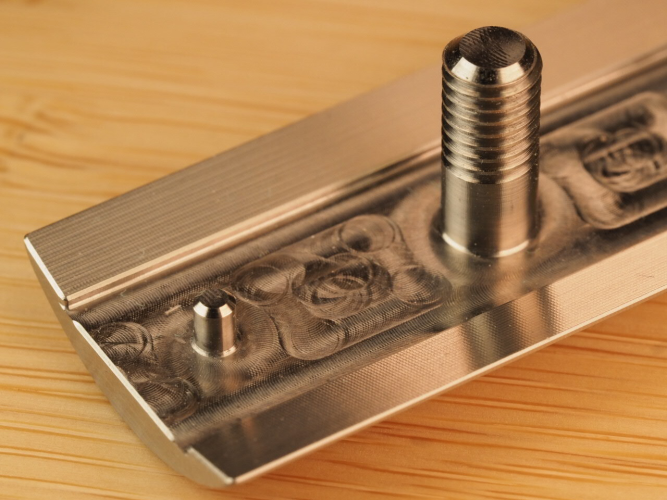
Prominently in sight is the central part, where the raw, unpolished machining and the central thread with its square threads are visible. This shape provides greater rigidity to the joint and a more robust screwing action. Both the central thread and the guides have beveled tops to facilitate insertion into their respective holes and for aesthetic reasons. The beveled edges of the guides are also a welcome feature when cleaning the inside of the cap.

We can see a difference in polishing between the center section and the clamping surfaces. The manufacturer mentions that they have been lightly polished to improve adhesion without altering the desired tolerances. Aside from that, they have a beautiful appearance that provides a striking contrast to the machined center.
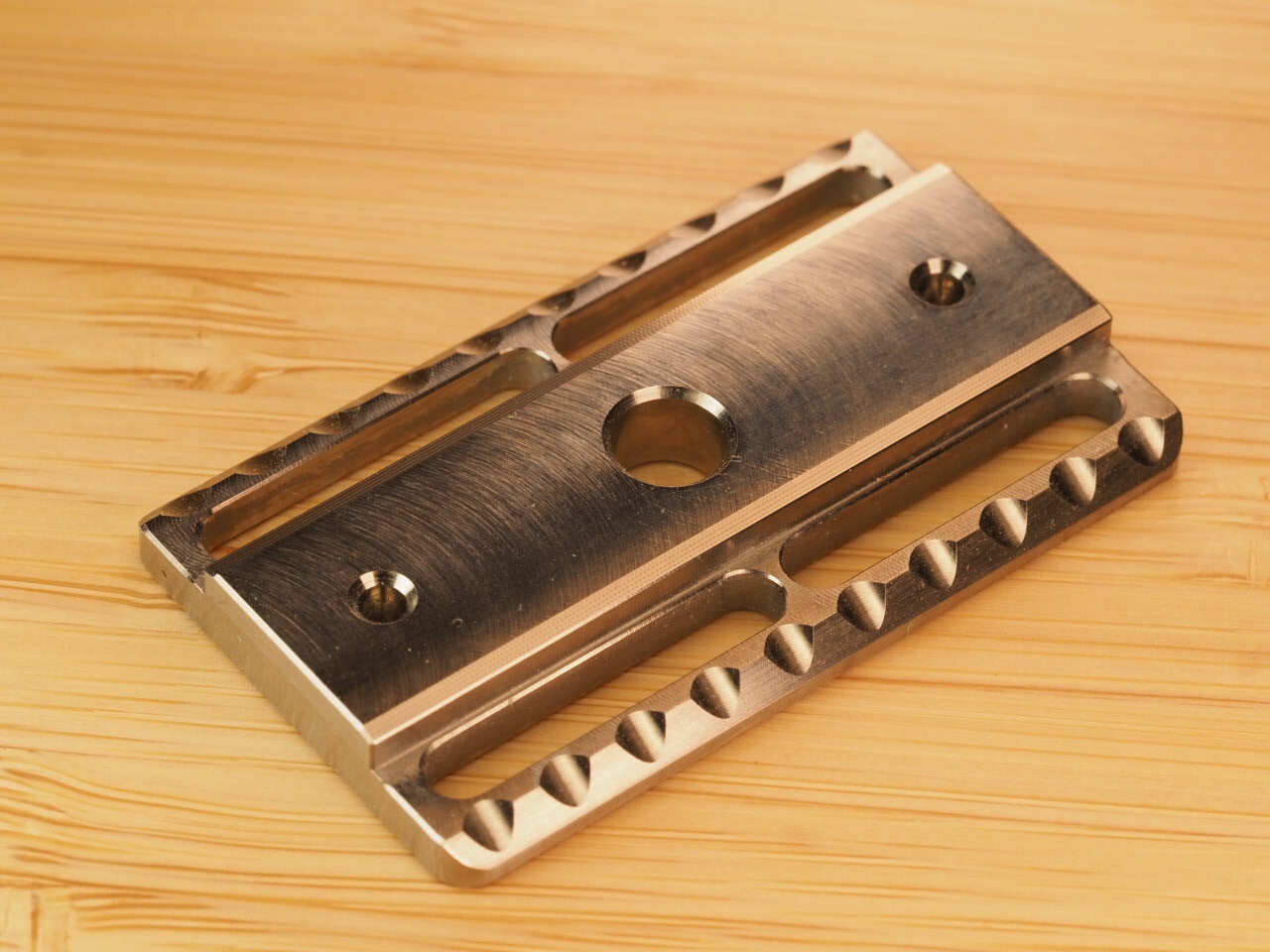
When we examine the inside of the base plate, we see more of the same. Beveled edges, polished surfaces and a clean, functional design. There are no superfluous elements, nor are there any missing components. In the central part, we see the hole for the central thread (beveled) and the holes for the guides (also beveled).
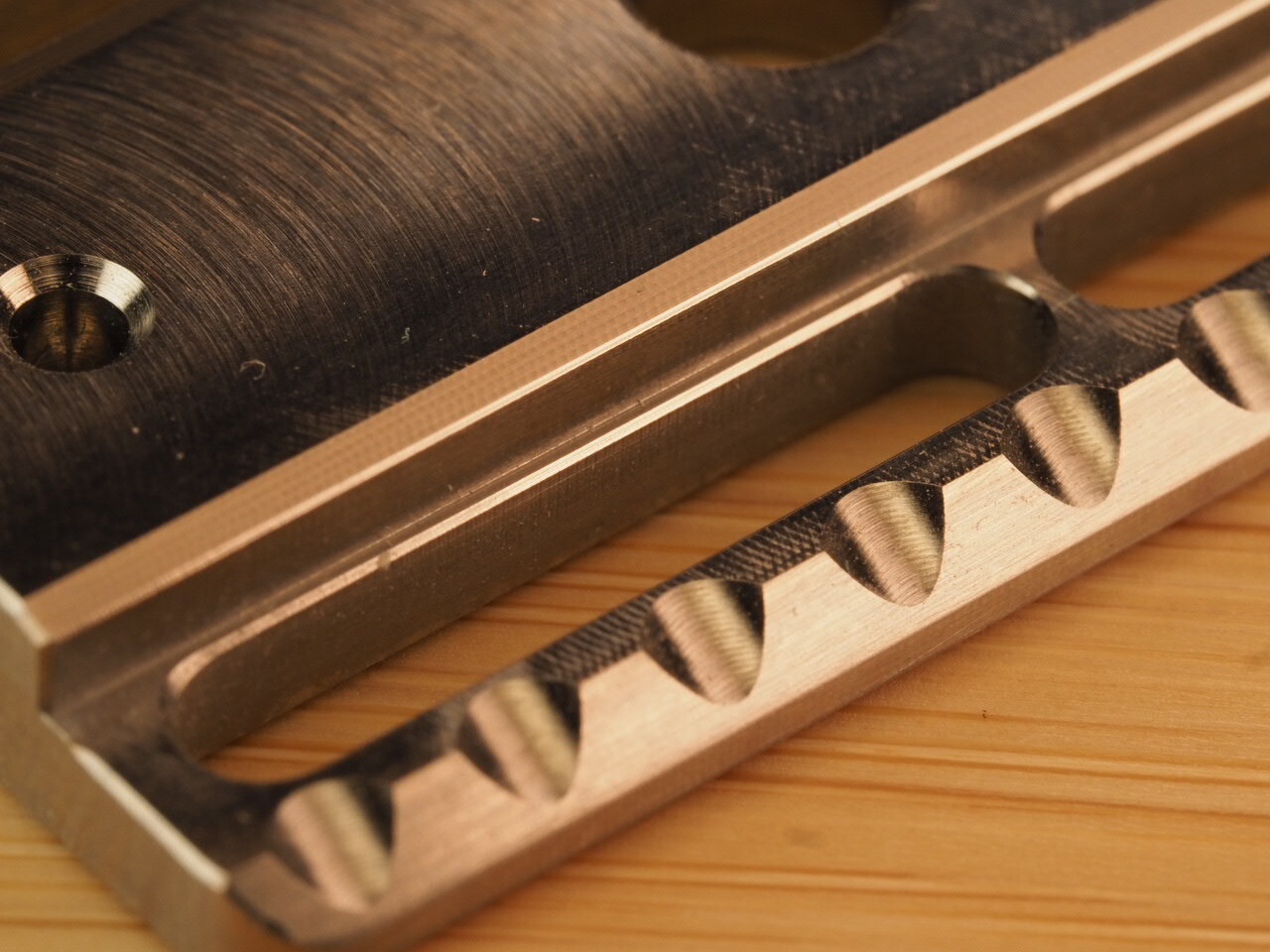
All the edges are also beveled or polished so they don't cause discomfort, but never losing definition.

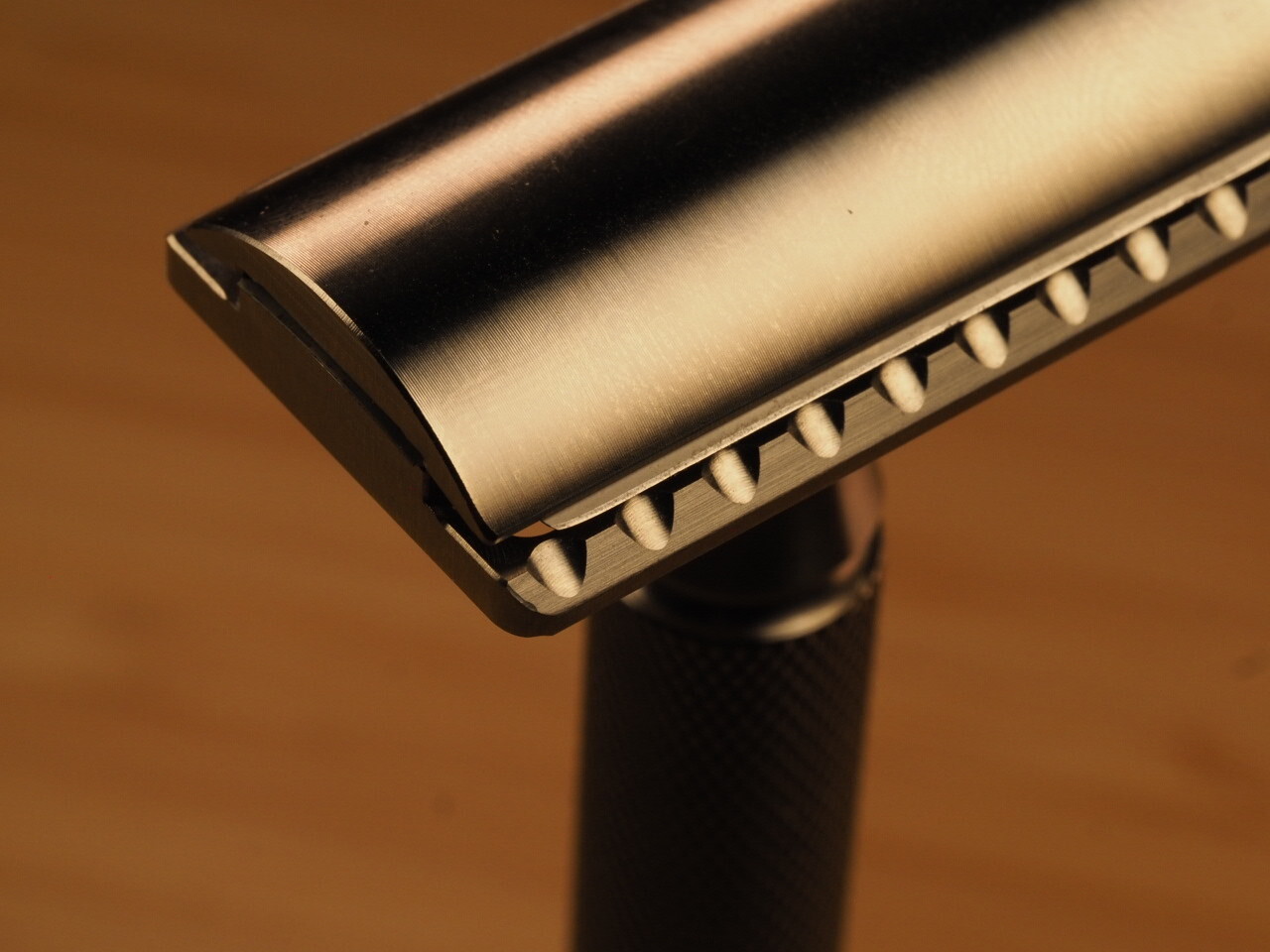
Continuing with the bar, we see that it rests on three supports, creating two rinsing channels. The front of the bar has grooves and here we see one of the modifications Blackland has introduced. If we look at the shape of the bar's grooves, we can see that they are oval with a downward point. This shape reminded me of something I'd seen before
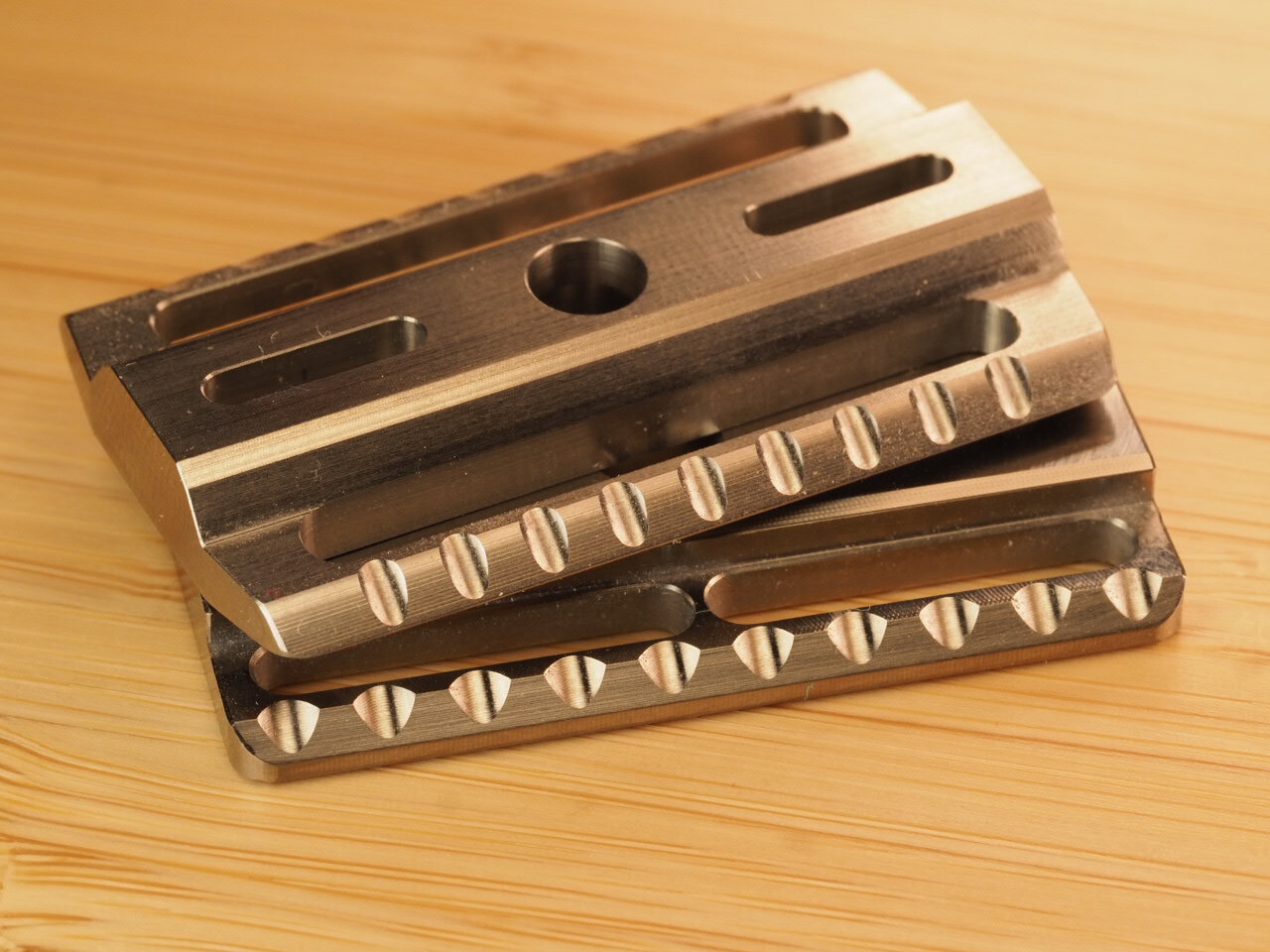
I didn't have to look far; I have the Blackbird on permanent display. We can see that the Blackbird's grooves were a clear inspiration for the Windsor Ti's. The Windsor also had oval grooves, but not with the points facing downwards; instead, they faced outwards.
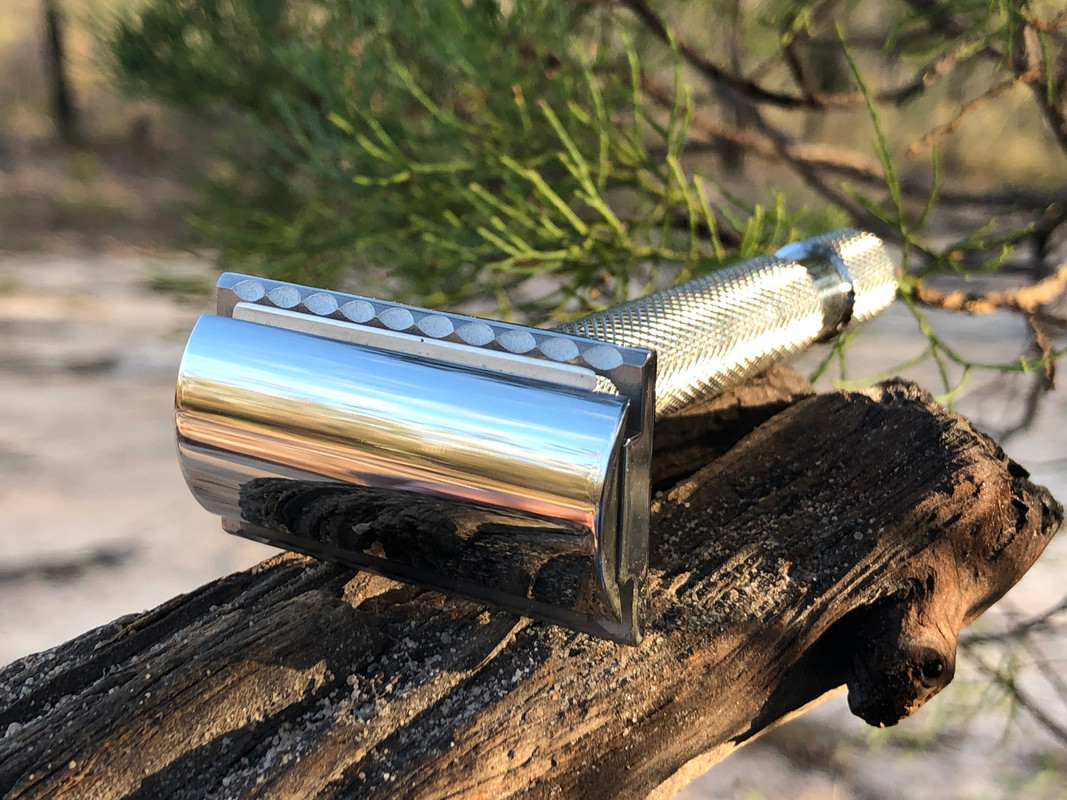
For comparison, I've included a photo of a Windsor Pro made in 2021 when AtT was still independent. This photo has a very interesting element that isn't immediately apparent, but I'll discuss it after I've finished reviewing the construction.

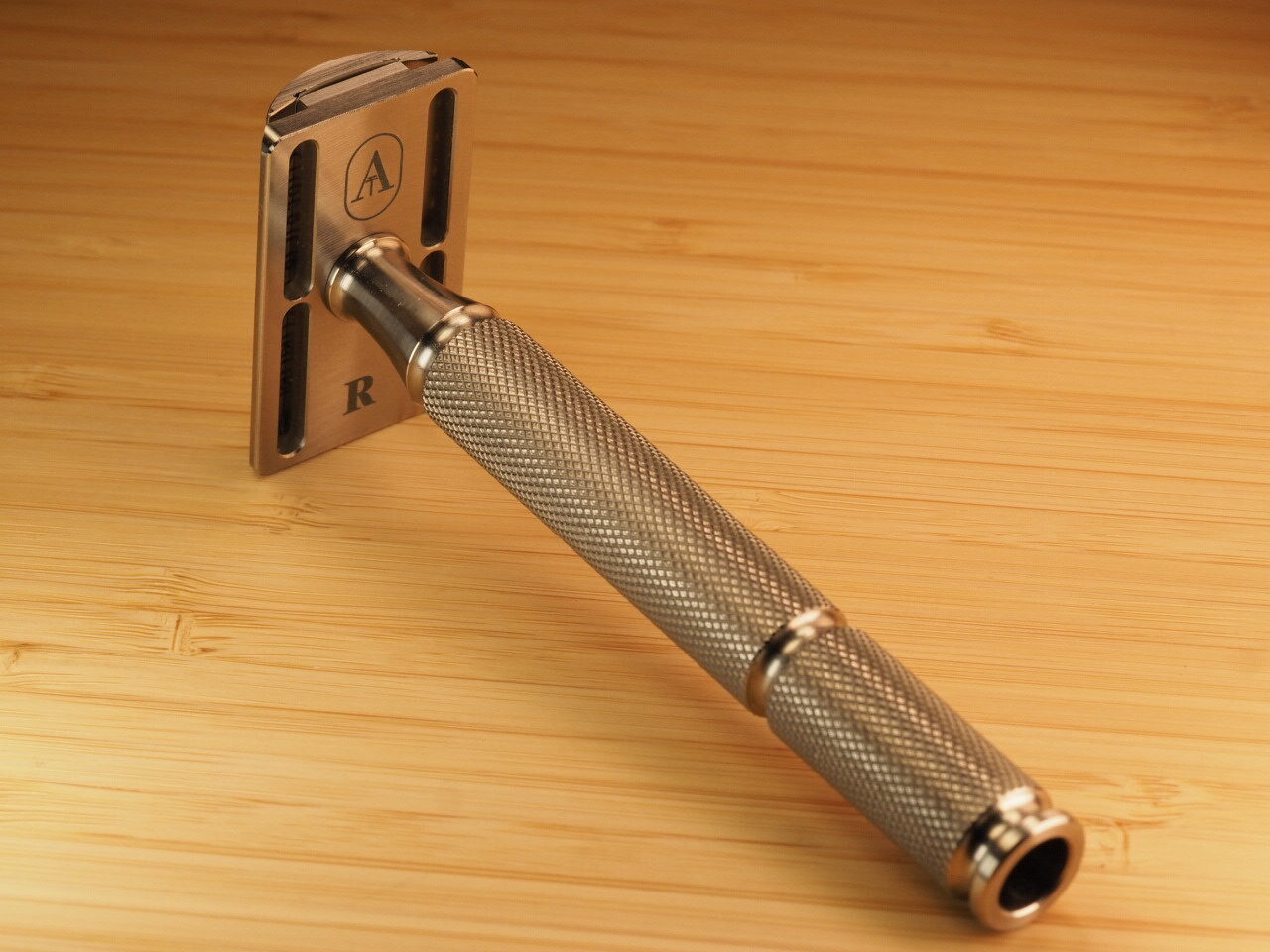
The underside of the base plate displays the logo and the base plate's efficiency rating. In this case, we see an "R" indicating a Regular base plate. There are also M (Mild) and H (Heavy) base plates. Previously, AtT added the number 1 or 2 to indicate whether the base plate had a closed or open comb respectively. Newer base plates do not yet feature open combs.
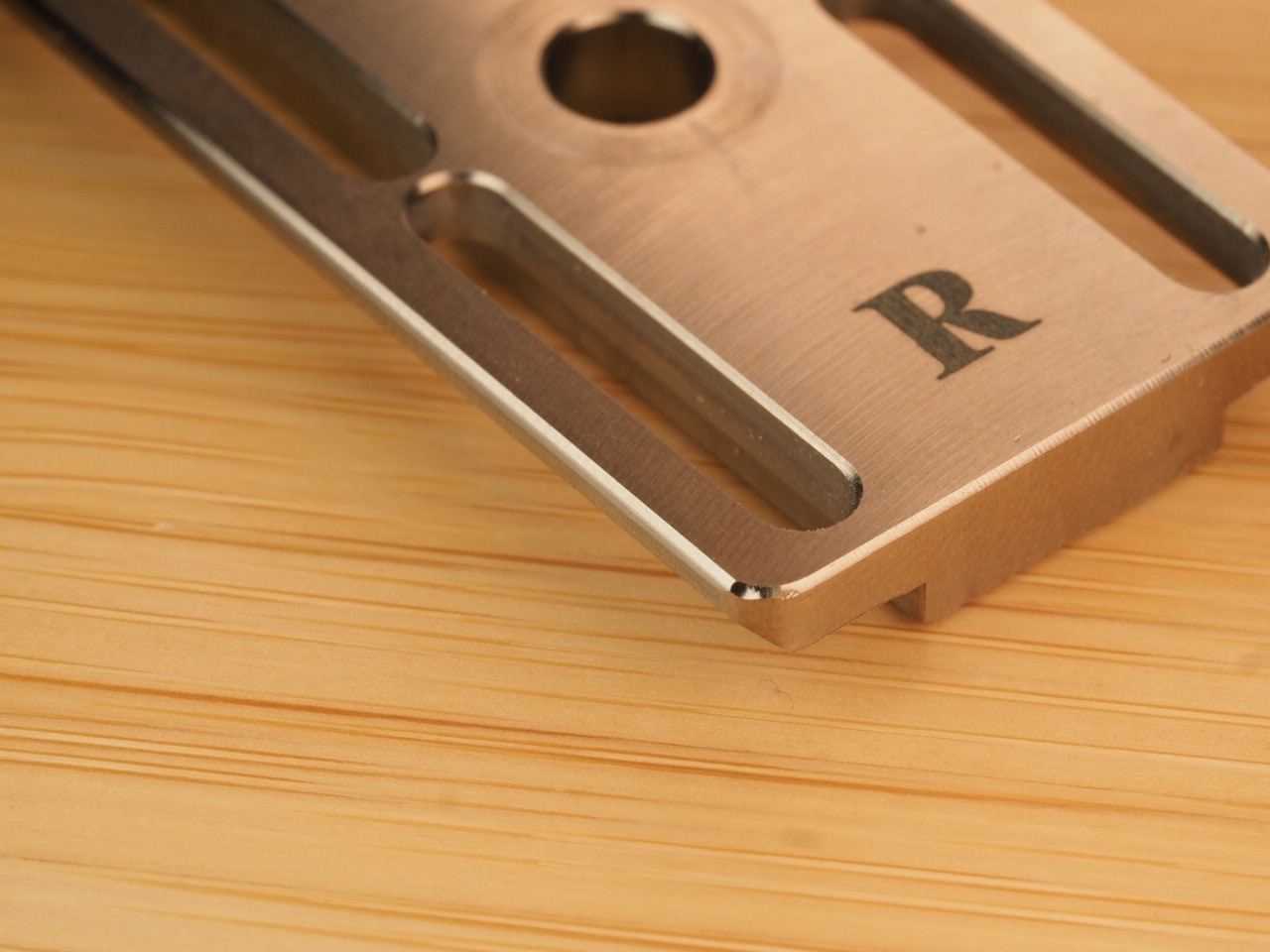
Another unusual feature is that the edges of the underside are also beveled, including the edges of the rinsing channels. This has no practical use because these parts should never come into contact with the skin, but it does add significant value to the finish.
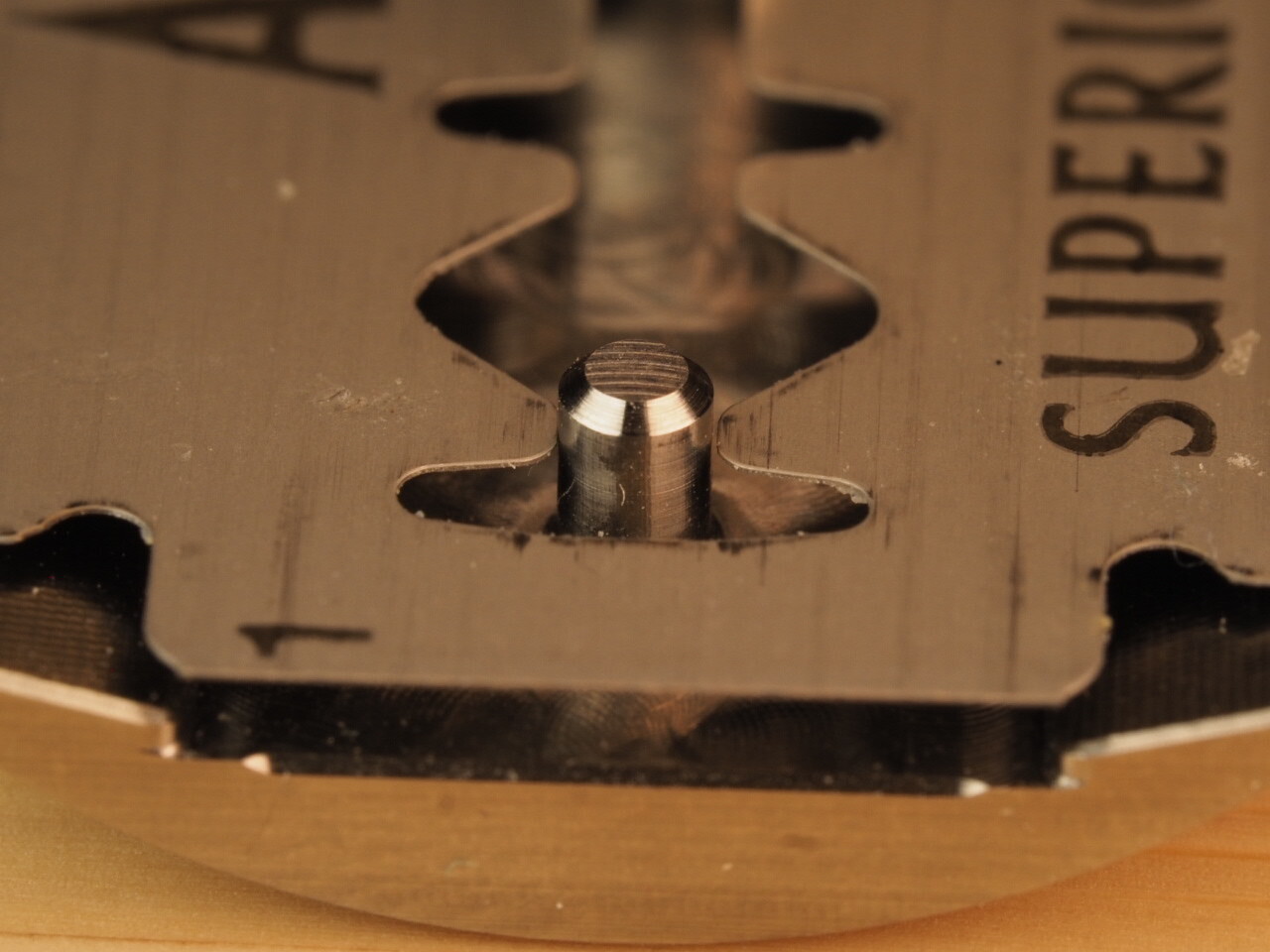
And speaking of the finish, I'll combine it with the tolerances. Both elements are at a very high level. The guides not only fit perfectly in their holes but also hold the blade securely. There's a 0.02 mm gap between the blade and the guides to allow for proper blade placement. The threading action inspires confidence and the fit is precise. But there's something else I want to highlight.
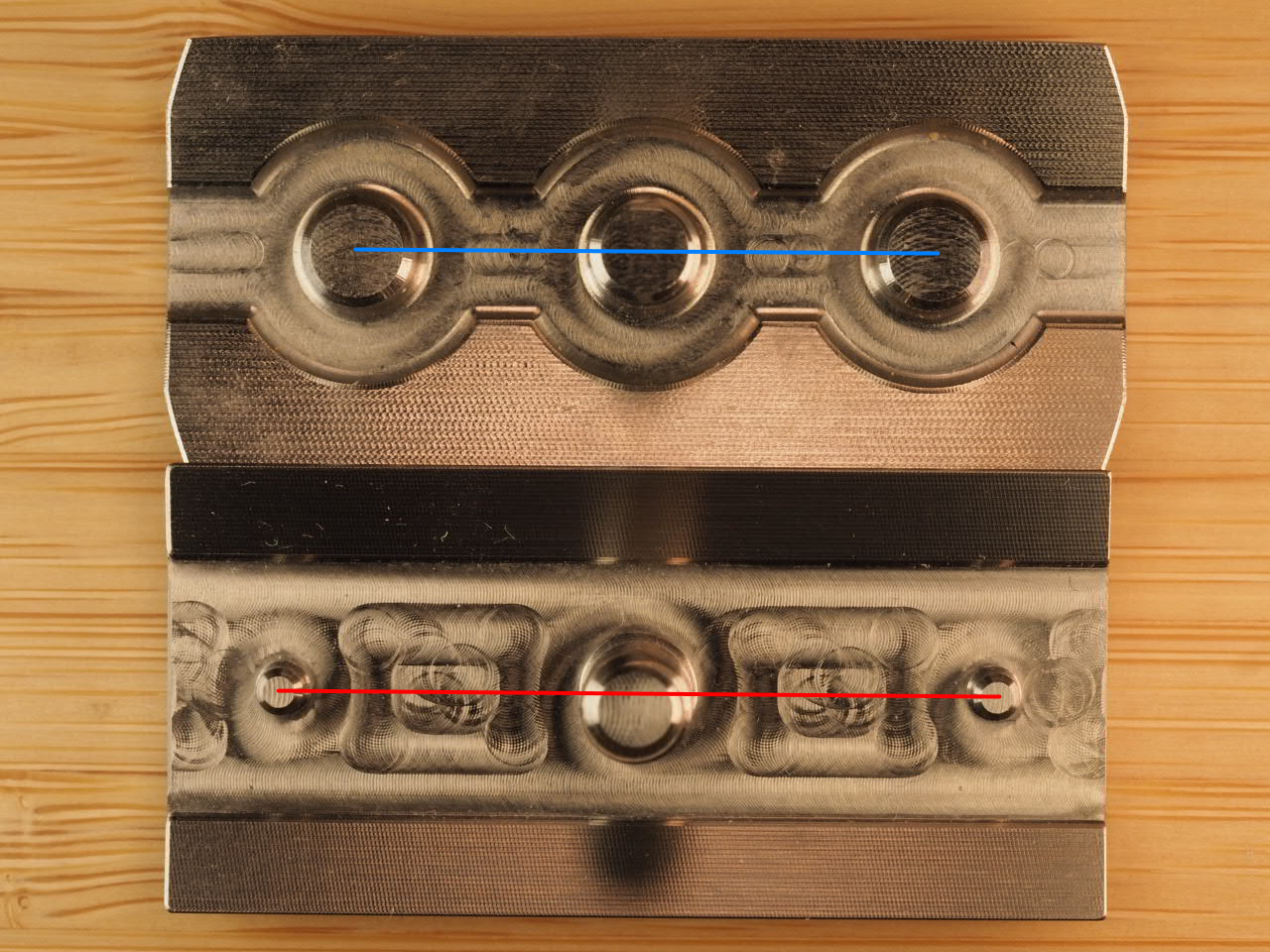
These guides are not merely an aesthetic choice; they are based on very practical reasoning. In caps with conventional cylindrical guides, the guides are located closer to the central thread. The smaller the distance between the guides and the central thread, the more pronounced any deviations in the machining are and this has a significant impact on blade alignment.
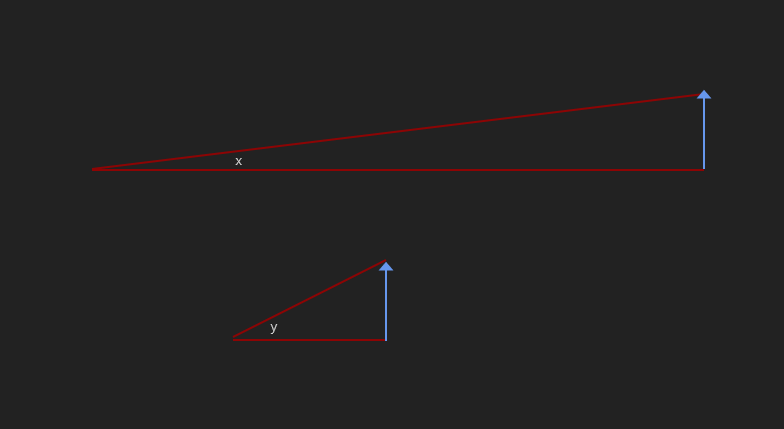
Imagine we have two points. One is the fixed point (the central thread) and the other is movable (the guide). If we keep the distance between them fixed but move the movable point slightly up (or down), the blade becomes misaligned within the head. And the distance between the fixed point and the movable point is what determines the degree of misalignment. A simpler example, perhaps because it's so extreme, is to drive a post into the ground and tie a 1-meter rope to it. At the other end of this rope, we place another post. Now we move that, still attached post half a meter along that radius. The difference between the initial and final positions is the angle of change. But imagine the rope isn't 1 meter long, but 100 meters. We move 100 meters away from the post and, by pulling the rope taut, move the second post half a meter again. The angle formed at the post is much smaller due to the length of the rope. Therefore, if we return to our caps, by moving the guides further away from the central thread, we reduce the effect that deviations in tolerances can have on the blade alignment. It’s as simple as it is brilliant,
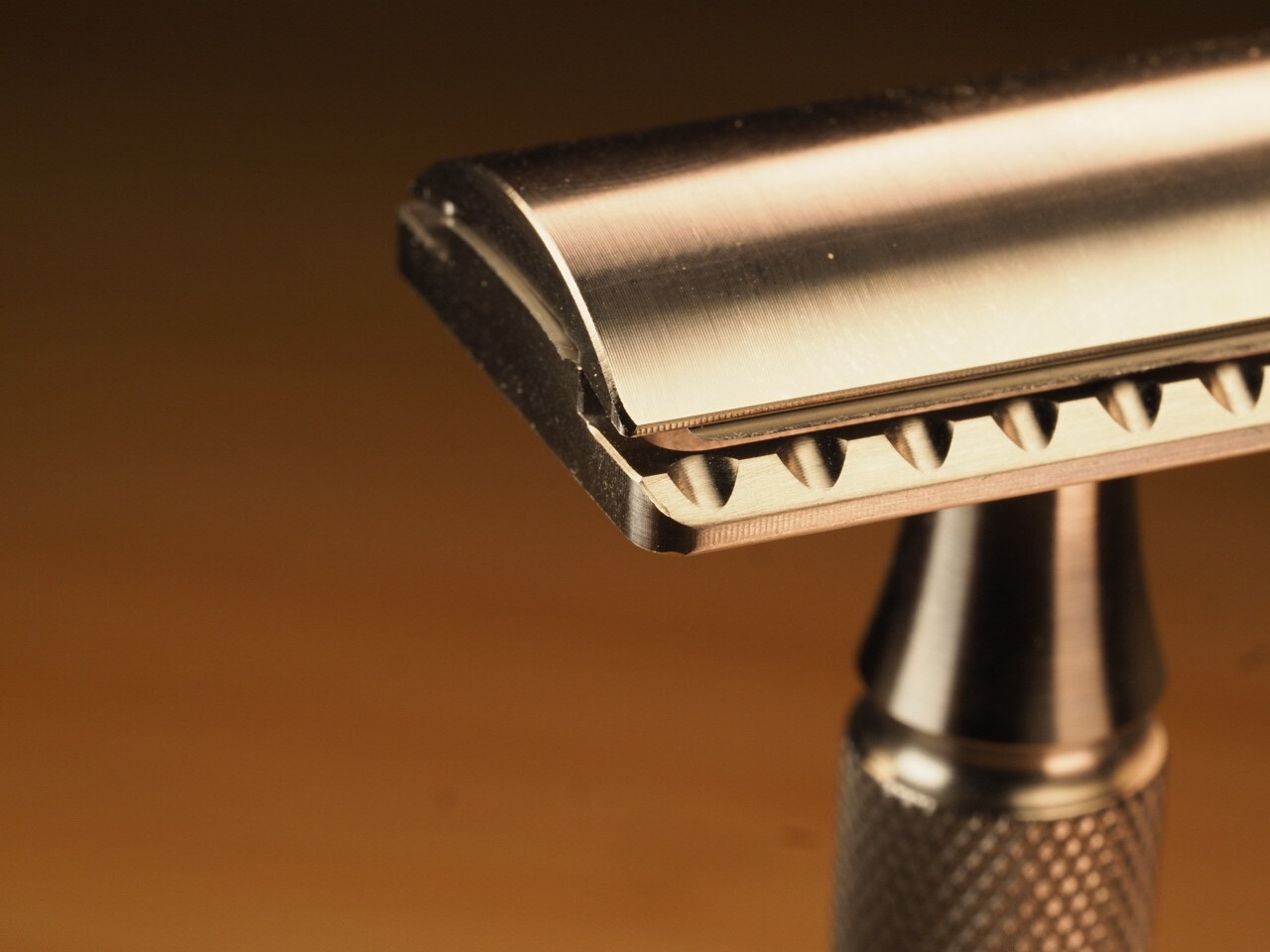
And the same goes for the finish. There are no sharp edges or surfaces that might be bothersome and everything is polished except for the central interior of the cap where the central thread and guides are located. This seems perfectly logical and reasonable to me. Otherwise, the finish is impeccable and very attractive and it's also practical because it hides fingerprints very well.
Reaching the end of this section, we’ll continue with the final part of AtT's story. When Stan started making razors, the hardest part was finding a reliable machinist who could provide the tolerances he required for his products. At the beginning of his journey, price wasn't the limiting factor. There were enough customers who wanted a razor machined from steel! This was the future of shaving. But every market gets saturated, especially when you're selling razors that are meant to last longer than two lifetimes combined. Gillette got rich manufacturing replacement blades because they knew very well that they needed repeat customers to generate continuous revenue. For manufacturers of high-quality razors with tremendous durability, that monetization model didn't work and they had to find new markets.

AtT ventured into creating aluminum razors. They manufactured the SB90, which you see in the photo, in 2018, but this is where the first doubts arose in the market. The SB90 was an expensive razor (almost $100) for being made of aluminum and AtT models always had the "Made in USA" stamp on their base plate as a mark of quality... the SB90 did not. There was speculation that this razor was manufactured in China and that AtT had abandoned its policy of producing everything in the USA. The changing market, with new manufacturers producing abroad at low costs and the growing dissatisfaction with AtT's dominant model, put this manufacturer in a precarious position.
In 2020/2021, the Windsor Pro SS was released, AtT openly mentioned that it was manufactured in China. Customers noticed a decline in the finish and to make matters worse, AtT tried to sell it as being made in China but assembled in the USA. Prices remained high and Errol from Paste and Cut, whose opinions I trust greatly, said the razor shaved very well. But the damage had already been done. In the end, I don't think it was the quality or the shaving performance that meant the end of AtT, but rather the rising costs of a reliable machinist in the USA, the lack of diversity in models, the design of the Windsor which, compared to the competition, was nothing special and the loss of confidence in a manufacturer that had always said that quality could only be found and guaranteed if it was manufactured in the USA, but then went to China. Around 2022, the first discounts on AtT products began appearing in stores and then in early 2023, AtT itself announced it was closing its doors and selling off all its stock at reduced prices. It was the beginning of the end for AtT and they closed on June 30, 2023. In 2024, Blackland announced it had acquired the rights and designs of AtT and was considering releasing AtT razors under the Blackland brand. This razor we have here today is one of the first. Above the Tie played its part in the history of shaving, but ultimately, the market brought it down.
Score: 19
Material: 4
Finish: 5
Tolerances: 5
Head/Comb Shape: 5
Grip
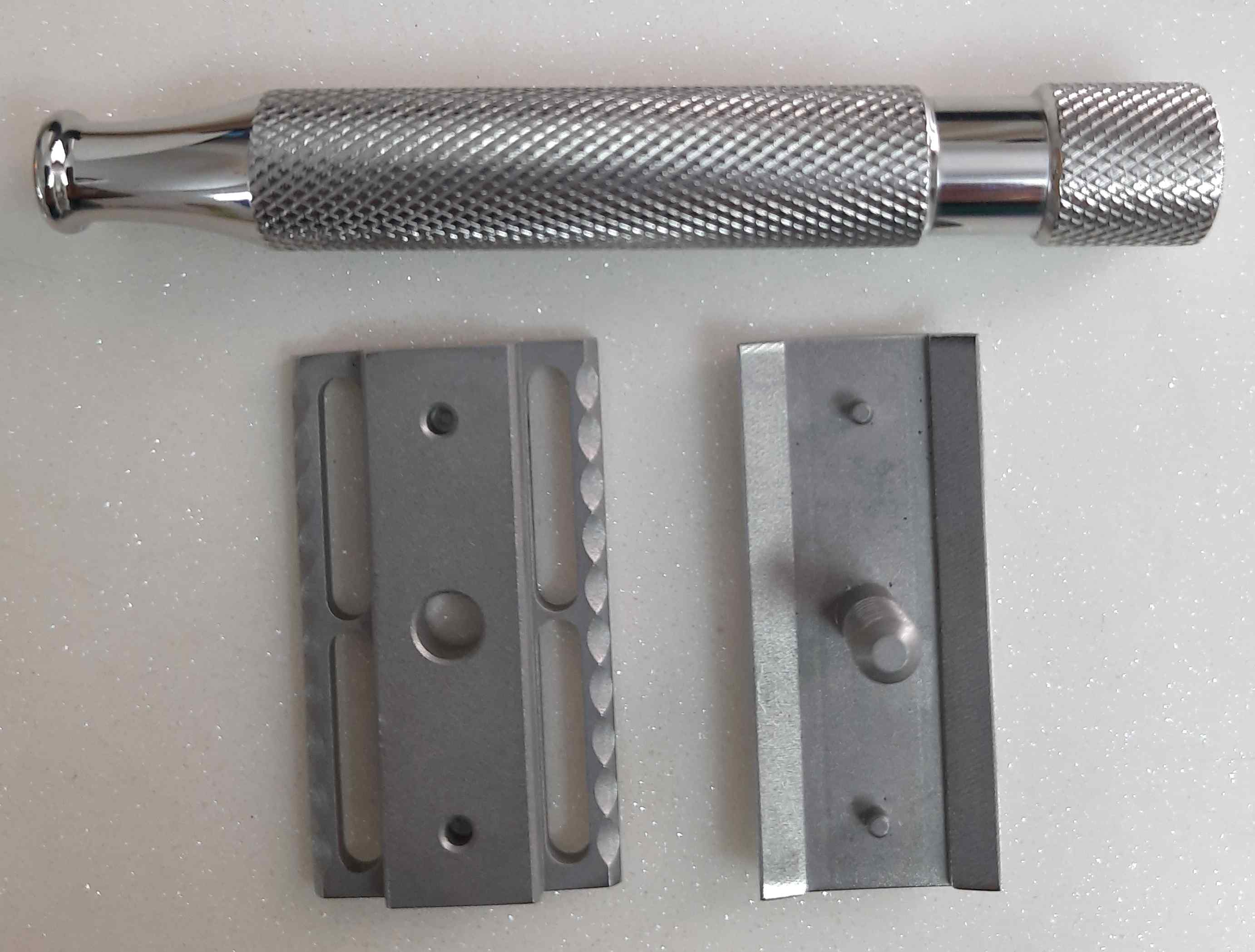
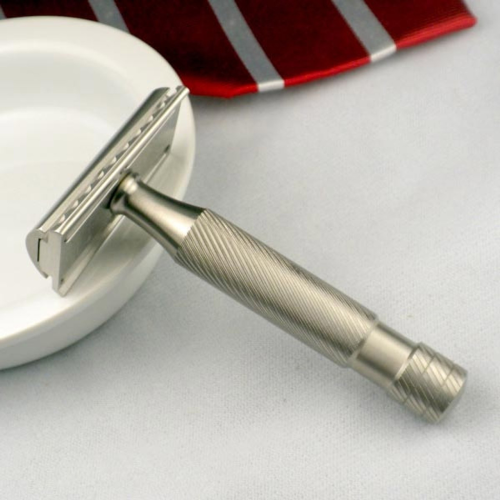
The Colossus handle that adorns this razor is also an original AtT design. In this photo, you can see the handle on one of their SE models. There are two differences compared to the modern handle. The knurling on the modern handle is somewhat gentler and less pronounced and a recessed ring has been incorporated into the neck of the handle, similar to the one found on the lower part of the handle and on the pommel.

The handle offers a very good grip. There's plenty of surface area to find a comfortable and functional grip and the knurling is subtle but very practical.
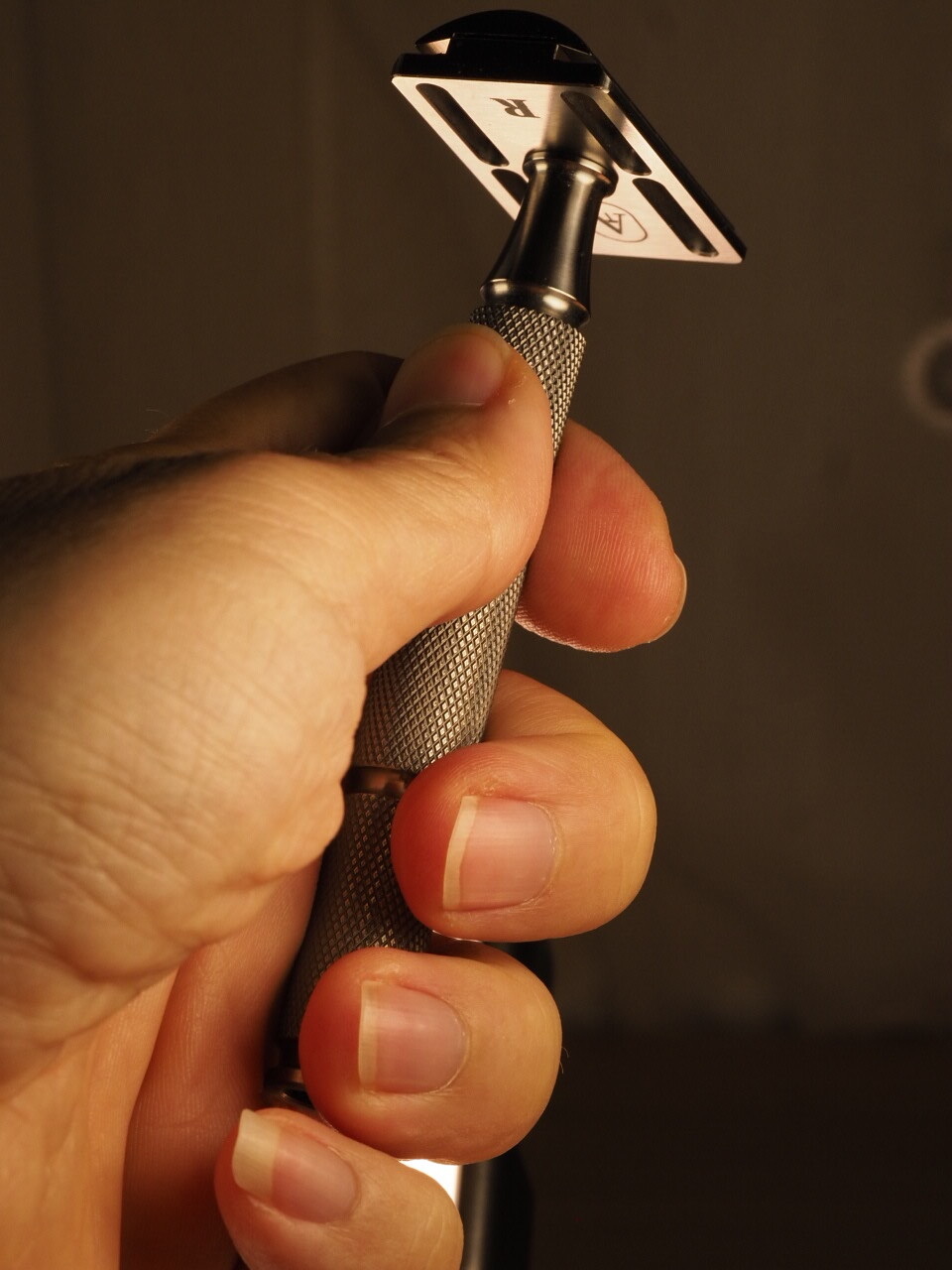
The two rings at the bottom and on the knob coincide with the buds of the middle and ring fingers, but we can also rest the handle on the little finger if we wish.
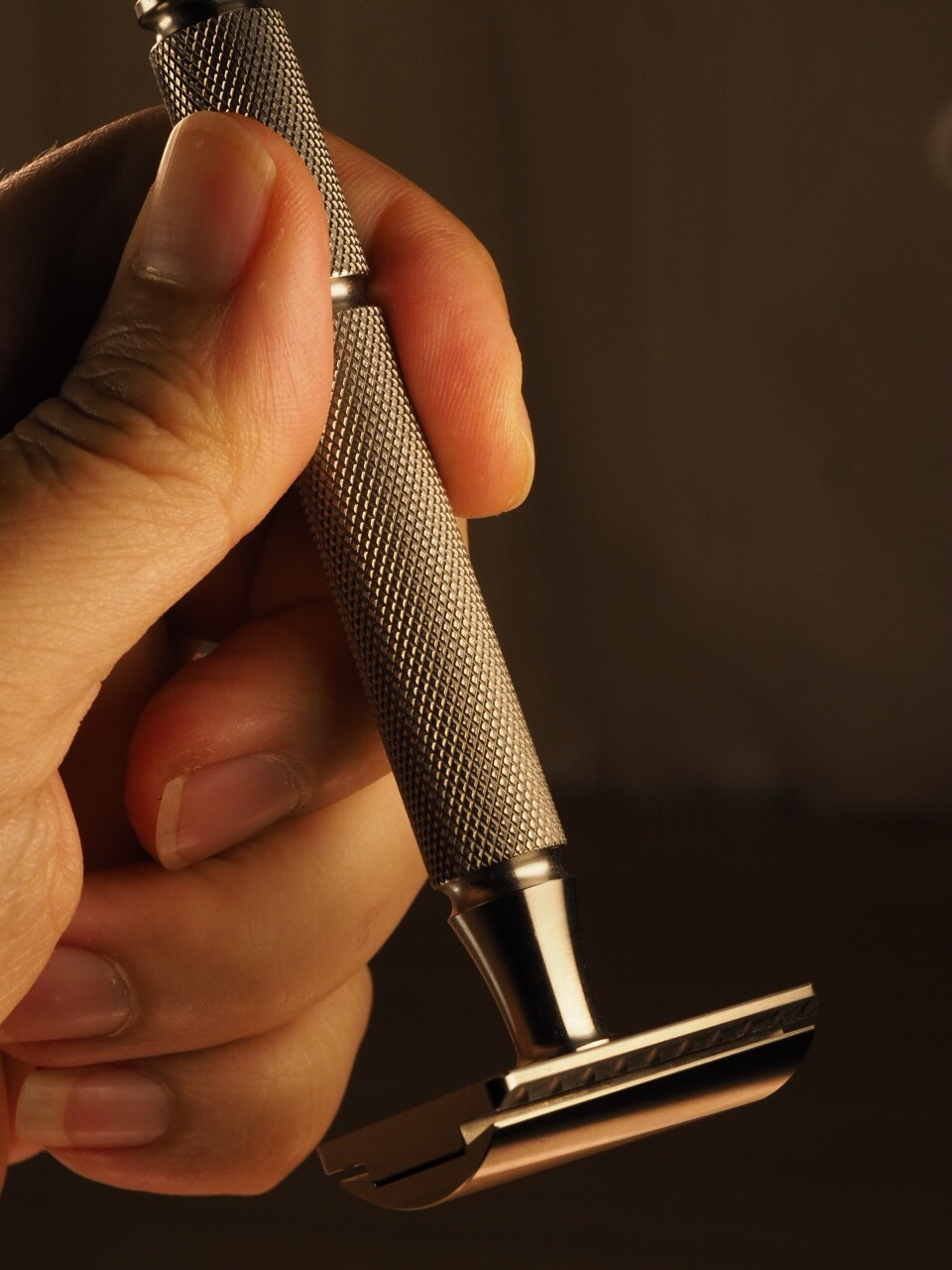

In the reverse grip we can use the lower ring for the thumb and in the horizontal grip perhaps the head is a little far from the fingers but it isn’t uncomfortable.
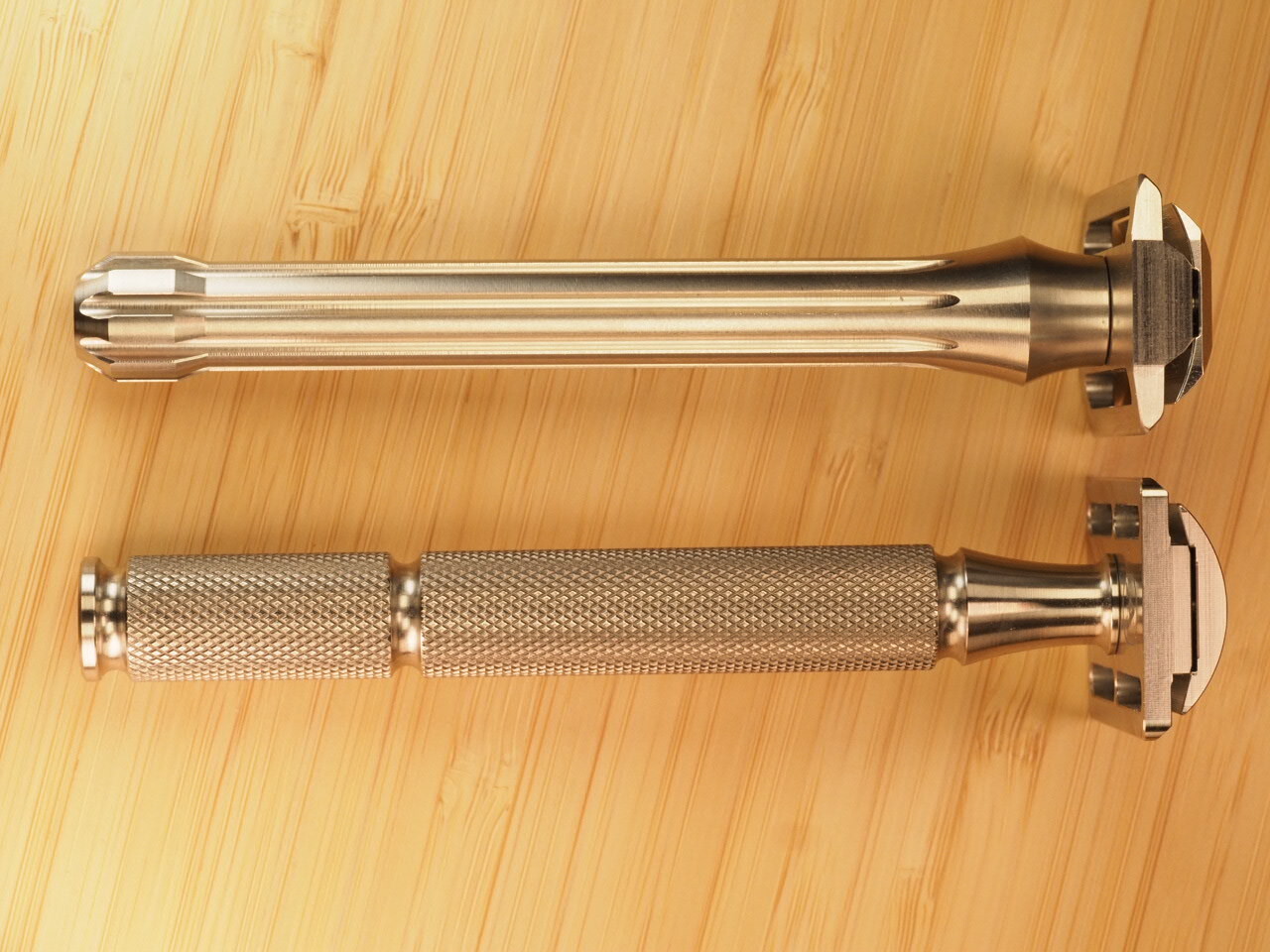
All these elements offer excellent comfort and control over the razor. It's very easy to find a comfortable and pleasant grip on this handle. The handle is long and if we look at Blackland's references, it's almost identical in length to the long handle of the Blackbird. This is a detail worth noting because the Colossus has the same dimensions as the original Colossus. Perhaps the Blackbird copied it.
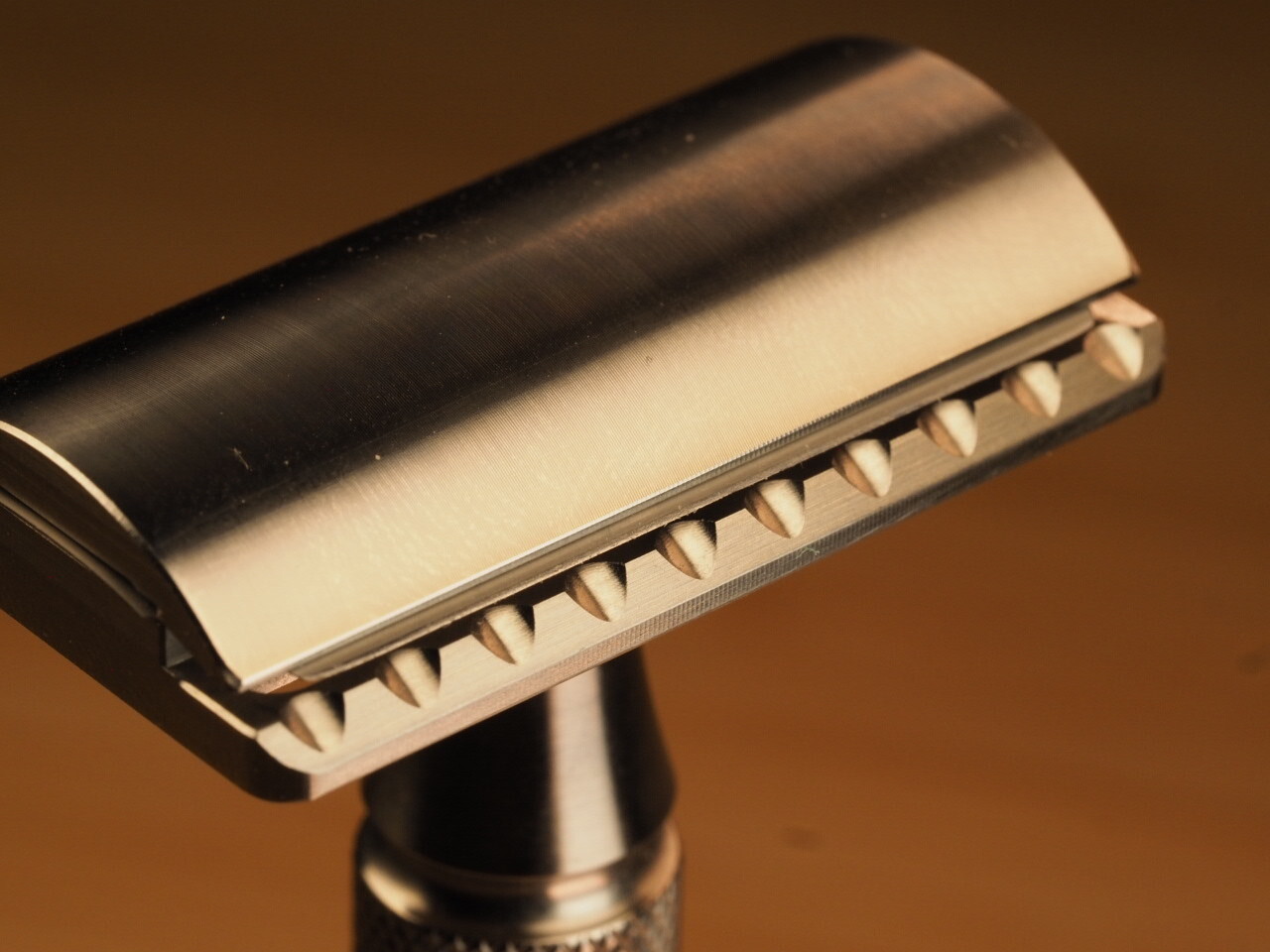
The glide of the head is also excellent. The cap has the texture of machined titanium but is polished to a shine. This surface requires very little lubrication to function properly. Furthermore, the comb, with its wide grooves, allows sufficient lubrication to reach the well-defined shaving surface for a comfortable and precise cut.
Score: 20
Dry/Wet: 5
Comfort: 5
Control: 5
Head glide: 5
Handling
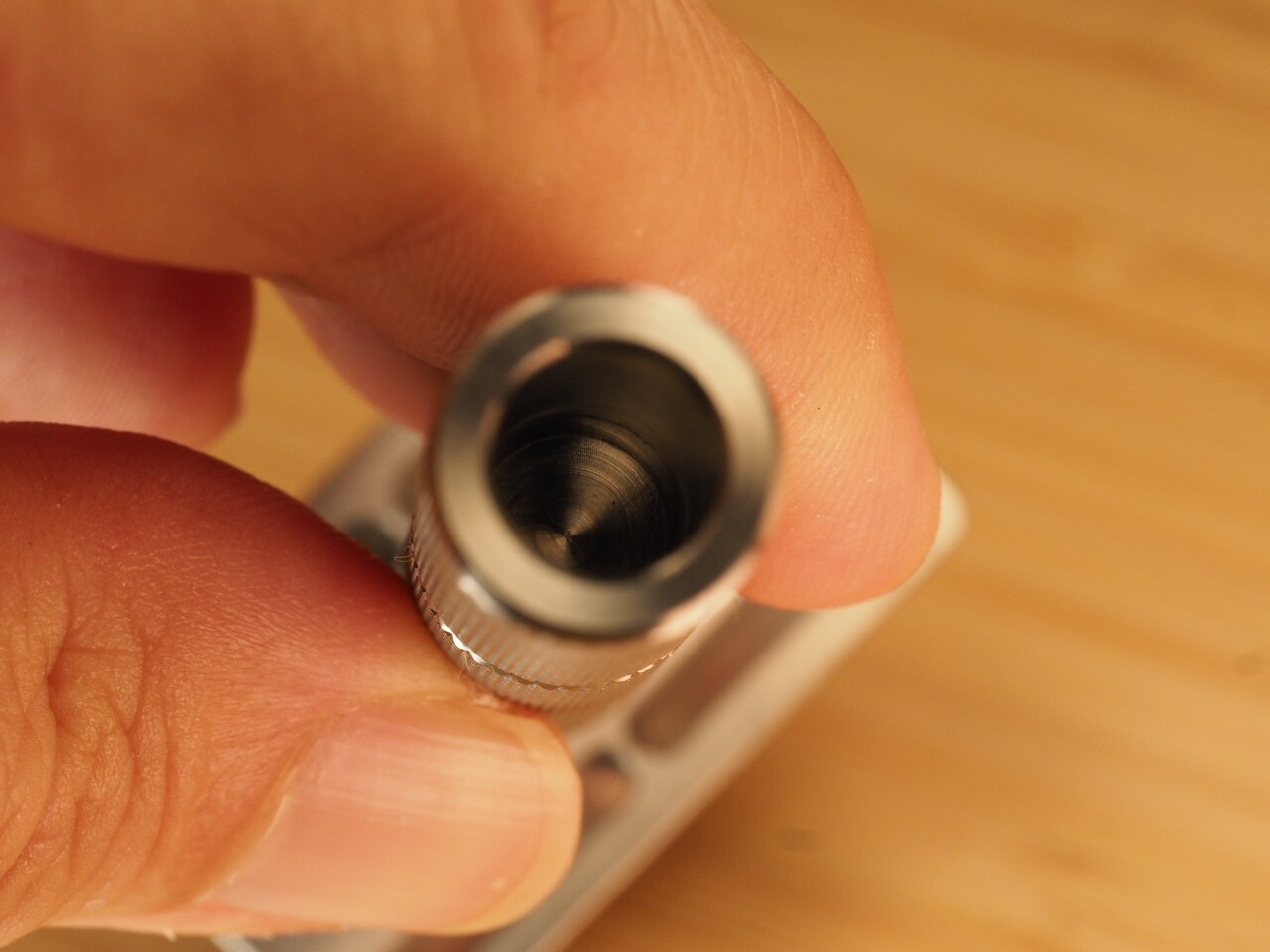
The handle is long and to cover that length, material is needed. This could cause an imbalance between the weight of the head and the handle. But the guys at Blackland have used a trick to restore that perfect balance to the whole: they've made a hollow part.

From the base to the ring, the handle is hollow. This 34mm of air delivers perfect balance to the razor. The balance point is exactly at the intuitive grip point and the handle's length ensures the razor's weight is evenly distributed across your fingers.

I've always preferred long handles and I can list several reasons why. But I have to admit that with this razor, I've noticed that the combination of the material, the construction (the hollow core) and the length together has a huge effect on how the razor feels in my hand. This further reinforces my preference for long handles!
At 62 grams, the razor is perfectly lightweight. This, combined with the good grip and well-calibrated balance, results in a tool that not only feels light in the hand but also precise. An aluminum razor weighing 30 grams, for example, can feel imprecise because you don't quite have a feel for where it's going. That doesn't happen with this razor, even though it's still lightweight. The balance and the fact that you have a large portion of the razor in your hand (the handle creates many points of contact) always gives you that sense of control and makes you feel confident in what it's doing on your skin.
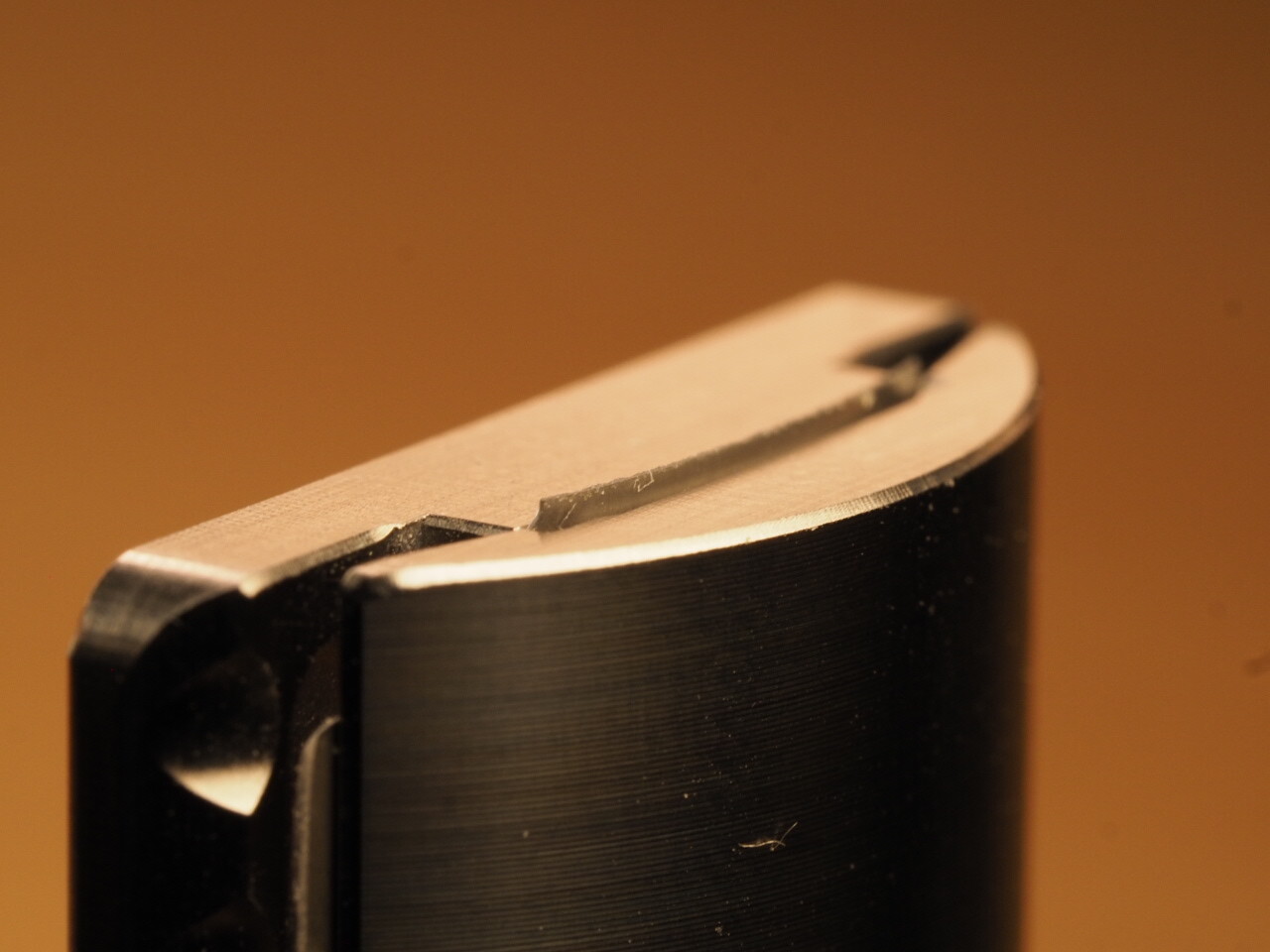
A three-piece razor that almost completely covers the blade. It only leaves a tenth of a millimeter exposed. I can see some logic to it. One reason is that by covering most of the blade, it protects your skin. Another is that by leaving that tenth exposed, you always have a better grip on the blade when changing it. And the third reason that comes to mind is that in the patent description of his razor, Stan mentions that the blade protrudes. Perhaps by leaving that tenth exposed, Shane from Blackland has killed three birds with one stone.

What Blackland does recommend is screwing down the razor very tightly when loading it. This design needs that internal force to ensure the blade is at the designed cutting angle. And it makes a difference. If you screw down the handle firmly and run your fingertip over the shaving surface, you'll notice it has neutral exposure.

If you unscrew it 1/8 of the way (just a little) and run your fingertip over it, you'll notice slightly higher exposure. This is because the blade's edge is quite far from the end of the cap and the only support the blade has to hold it in place is the cap. For the cap to push the blade down properly and bend it into submission, it needs to be tightened securely. Cleaning the razor is a breeze. The finish is a big help because it doesn't get dirty and if it does, it's easy to clean. But there's another, even more practical feature. The hardest part of cleaning a razor is always the area with the most obstacles and in most cases, that's the inside of the cap with its central thread and two guides. Well, the inside of this cap has a central thread but hardly any guides. It's the easiest inside of a cap to clean. It rinses well, collects lather effectively and the long handle prevents soap residue from getting all over your hand. It just works.
Score: 19
Balance: 5
Weight: 5
Model/Security: 4
Cleaning: 5
Shaving
This razor can be fitted with three different plates: M, R and H, in order of increasing efficiency. This razor comes with the R plate and with that plate, it's practically an auto-pilot razor, making it easy to use effortlessly every day. Due to traveling I had to do, I was able to use it for two weeks straight instead of the normal one week and each day shaving was easy, comfortable, practical and extremely enjoyable. Did it give me the closest shave in the world? No, not quite, but it didn't cut or irritate my skin either. On my face, it gave me a remarkably close shave and outstanding smoothness and comfort. I think the H plate would be a more suitable option for my personal preferences.
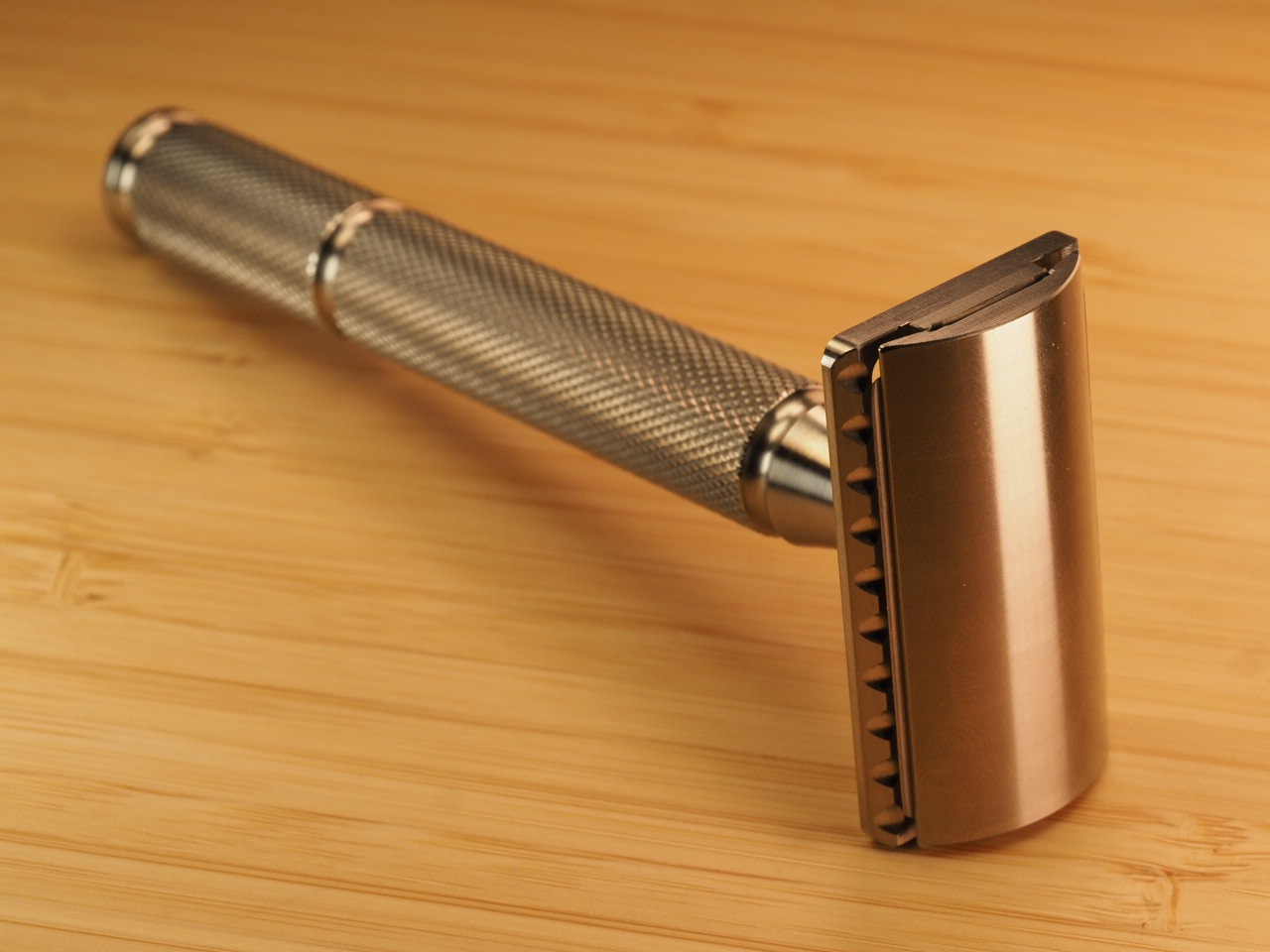
The control you have over the razor head is excellent. There's no area you can't shave cleanly. This head has the advantage of a cap that offers multiple cutting angles. The bar is also very helpful thanks to its clearly defined shaving plane. It protects the skin very well, allowing you to shave a little closer (if needed) in those hard-to-reach areas. I've noticed that this razor works better for me with sharp blades (I've used the BIC a lot). This probably also has to do with the fact that the geometry is a bit less efficient for me. With a sharp blade, the razor glides beautifully and the shave holds from morning till night. But things change with less sharp blades. And it's not that the razor becomes vampiric, not at all. You notice it because the blade doesn't glide as smoothly. I've noticed it using the Derby (of course) but also with a Lord and a Shark, blades that are more forgiving because they have a less sharp edge. Given the safety this geometry offers, I would always recommend using a sharper blade.
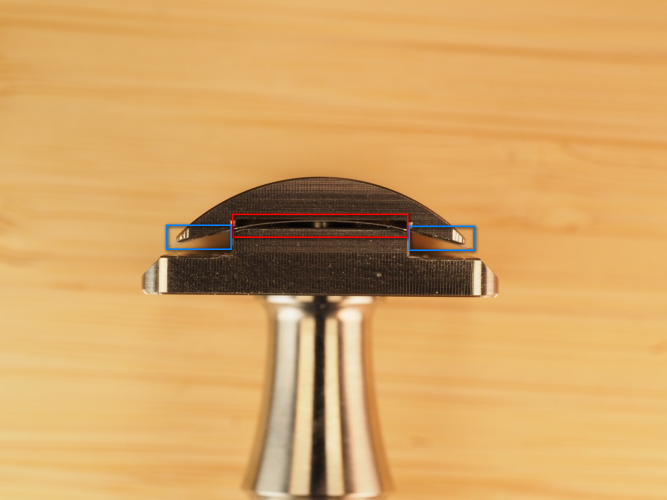
Razors with a blade clamping system further from the edge of the cap will always allow for more vibration of the blade. There's simply more "loose" blade that isn't between the clamping points. With this razor, you'll notice this when you load a blade, tighten it and try to move the edge downwards. It moves very easily. However, what this razor does very well is cover the blade. It only leaves 1 mm visible, which helps keep the blade in place better.
In summary, there are two things to keep in mind. A razor that allows more freedom of movement for a sharp blade will work well, but if it gives that same freedom to a less sharp blade, it might be noticeable. That less sharp blade might need a head with clamping closer to the edge to provide the rigidity that it needs to improve the cut. A less clamped blade doesn't always perform worse and a less sharp blade doesn't always cut worse. Shaving is always a combination of elements that can enhance or undermine each other.
As I mentioned, I've been using this razor for two weeks straight and it's never given me any trouble. In that sense, it's rather forgiving; it doesn't want to see blood or make you pay for using it. It's lenient, but it does give you feedback on what it's doing. The M plate might be useful for people who want even more leniency, but it might lose some efficiency and you always have to be careful with that. Less efficiency can mean you're applying more pressure while shaving to get a good result and that usually leads to irritation and cuts. Especially if you have sensitive skin, which could’ve been the reason for choosing a Mild plate in the first place.
Shaving: 17
Efficiency: 4
Head control: 5
Derby/blade test influences: 3
Indulgent: 5
Quality/Price

The handle of this Windsor Ti is fantastic. Its length, the rings that are perfectly positioned both aesthetically and for a comfortable grip and the beautiful and practical knurling are all excellent. I love the detail of the comb's recesses; I think they look great. The logo on the underside of the plate also looks very nice. This razor is extremely beautiful but not ostentatious.

That said, I believe this simplicity of lines and design is what captivated so many users when this model came out back in 2012. After that, I think people started seeing more ornate models like the Timeless, the Blackbird and the Yates. That might have overshadowed the Windsor a bit. But now, almost 14 years and many highly decorated (and some incredibly ugly) razors later, we're back to the basics that always work. Simple lines work; for me, the Windsor Ti is beautiful in all its modesty. Is it worth having a razor like this in your collection? Absolutely. It's an iconic razor with a great design, impeccable craftsmanship and a very affordable price. Original AtT razors still command high prices. Not only because they were expensive back in the day, but because they continue to offer excellent shaves. They also contain features that weren't seen before. The round holes that form the rinsing channels, for example, still attract attention. I believe an open channel is better for rinsing, but the price of an object isn't always determined by its practicality. In fact, the more practical an object is, the lower its price tends to be. To illustrate... how practical is a Picasso? Point proven.
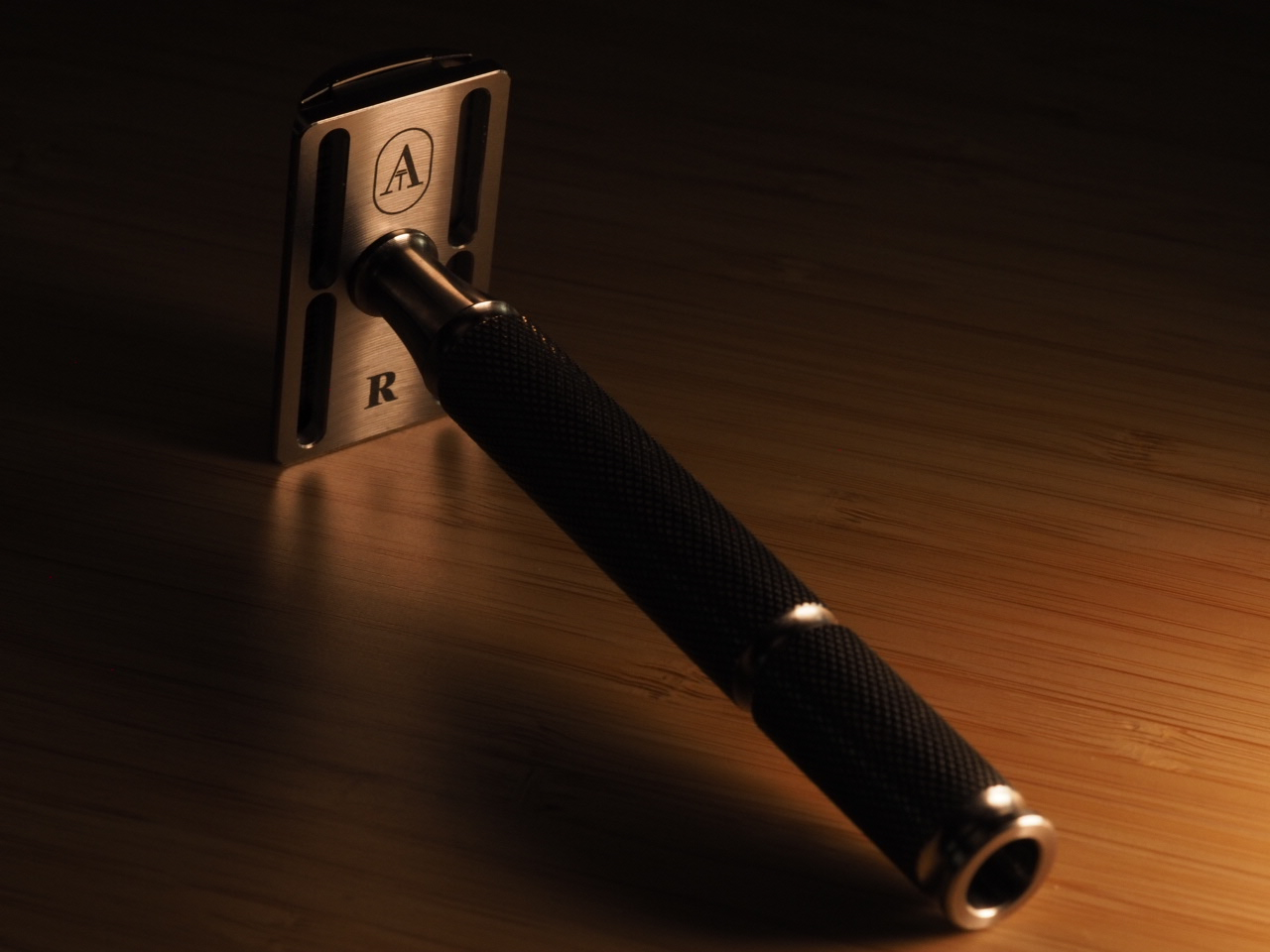
This razor is now a more mainstream product and I think that's why the prices can be lower and won't rise too much. Even so, I don't think the razor will lose value. It won't gain value by being extravagant, but it also won't lose value because it works very well. Could I live with this razor for the rest of my life? The answer is a resounding yes. I've used it continuously for two weeks and for me, that's an eternity. But the travel situation, the need for simple shaves and the lack of time or peace to complete the whole routine meant I didn't need a temperamental razor. This AtT Windsor Ti performed with elegant efficiency and never complained.
Score: 19
Aesthetics: 5
Reward: 5
Value in 25: 4
Single razor: 5
Conclusion
I think Blackland has made an extraordinary product with this Windsor Ti. It's a very elegant razor, relatively inexpensive, using a tried-and-tested iconic design and made in-house. Remember that Stan's biggest problem was always finding someone to machine his razors. Shane doesn't have that problem because he makes them himself. That's a huge advantage on many fronts.

The story of Above the Tie demonstrates that a product can succeed simply by being good. A product succeeds by fulfilling a need, or by creating one first and then fulfilling it. As soon as the need changes, the product must adapt or it will disappear. This is what happened with Above the Tie...until Blackland revived the brand.
And the result is spectacular, I think. Fashions are cyclical and I always recommend keeping clothes that were once fashionable because that fashion will return. Well, my new recommendation is this: take good care of your iconic razors because they will most likely be popular again. And this Windsor Ti is proof of that.
Final score: 94 points
Introduction
The Above the Tie brand was created in 2011 by Stan Hickam. To be more precise, the name was created by his son-in-law, Matt, but Stan had already conceived the business idea. Stan worked as a radiologist at a medical center and he and his wife, Lennea, have a daughter named Mariah. When Mariah moved out, Stan began searching for vintage Gillette razors to fully restore and resell on eBay.
This continued for a while, but soon after, with his Above the Tie (AtT) brand already up and running, Stan also began offering brushes, soaps and other razors than Gillettes with rhodium plating. He wanted to offer high-quality tools to a broad audience. The next logical step was to design and produce his own razor and thus the Atlas was born.
The design of AtT razors hasn't changed much throughout their history. They always use the basic design that we'll break down in more detail later. Today we have the honor of reviewing a razor that @J349 has lent me, the Windsor Ti with an R plate. Thank you very much buddy!
This razor is an AtT razor but made by our friends at Blackland. In 2023, they bought the brand and began refining the designs and manufacturing AtT razors. This Windsor and the S1 Slant are the two razors they've released so far and they're based on the original 2012 razor designs. The name "Windsor" came into use later, around 2017, but Blackland combined these two elements. How did AtT get to this point? We'll explore that during this razor review. Let's go!
Construction
The AtT Windsor Ti is a three-piece DE razor made of Grade 5 titanium (Ti-6Al-4Va) and CNC machined. This titanium alloy contains 6% aluminum and 4% vanadium. AtT initially manufactured its razors using 303 stainless steel. Stan, who had a degree in business administration, explained that he used the 303 steel because it was easier to machine and in a razor, no one would notice the difference compared to 316 steel. The latter, while more resistant to everything, is also more resistant to machining and therefore more expensive to produce or has less of a profit margin. Depends on your perspective I suppose. AtT was one of the first brands to use machined stainless steel for its razor parts. At that time (2010-), it wasn't common to find razors made of steel. Modern manufacturing methods were increasingly offering the possibility of using more "exotic" materials for products. These materials had superior characteristics compared to those used previously, but also a higher cost.
That's why AtT positioned itself in the market as a "premium" brand, offering functional design, high-quality materials and cutting-edge manufacturing and finishing. Furthermore, they manufactured everything in the USA to maintain a high level of quality. At the time, this description perfectly matched what the company offered and they began to achieve success with this model.
They gradually expanded their catalog without straying from the original design. They added different baseplates to offer varying levels of efficiency, introduced more handles and even combined their entire catalog into a complete package that included two caps, two different handles, three baseplates and a stand for $399. At the time, this was an enormous amount for a set like this, but there weren't many alternatives offering the same features.
Continuing down this path, they also introduced an SE razor and the S1 Slant, the brand's most iconic model. Until then, slant razors had always been made with contorted base plates. The S1 Slant's base plate didn't follow that design. This plate was flat but had the attachment surfaces and combs angled to accommodate the blade at an angle that corresponds to the slant philosophy. We’ll continue the AtT story later.
Material: Titanium Gr5
Finish: Polished
Handle length: 102 mm (Colossus)
Handle diameter: 12.5 mm
Total length of the razor: 110 mm
Total weight: 62 gr
Head weight: 22.4 gr
Cap height: 4.7 mm
Gap: 0,58 mm
Exposure: neutral
The first thing we notice when we look at the top of the cap is a very uniform finish with a bright polish. It's not a mirror polish, although AtT does offer that option. Because it's titanium, a mirror polish is about 30% more expensive. This polish is very well done and should provide a good glide.
The cap is 4.7 millimeters high and has a gentle outer curve. This allows for different cutting angles. The inner profile of the cap is not as curved as the outer part, which keeps the blade in a more horizontal position than a cap that bends the blade more downwards, such as the Henson AL13. With the latter, the end of the cap creates the cutting angle, leaving little room to adjust the cutting angles on the outer surface. The Windsor offers a more direct angle but provides more freedom in using the top surface of the cap to modify that angle.
Inside the cap, we see one of this brand's iconic design elements: its guides. Stan has patented their design (US20150352737A1) and specifically named these guides. He has documented that they can be placed on the cap but also inside the base plate. Better safe than sorry, as they say. These guides have always been used in their DE razors and this model is no exception.
Prominently in sight is the central part, where the raw, unpolished machining and the central thread with its square threads are visible. This shape provides greater rigidity to the joint and a more robust screwing action. Both the central thread and the guides have beveled tops to facilitate insertion into their respective holes and for aesthetic reasons. The beveled edges of the guides are also a welcome feature when cleaning the inside of the cap.
We can see a difference in polishing between the center section and the clamping surfaces. The manufacturer mentions that they have been lightly polished to improve adhesion without altering the desired tolerances. Aside from that, they have a beautiful appearance that provides a striking contrast to the machined center.
When we examine the inside of the base plate, we see more of the same. Beveled edges, polished surfaces and a clean, functional design. There are no superfluous elements, nor are there any missing components. In the central part, we see the hole for the central thread (beveled) and the holes for the guides (also beveled).
All the edges are also beveled or polished so they don't cause discomfort, but never losing definition.
Continuing with the bar, we see that it rests on three supports, creating two rinsing channels. The front of the bar has grooves and here we see one of the modifications Blackland has introduced. If we look at the shape of the bar's grooves, we can see that they are oval with a downward point. This shape reminded me of something I'd seen before
I didn't have to look far; I have the Blackbird on permanent display. We can see that the Blackbird's grooves were a clear inspiration for the Windsor Ti's. The Windsor also had oval grooves, but not with the points facing downwards; instead, they faced outwards.
For comparison, I've included a photo of a Windsor Pro made in 2021 when AtT was still independent. This photo has a very interesting element that isn't immediately apparent, but I'll discuss it after I've finished reviewing the construction.
The underside of the base plate displays the logo and the base plate's efficiency rating. In this case, we see an "R" indicating a Regular base plate. There are also M (Mild) and H (Heavy) base plates. Previously, AtT added the number 1 or 2 to indicate whether the base plate had a closed or open comb respectively. Newer base plates do not yet feature open combs.
Another unusual feature is that the edges of the underside are also beveled, including the edges of the rinsing channels. This has no practical use because these parts should never come into contact with the skin, but it does add significant value to the finish.
And speaking of the finish, I'll combine it with the tolerances. Both elements are at a very high level. The guides not only fit perfectly in their holes but also hold the blade securely. There's a 0.02 mm gap between the blade and the guides to allow for proper blade placement. The threading action inspires confidence and the fit is precise. But there's something else I want to highlight.
These guides are not merely an aesthetic choice; they are based on very practical reasoning. In caps with conventional cylindrical guides, the guides are located closer to the central thread. The smaller the distance between the guides and the central thread, the more pronounced any deviations in the machining are and this has a significant impact on blade alignment.
Imagine we have two points. One is the fixed point (the central thread) and the other is movable (the guide). If we keep the distance between them fixed but move the movable point slightly up (or down), the blade becomes misaligned within the head. And the distance between the fixed point and the movable point is what determines the degree of misalignment. A simpler example, perhaps because it's so extreme, is to drive a post into the ground and tie a 1-meter rope to it. At the other end of this rope, we place another post. Now we move that, still attached post half a meter along that radius. The difference between the initial and final positions is the angle of change. But imagine the rope isn't 1 meter long, but 100 meters. We move 100 meters away from the post and, by pulling the rope taut, move the second post half a meter again. The angle formed at the post is much smaller due to the length of the rope. Therefore, if we return to our caps, by moving the guides further away from the central thread, we reduce the effect that deviations in tolerances can have on the blade alignment. It’s as simple as it is brilliant,
And the same goes for the finish. There are no sharp edges or surfaces that might be bothersome and everything is polished except for the central interior of the cap where the central thread and guides are located. This seems perfectly logical and reasonable to me. Otherwise, the finish is impeccable and very attractive and it's also practical because it hides fingerprints very well.
Reaching the end of this section, we’ll continue with the final part of AtT's story. When Stan started making razors, the hardest part was finding a reliable machinist who could provide the tolerances he required for his products. At the beginning of his journey, price wasn't the limiting factor. There were enough customers who wanted a razor machined from steel! This was the future of shaving. But every market gets saturated, especially when you're selling razors that are meant to last longer than two lifetimes combined. Gillette got rich manufacturing replacement blades because they knew very well that they needed repeat customers to generate continuous revenue. For manufacturers of high-quality razors with tremendous durability, that monetization model didn't work and they had to find new markets.
AtT ventured into creating aluminum razors. They manufactured the SB90, which you see in the photo, in 2018, but this is where the first doubts arose in the market. The SB90 was an expensive razor (almost $100) for being made of aluminum and AtT models always had the "Made in USA" stamp on their base plate as a mark of quality... the SB90 did not. There was speculation that this razor was manufactured in China and that AtT had abandoned its policy of producing everything in the USA. The changing market, with new manufacturers producing abroad at low costs and the growing dissatisfaction with AtT's dominant model, put this manufacturer in a precarious position.
In 2020/2021, the Windsor Pro SS was released, AtT openly mentioned that it was manufactured in China. Customers noticed a decline in the finish and to make matters worse, AtT tried to sell it as being made in China but assembled in the USA. Prices remained high and Errol from Paste and Cut, whose opinions I trust greatly, said the razor shaved very well. But the damage had already been done. In the end, I don't think it was the quality or the shaving performance that meant the end of AtT, but rather the rising costs of a reliable machinist in the USA, the lack of diversity in models, the design of the Windsor which, compared to the competition, was nothing special and the loss of confidence in a manufacturer that had always said that quality could only be found and guaranteed if it was manufactured in the USA, but then went to China. Around 2022, the first discounts on AtT products began appearing in stores and then in early 2023, AtT itself announced it was closing its doors and selling off all its stock at reduced prices. It was the beginning of the end for AtT and they closed on June 30, 2023. In 2024, Blackland announced it had acquired the rights and designs of AtT and was considering releasing AtT razors under the Blackland brand. This razor we have here today is one of the first. Above the Tie played its part in the history of shaving, but ultimately, the market brought it down.
Score: 19
Material: 4
Finish: 5
Tolerances: 5
Head/Comb Shape: 5
Grip
The Colossus handle that adorns this razor is also an original AtT design. In this photo, you can see the handle on one of their SE models. There are two differences compared to the modern handle. The knurling on the modern handle is somewhat gentler and less pronounced and a recessed ring has been incorporated into the neck of the handle, similar to the one found on the lower part of the handle and on the pommel.
The handle offers a very good grip. There's plenty of surface area to find a comfortable and functional grip and the knurling is subtle but very practical.
The two rings at the bottom and on the knob coincide with the buds of the middle and ring fingers, but we can also rest the handle on the little finger if we wish.
In the reverse grip we can use the lower ring for the thumb and in the horizontal grip perhaps the head is a little far from the fingers but it isn’t uncomfortable.
All these elements offer excellent comfort and control over the razor. It's very easy to find a comfortable and pleasant grip on this handle. The handle is long and if we look at Blackland's references, it's almost identical in length to the long handle of the Blackbird. This is a detail worth noting because the Colossus has the same dimensions as the original Colossus. Perhaps the Blackbird copied it.
The glide of the head is also excellent. The cap has the texture of machined titanium but is polished to a shine. This surface requires very little lubrication to function properly. Furthermore, the comb, with its wide grooves, allows sufficient lubrication to reach the well-defined shaving surface for a comfortable and precise cut.
Score: 20
Dry/Wet: 5
Comfort: 5
Control: 5
Head glide: 5
Handling
The handle is long and to cover that length, material is needed. This could cause an imbalance between the weight of the head and the handle. But the guys at Blackland have used a trick to restore that perfect balance to the whole: they've made a hollow part.
From the base to the ring, the handle is hollow. This 34mm of air delivers perfect balance to the razor. The balance point is exactly at the intuitive grip point and the handle's length ensures the razor's weight is evenly distributed across your fingers.
I've always preferred long handles and I can list several reasons why. But I have to admit that with this razor, I've noticed that the combination of the material, the construction (the hollow core) and the length together has a huge effect on how the razor feels in my hand. This further reinforces my preference for long handles!
At 62 grams, the razor is perfectly lightweight. This, combined with the good grip and well-calibrated balance, results in a tool that not only feels light in the hand but also precise. An aluminum razor weighing 30 grams, for example, can feel imprecise because you don't quite have a feel for where it's going. That doesn't happen with this razor, even though it's still lightweight. The balance and the fact that you have a large portion of the razor in your hand (the handle creates many points of contact) always gives you that sense of control and makes you feel confident in what it's doing on your skin.
A three-piece razor that almost completely covers the blade. It only leaves a tenth of a millimeter exposed. I can see some logic to it. One reason is that by covering most of the blade, it protects your skin. Another is that by leaving that tenth exposed, you always have a better grip on the blade when changing it. And the third reason that comes to mind is that in the patent description of his razor, Stan mentions that the blade protrudes. Perhaps by leaving that tenth exposed, Shane from Blackland has killed three birds with one stone.
What Blackland does recommend is screwing down the razor very tightly when loading it. This design needs that internal force to ensure the blade is at the designed cutting angle. And it makes a difference. If you screw down the handle firmly and run your fingertip over the shaving surface, you'll notice it has neutral exposure.
If you unscrew it 1/8 of the way (just a little) and run your fingertip over it, you'll notice slightly higher exposure. This is because the blade's edge is quite far from the end of the cap and the only support the blade has to hold it in place is the cap. For the cap to push the blade down properly and bend it into submission, it needs to be tightened securely. Cleaning the razor is a breeze. The finish is a big help because it doesn't get dirty and if it does, it's easy to clean. But there's another, even more practical feature. The hardest part of cleaning a razor is always the area with the most obstacles and in most cases, that's the inside of the cap with its central thread and two guides. Well, the inside of this cap has a central thread but hardly any guides. It's the easiest inside of a cap to clean. It rinses well, collects lather effectively and the long handle prevents soap residue from getting all over your hand. It just works.
Score: 19
Balance: 5
Weight: 5
Model/Security: 4
Cleaning: 5
Shaving
This razor can be fitted with three different plates: M, R and H, in order of increasing efficiency. This razor comes with the R plate and with that plate, it's practically an auto-pilot razor, making it easy to use effortlessly every day. Due to traveling I had to do, I was able to use it for two weeks straight instead of the normal one week and each day shaving was easy, comfortable, practical and extremely enjoyable. Did it give me the closest shave in the world? No, not quite, but it didn't cut or irritate my skin either. On my face, it gave me a remarkably close shave and outstanding smoothness and comfort. I think the H plate would be a more suitable option for my personal preferences.
The control you have over the razor head is excellent. There's no area you can't shave cleanly. This head has the advantage of a cap that offers multiple cutting angles. The bar is also very helpful thanks to its clearly defined shaving plane. It protects the skin very well, allowing you to shave a little closer (if needed) in those hard-to-reach areas. I've noticed that this razor works better for me with sharp blades (I've used the BIC a lot). This probably also has to do with the fact that the geometry is a bit less efficient for me. With a sharp blade, the razor glides beautifully and the shave holds from morning till night. But things change with less sharp blades. And it's not that the razor becomes vampiric, not at all. You notice it because the blade doesn't glide as smoothly. I've noticed it using the Derby (of course) but also with a Lord and a Shark, blades that are more forgiving because they have a less sharp edge. Given the safety this geometry offers, I would always recommend using a sharper blade.
Razors with a blade clamping system further from the edge of the cap will always allow for more vibration of the blade. There's simply more "loose" blade that isn't between the clamping points. With this razor, you'll notice this when you load a blade, tighten it and try to move the edge downwards. It moves very easily. However, what this razor does very well is cover the blade. It only leaves 1 mm visible, which helps keep the blade in place better.
In summary, there are two things to keep in mind. A razor that allows more freedom of movement for a sharp blade will work well, but if it gives that same freedom to a less sharp blade, it might be noticeable. That less sharp blade might need a head with clamping closer to the edge to provide the rigidity that it needs to improve the cut. A less clamped blade doesn't always perform worse and a less sharp blade doesn't always cut worse. Shaving is always a combination of elements that can enhance or undermine each other.
As I mentioned, I've been using this razor for two weeks straight and it's never given me any trouble. In that sense, it's rather forgiving; it doesn't want to see blood or make you pay for using it. It's lenient, but it does give you feedback on what it's doing. The M plate might be useful for people who want even more leniency, but it might lose some efficiency and you always have to be careful with that. Less efficiency can mean you're applying more pressure while shaving to get a good result and that usually leads to irritation and cuts. Especially if you have sensitive skin, which could’ve been the reason for choosing a Mild plate in the first place.
Shaving: 17
Efficiency: 4
Head control: 5
Derby/blade test influences: 3
Indulgent: 5
Quality/Price
The handle of this Windsor Ti is fantastic. Its length, the rings that are perfectly positioned both aesthetically and for a comfortable grip and the beautiful and practical knurling are all excellent. I love the detail of the comb's recesses; I think they look great. The logo on the underside of the plate also looks very nice. This razor is extremely beautiful but not ostentatious.
That said, I believe this simplicity of lines and design is what captivated so many users when this model came out back in 2012. After that, I think people started seeing more ornate models like the Timeless, the Blackbird and the Yates. That might have overshadowed the Windsor a bit. But now, almost 14 years and many highly decorated (and some incredibly ugly) razors later, we're back to the basics that always work. Simple lines work; for me, the Windsor Ti is beautiful in all its modesty. Is it worth having a razor like this in your collection? Absolutely. It's an iconic razor with a great design, impeccable craftsmanship and a very affordable price. Original AtT razors still command high prices. Not only because they were expensive back in the day, but because they continue to offer excellent shaves. They also contain features that weren't seen before. The round holes that form the rinsing channels, for example, still attract attention. I believe an open channel is better for rinsing, but the price of an object isn't always determined by its practicality. In fact, the more practical an object is, the lower its price tends to be. To illustrate... how practical is a Picasso? Point proven.
This razor is now a more mainstream product and I think that's why the prices can be lower and won't rise too much. Even so, I don't think the razor will lose value. It won't gain value by being extravagant, but it also won't lose value because it works very well. Could I live with this razor for the rest of my life? The answer is a resounding yes. I've used it continuously for two weeks and for me, that's an eternity. But the travel situation, the need for simple shaves and the lack of time or peace to complete the whole routine meant I didn't need a temperamental razor. This AtT Windsor Ti performed with elegant efficiency and never complained.
Score: 19
Aesthetics: 5
Reward: 5
Value in 25: 4
Single razor: 5
Conclusion
I think Blackland has made an extraordinary product with this Windsor Ti. It's a very elegant razor, relatively inexpensive, using a tried-and-tested iconic design and made in-house. Remember that Stan's biggest problem was always finding someone to machine his razors. Shane doesn't have that problem because he makes them himself. That's a huge advantage on many fronts.
The story of Above the Tie demonstrates that a product can succeed simply by being good. A product succeeds by fulfilling a need, or by creating one first and then fulfilling it. As soon as the need changes, the product must adapt or it will disappear. This is what happened with Above the Tie...until Blackland revived the brand.
And the result is spectacular, I think. Fashions are cyclical and I always recommend keeping clothes that were once fashionable because that fashion will return. Well, my new recommendation is this: take good care of your iconic razors because they will most likely be popular again. And this Windsor Ti is proof of that.
Final score: 94 points


 for another great razor review, I enjoy a standard review but mate the history you put into these wow. I have a scan through then sit and fully read to uptake, again thanks mate
