This review is about the Alpha Shaving Outlaw Evolution Ti
Introduction
Steve Tinter owns Alpha Shaving, based in Hong Kong. He started the business because he loved (and still loves) brushes and decided to make them himself. Gradually, he also ventured into designing and manufacturing razors. And not without success. His name is associated with razors like the original Outlaw, the Spirit AC, the Claymore Evo AC, the Eclipse and several custom models he produced for different groups of enthusiasts. Examples include the Cape Cod, the Shave Dad, the Lone Star, the UKWSS and the Gloria. These razors use the same base but are completely different from one another.

Today we're focusing on a razor that uses the design that has most influenced Steve as a razor maker: the Alpha Shaving Outlaw Evo Ti. This razor shares the same basic design as the steel Outlaw Evo SS, which is based on the original design of the first Outlaw.
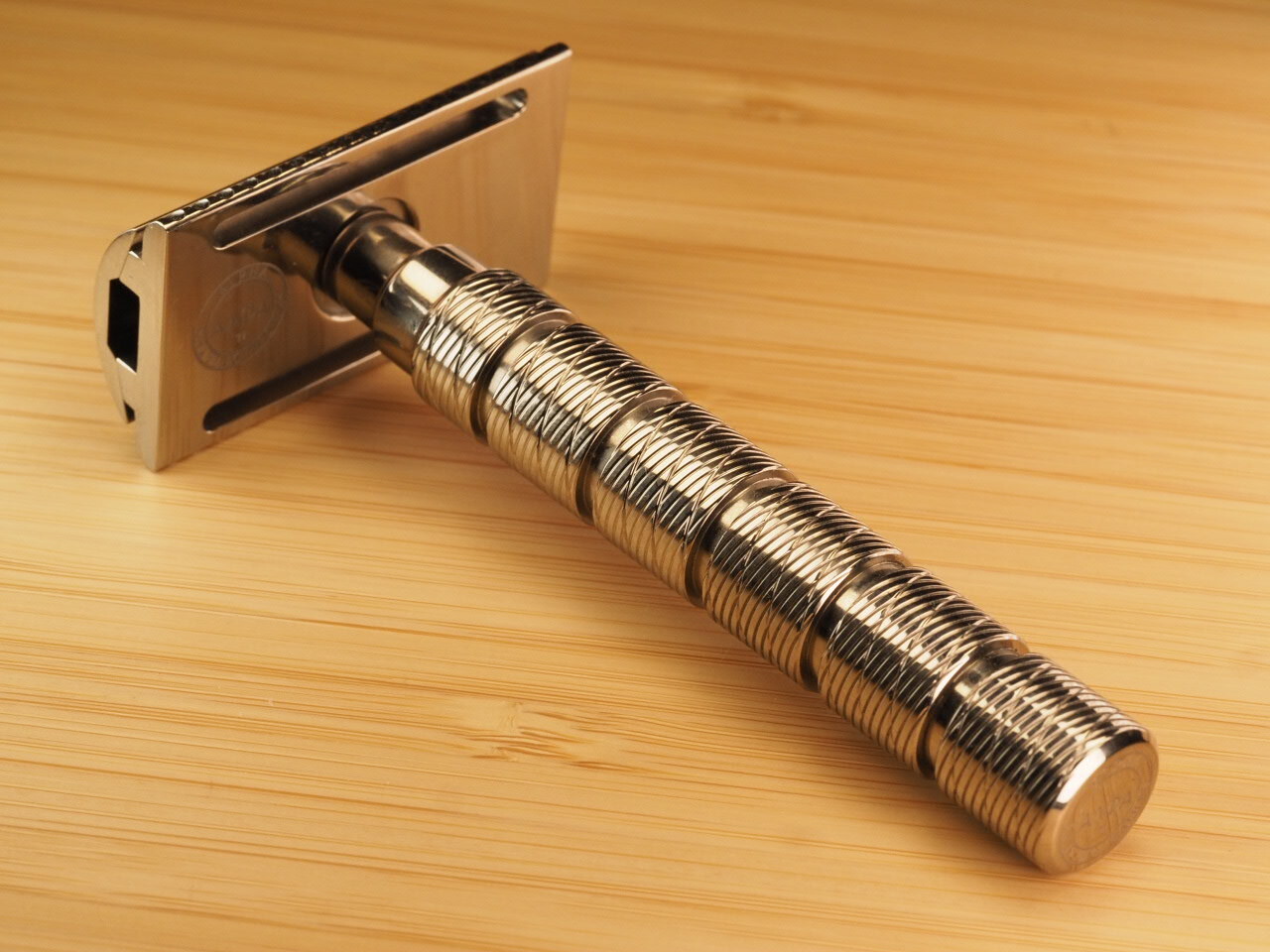
This design incorporates a few specific elements that define the razors’ shaving character. While these elements clearly define much of the razor, they aren't the whole picture. To complete the overall razor experience, more elements are needed. Good geometry alone isn't enough. What choices did Steve make for the other elements and what was the final result? We'll analyze everything in detail!
Construction
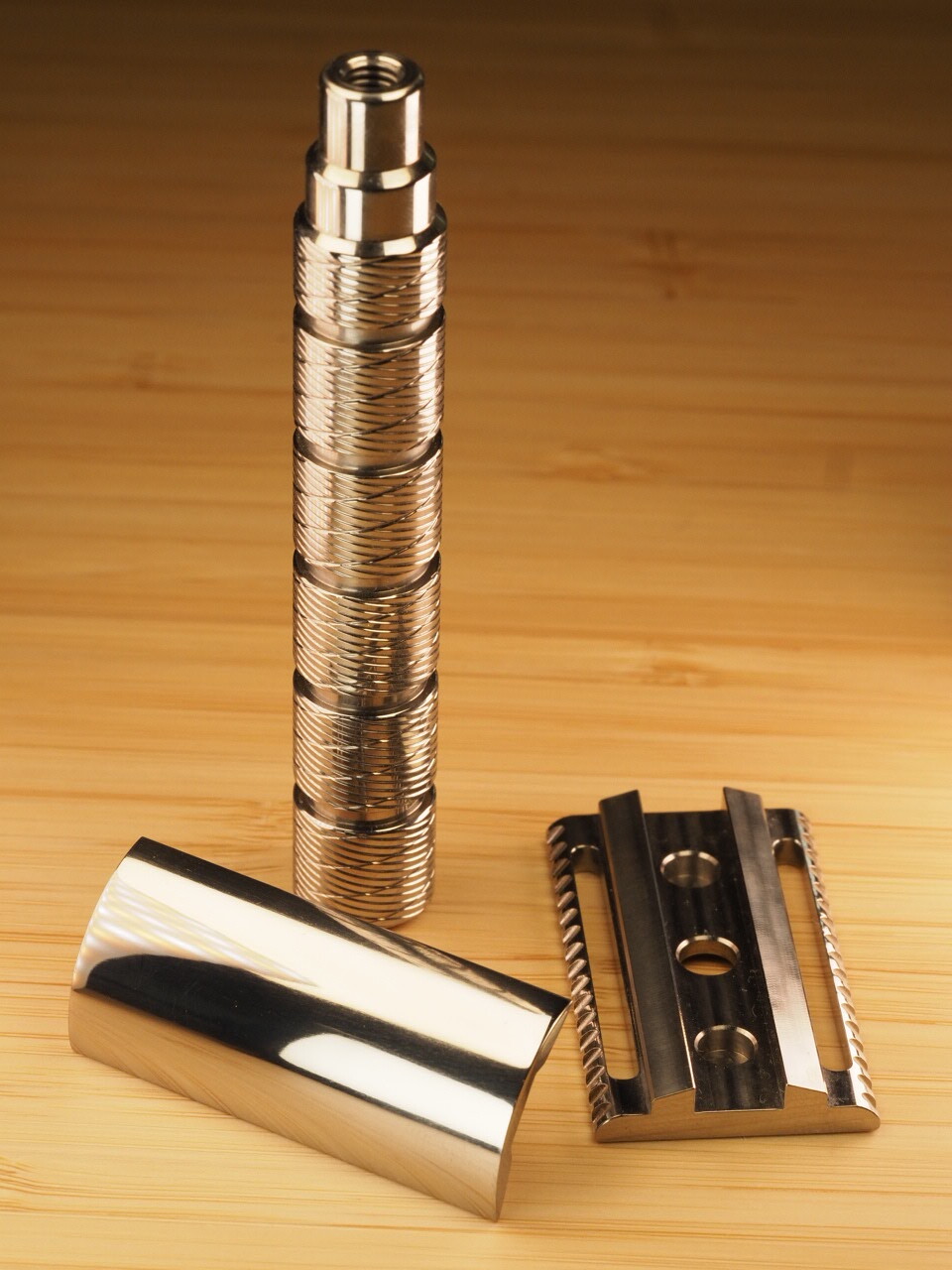
The Outlaw Evo Ti is a three-piece DE razor manufactured from Grade 5 titanium using CNC machining. Titanium is significantly more resistant to impacts and scratches than stainless steel, despite having a lower density, adapts more quickly to temperature changes and is bio compatible. Titanium components are used in many surgical procedures for example.

While steel is already an excellent material for razor manufacturing, titanium, with all its additional properties, is even better. But as always, there's a catch. Titanium is also more expensive. It's more difficult to mine, more difficult to transform into base material and much more difficult to machine and polish once it's used in manufacturing. We could say that the only point where it's cheaper in the entire supply chain is in transportation because it's lighter. Something is better than nothing I guess.

Furthermore, pure titanium does not exist in nature and is extracted from two minerals (ilmenite and rutile) that contain higher concentrations of the ore. After these minerals are separated from the soil, rock, sludge and/or sand in which they are found, they must be refined using the Kroll process, which is very labor- and energy-intensive. Base titanium ready for manufacturing already costs more than, for example, steel. In the world of shaving, many different materials are used to manufacture razors. Since the beginning of time, manufacturers have always had to adapt to two basic elements in their choice of material. The most important thing of all was (and still is) to choose from the available manufacturing materials. It's pointless to want to make a razor from a moon rock if those rocks can't be obtained on Earth. And related to this, the manufacturers also had to have the ability to work that material and shape it into a tool that served its purpose. Diamonds existed in prehistoric times, as did iron, but no one knew how to work them. The type of material and the ability to work it always determined the creation of different tools. Availability and ability to work it were and still are, critical choices.
And the second basic element in choosing the material for a shaving tool has always been (and still is) the characteristics that material needs to have to perform a certain function. Wood is a widely available material and very early on it also became a material that could be easily manipulated and shaped. But it's not suitable for a razor because it lacks the necessary characteristics.
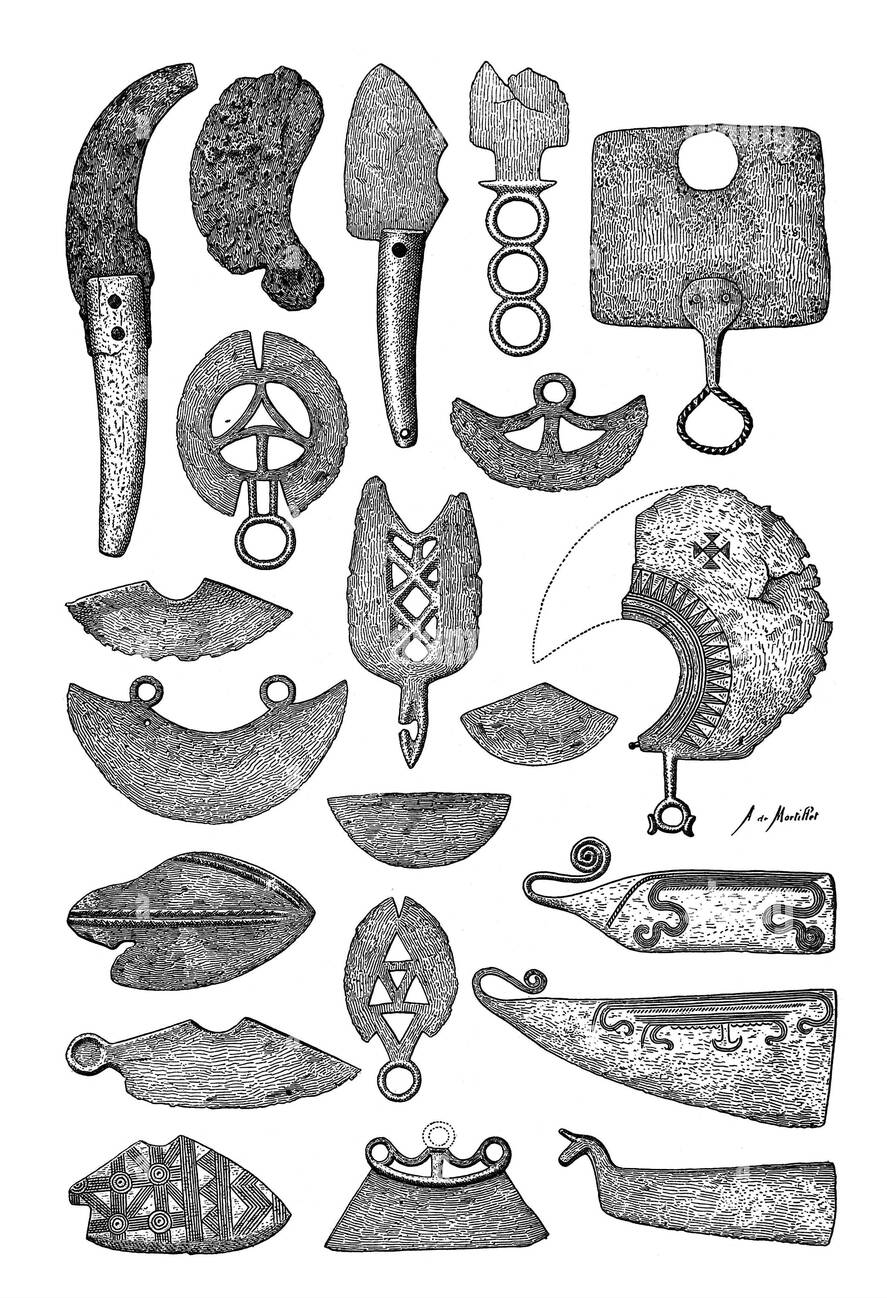
This is why we've seen shaving tools change in design and materials throughout history. The earliest designs were always sharp blades. Sometimes made of copper, sometimes bronze and sometimes gold for nobles. Even though this last one didn't hold its edge very well at least it would look good. Then came the domination of straight razors with their carbon steel, which still dominate much of the market today and of course, came the "safety" razors with their stainless steel blades.
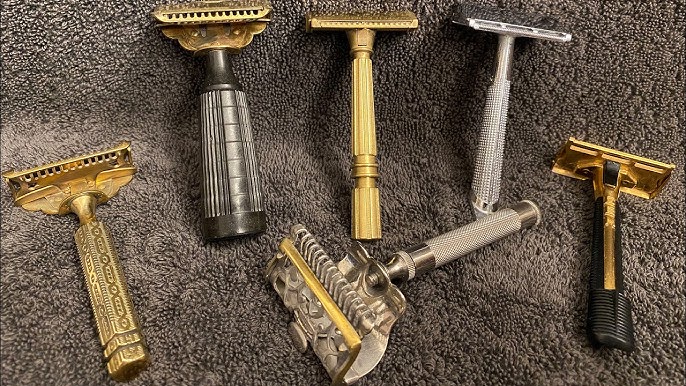
These razors were initially made of brass with a nickel coating. Gold and chromium were also used as coatings. Aluminum also began to be used for handles and simpler heads. Later, with the introduction of CNC machines, a whole new world opened up, the one we find ourselves in today.
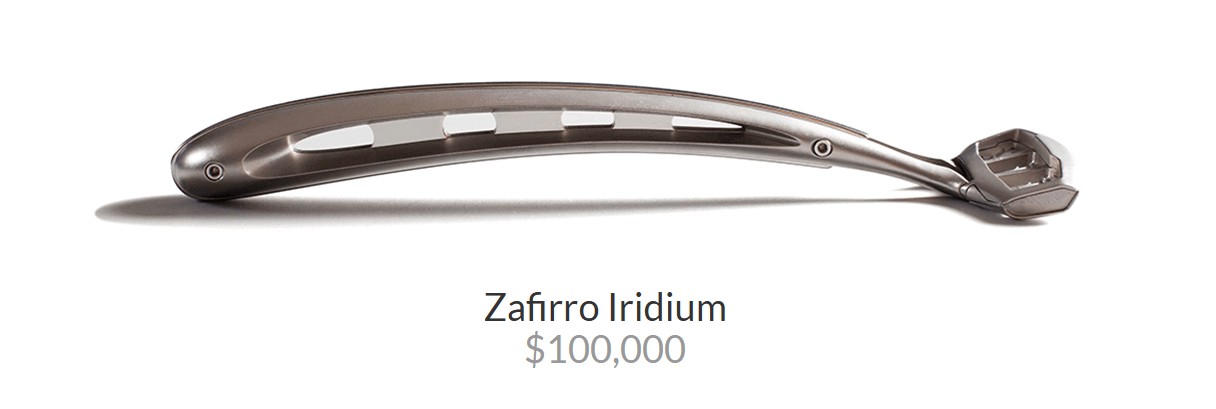
The range of materials that have been used over time has continued to expand. Various types of stainless steel, copper, bronze, aluminum, carbon fiber, titanium, steel damascus, titanium damascus and some other exotic materials have been used for special projects, such as the Sapphire Iridium. This razor, made of iridium with platinum screws and sapphire blades, costs $100,000—a minor drawback.
It's no secret that, in my opinion, Grade 5 titanium is the material that combines the most characteristics necessary to create a quality razor. It's resistant to impacts, scratches and corrosion. It's lightweight, but not excessively so. It's hypoallergenic, bio compatible and withstands temperature changes well. It's more difficult to machine and polish, which makes it more expensive. Even so, I believe the advantages far outweigh the disadvantages (yes, that’s an intended pun...). So why all this talk about the material used for this razor? Well, because I've already reviewed its stainless steel counterpart and it received a very high rating. The head is practically identical. How much difference can there be between the two? And where would we find those differences? We'll see soon.
Material: Titanium Gr.5
Finish: Mirror polished
Handle length: 85 mm
Handle diameter: 13 mm
Total length of the razor: 93 mm
Total weight: 64.8 gr
Head weight: 22.5 gr
Height of cover: 5 mm
Lid width: 19.88 mm
Gap: 0,70 mm
Exposure: neutral

The top of the cap displays the same pronounced curve that characterizes the Outlaw Evo. It's a taller cap than average, providing a bit more clearance for the blade inside. What also stands out is the mirror polish. And what a polish it is! It rivals other brands that offer this kind of polish for 200-300 Euros more. Just for the polish! What others charge for a fancy polish, Alpha Shaving charges for the entire razor.
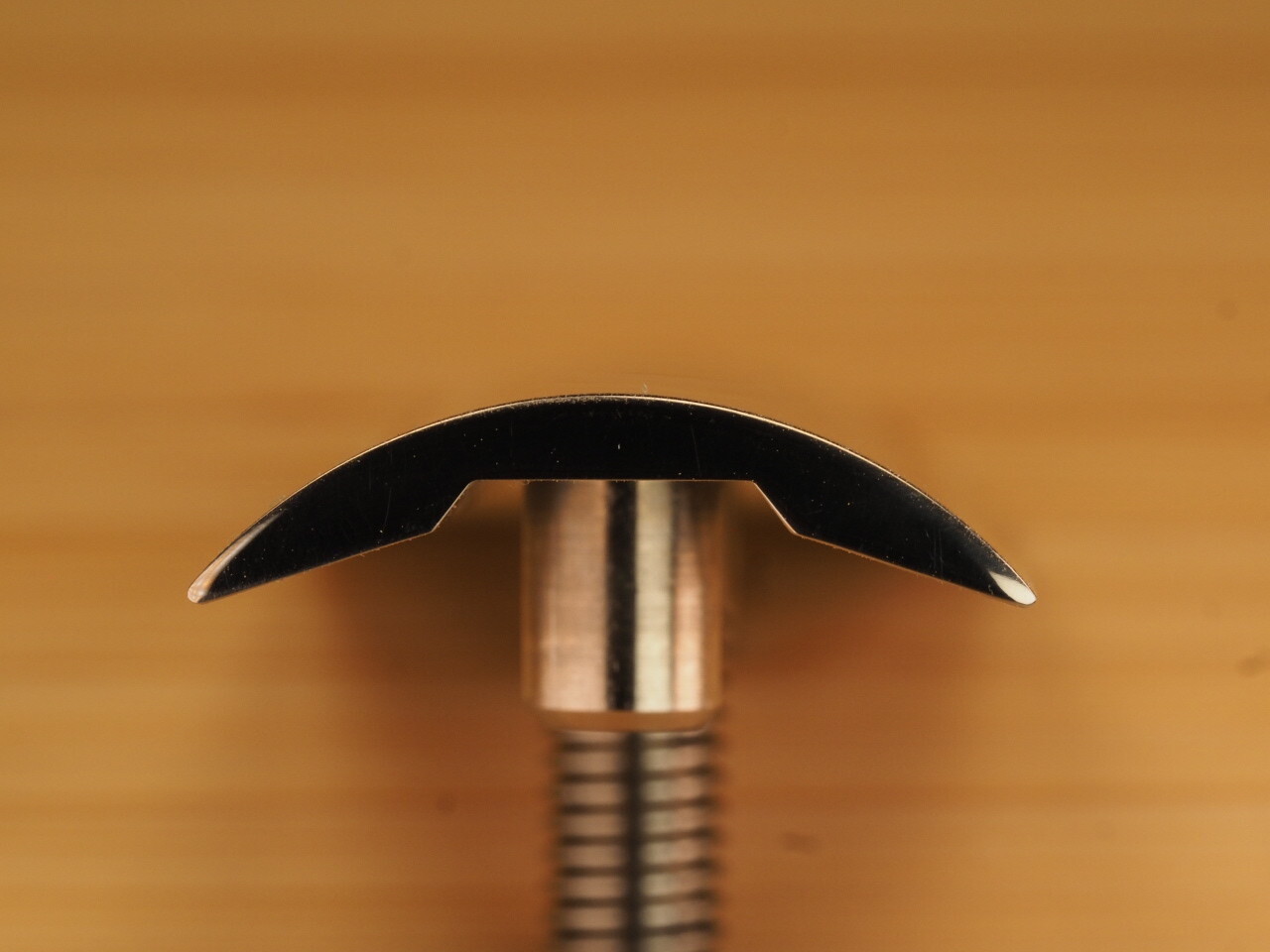
The profile of the cap clearly shows its curvature. Very few razors use such a pronounced curve. I've gathered a few razors with a cut/geometry that we could consider smooth and they don't curve the blade this much. What we can also clearly see in the profile of the cap are the two large clamping surfaces. Later, we'll see how these work in conjunction with the base plate mounting rails to delve deeper into its shaving performance.
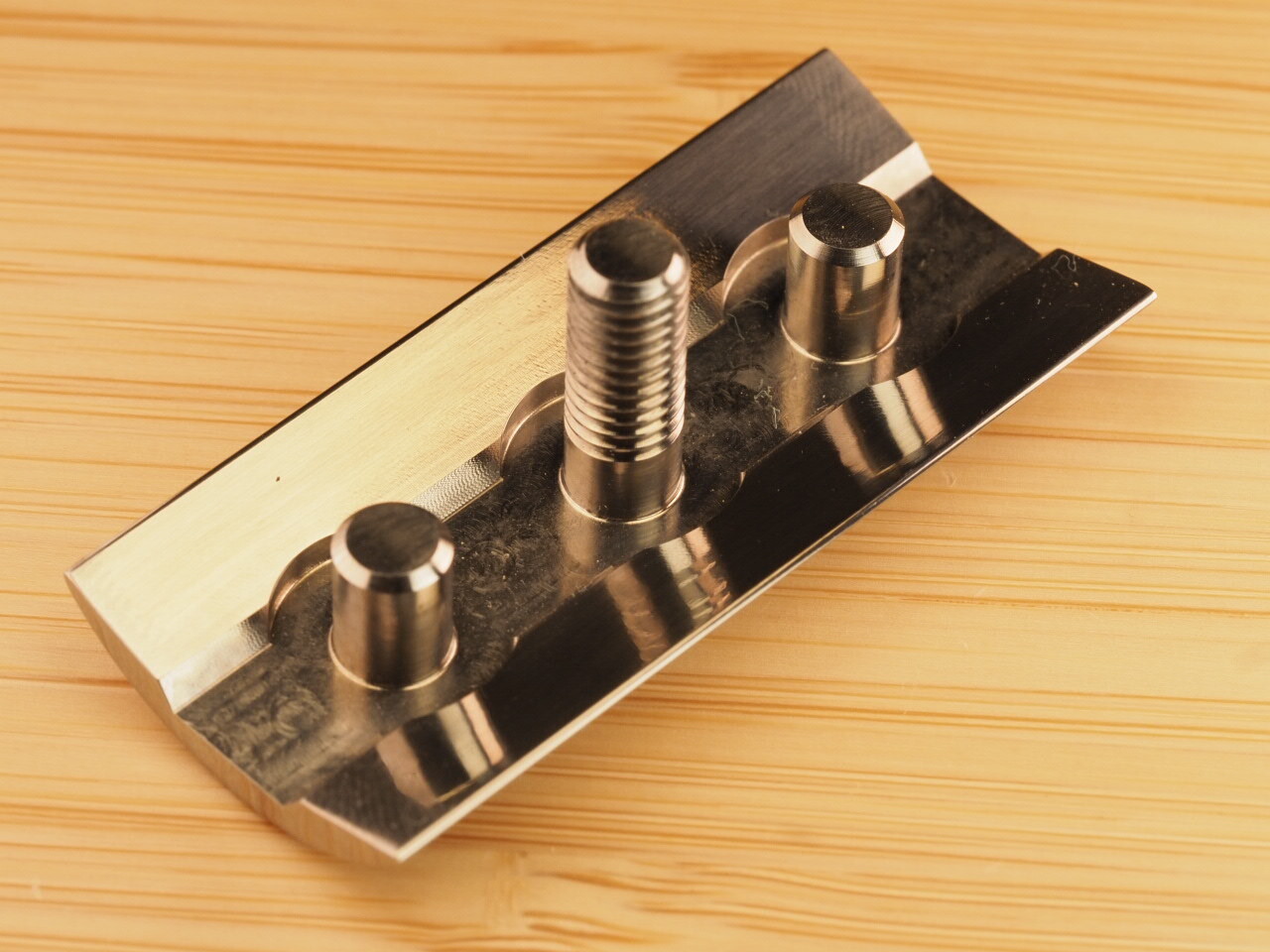
Inside the cap, we can clearly see the large mounting surfaces, which are also polished. It's not a perfect mirror finish, but it's very close. Some manufacturers don't polish because they don't want to alter the tolerances, while others take that into account when machining the parts. The central body contains some machining marks but they are barely visible and we see the two cylindrical guides with a beveled top and the central thread also with a beveled top and somewhat square thread fillets for better joining and (un)screwing action.

Things are always better understood by comparison. Are there more luxurious razor caps? Yes, there are. This cap is from the Lambda Athena SS. The Athena is one of the most "luxurious" razors I know in terms of manufacturing. Yes, Theodoros, you've set a new standard in that regard. It has mirror-polished mounting surfaces and its logo is engraved on the top of the guides. Pure luxury.

But the rest of the cap is identical to that of the Outlaw Evo. Both have a mirror polish, similar threads, similar finishes and similar tolerances. And I'm comparing two different materials to try and get a better price point because the Athena SS (steel!) costs 100 Euros more than the Outlaw Evo in polished titanium…
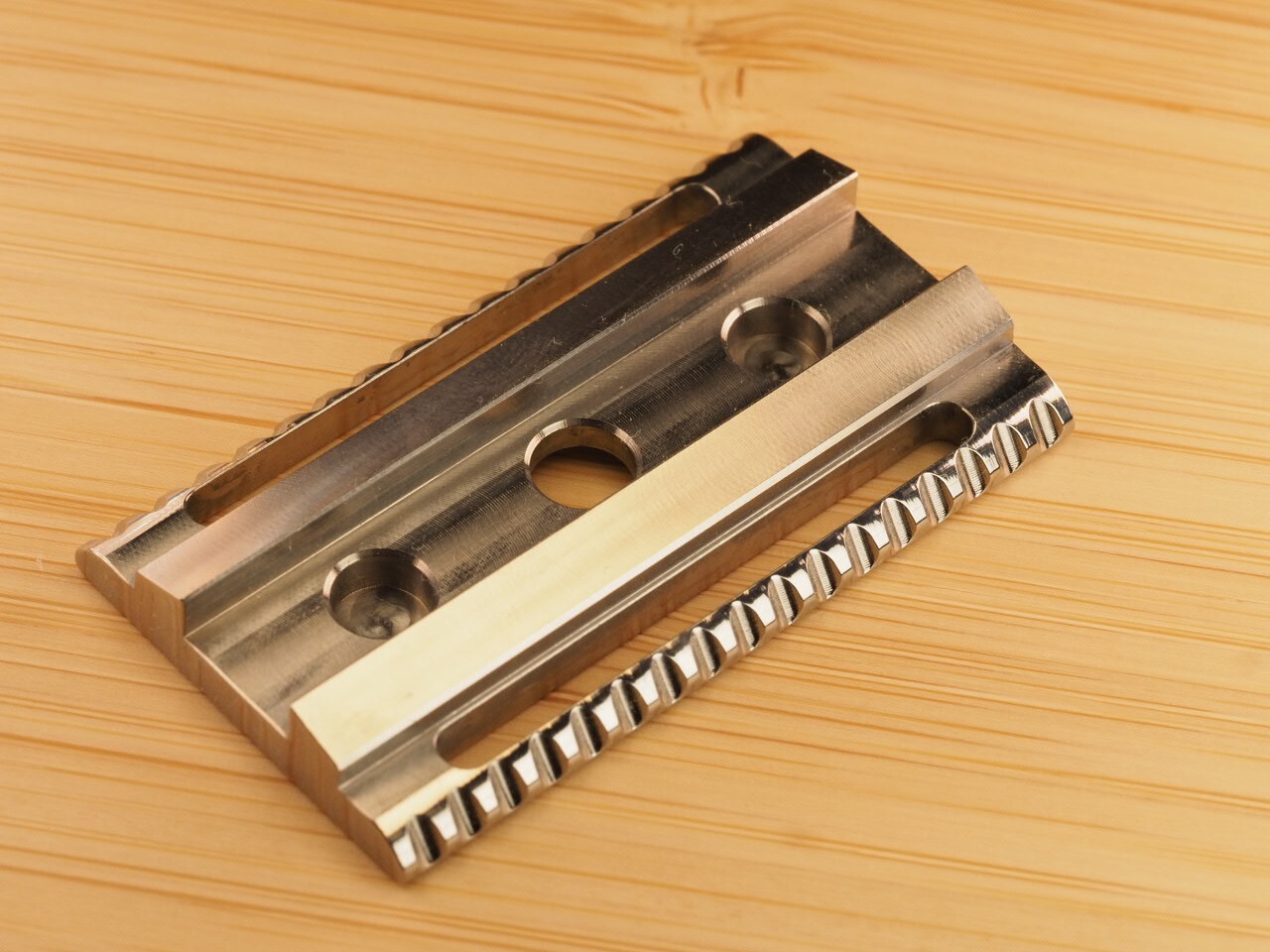
Inside the base plate, the high definition of the shapes is striking. Steve explained to me that when he modified the design of the original Outlaw to the Evolution, he decided to give it a more modern look. To achieve this, he increased the precision of the machining. All the angles and edges are now more defined than on the Outlaw. This is particularly noticeable in all the corners formed by the two rails at the top and at the joint with the base plate. The central body has been machined by removing all the core material to significantly reduce the head's weight. The hole entrances are chamfered and the guide holes are blind, preventing the guides from passing through the base plate. This is another element that modernizes the razor’s appearance, as it gives it a flat base plate on its underside.

And speaking of the underside, this is where we see another benefit of not allowing the guides to extend beyond the base plate. It provides space for a logo next to the central hole, which has a recess. The logo includes a small "Ti" to indicate the material the razor is made of. We also see the comb's rinsing channels, which almost completely cover the entire edge of a razor blade. The rest of the plate is smooth and flat.

The razor's finish is of a very high standard. The mirror polish of the titanium is impressive, especially considering how difficult it is to achieve. The corners are well-rounded and the edges are neatly defined. The goal of modernizing the razor's appearance was achieved and everything is crisp and clean. Even the grooves in the safety bar (which I'll discuss in a moment) are well-defined and well-finished.
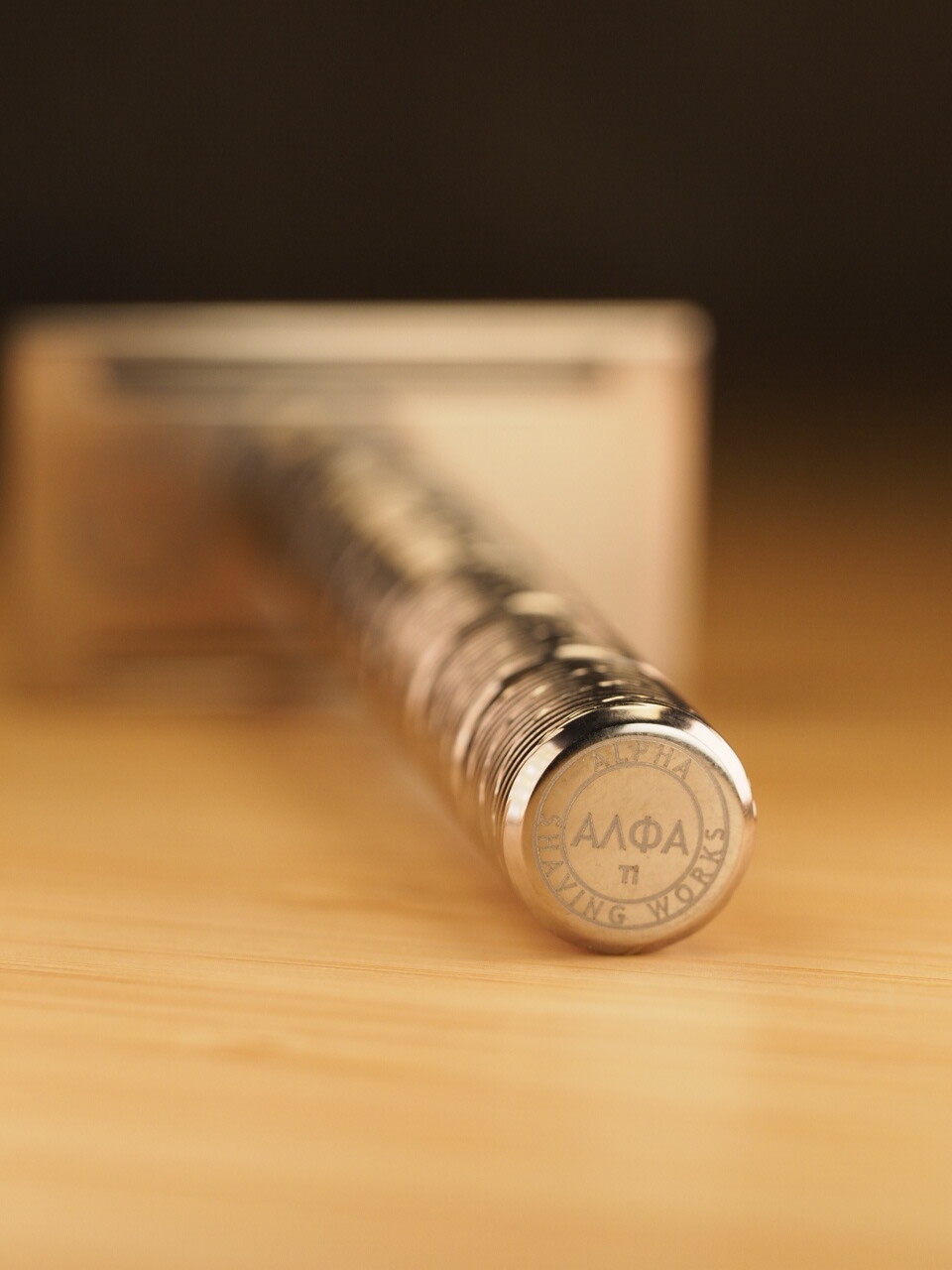
The laser-engraved logo on the plate is repeated on the base of the handle. Another nice touch. The tolerances are also very well achieved. The guides and the central thread fit perfectly within their holes. The thread has a better (un)screwing action than the steel versions. The blade is also perfectly positioned. Tolerances on par with the material’s quality.
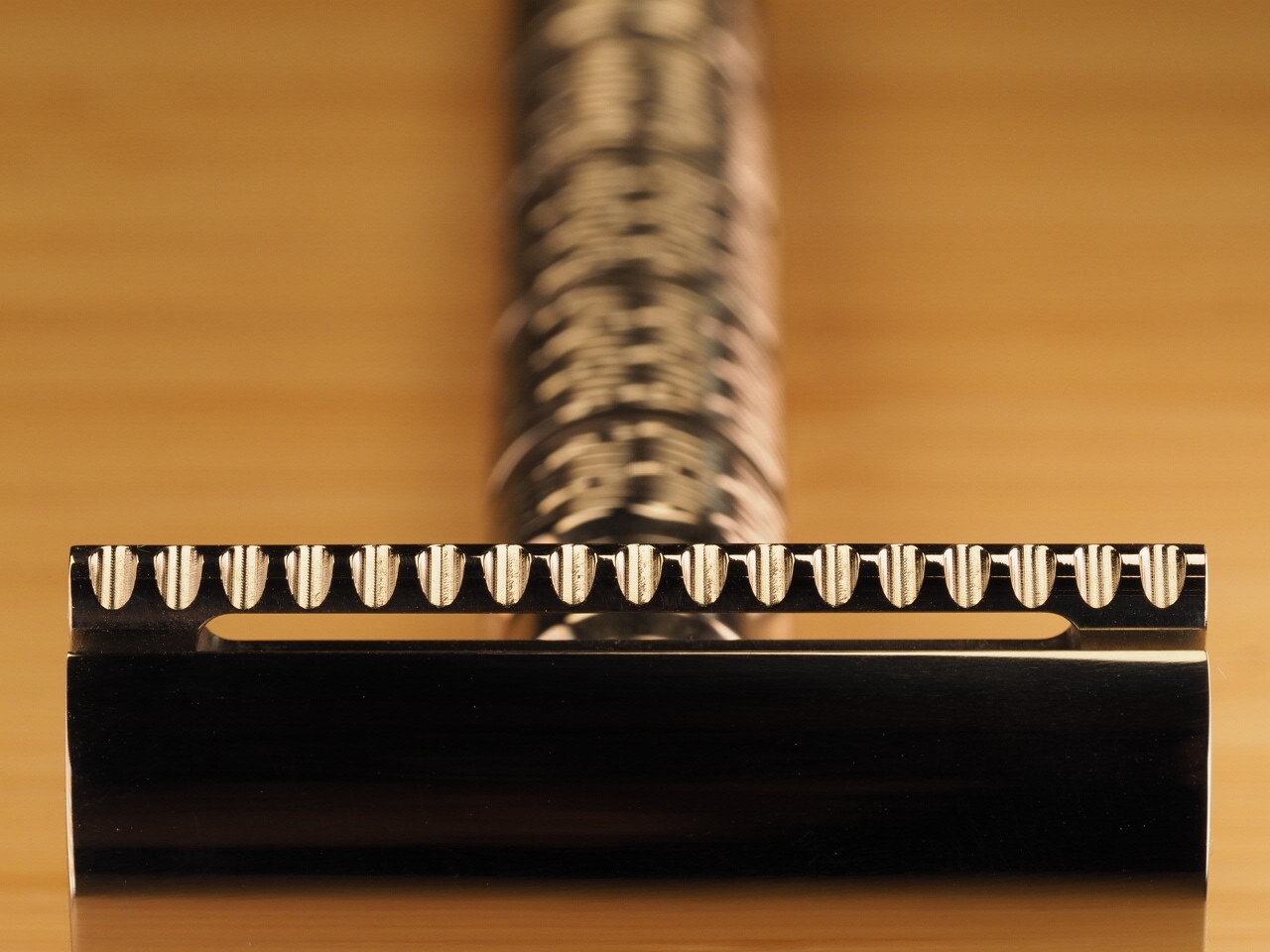
The bar also evolved from the original version, which had diagonal grooves, to these much straighter grooves. The grooves are oval-shaped and quite deep, creating 19 small ridges that separate the bar from the skin and allow lubrication to pass through their valleys. This is visually noticeable when you make a pass and lift the razor. You'll see the grooves marked in the lather. This is proof that the grooves are deep enough to allow lubrication to pass through and reduce resistance during gliding.

The grooves and the ridges are also an integral part of the shaving plane. It's not a bar that complicates the point of contact with the skin. This is the surface which is used for support and occupies the entire "front" of the bar. In combination with the curved cap, this bar forms a very gentle and comfortable shaving surface. It accurately defines the angle, is wide and comfortable and provides a smooth glide thanks to its polishing and lubrication capacity.
Score: 20 points
Material/Construction: 5
Finish: 5
Tolerances: 5
Head/comb shape: 5
Grip
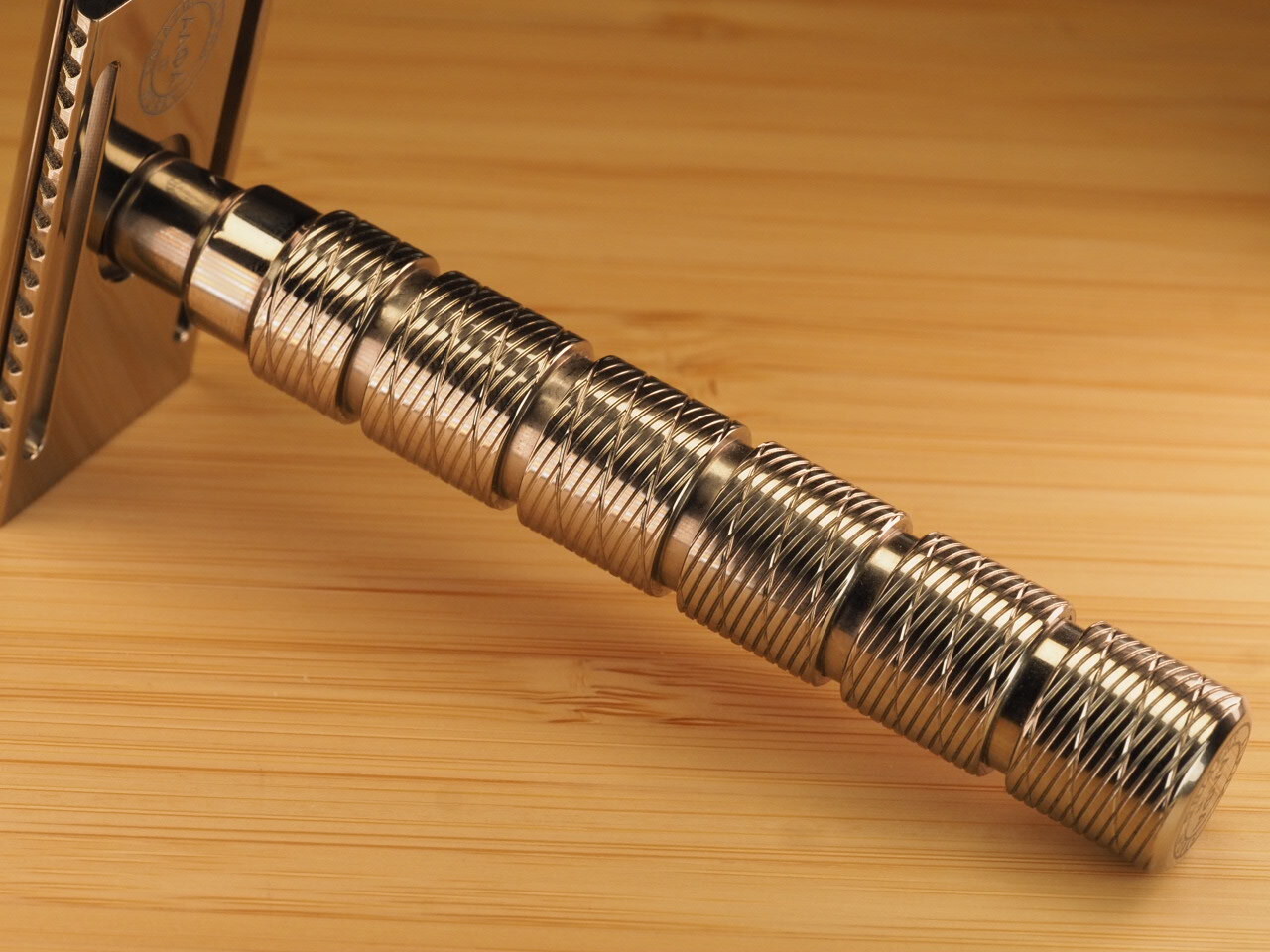
The handle on this razor is the Bravo 85 Spiral. This handle was also offered on the Outlaw and the Evo, but here it's called Spiral. It has the same general shape but with a different knurling pattern.
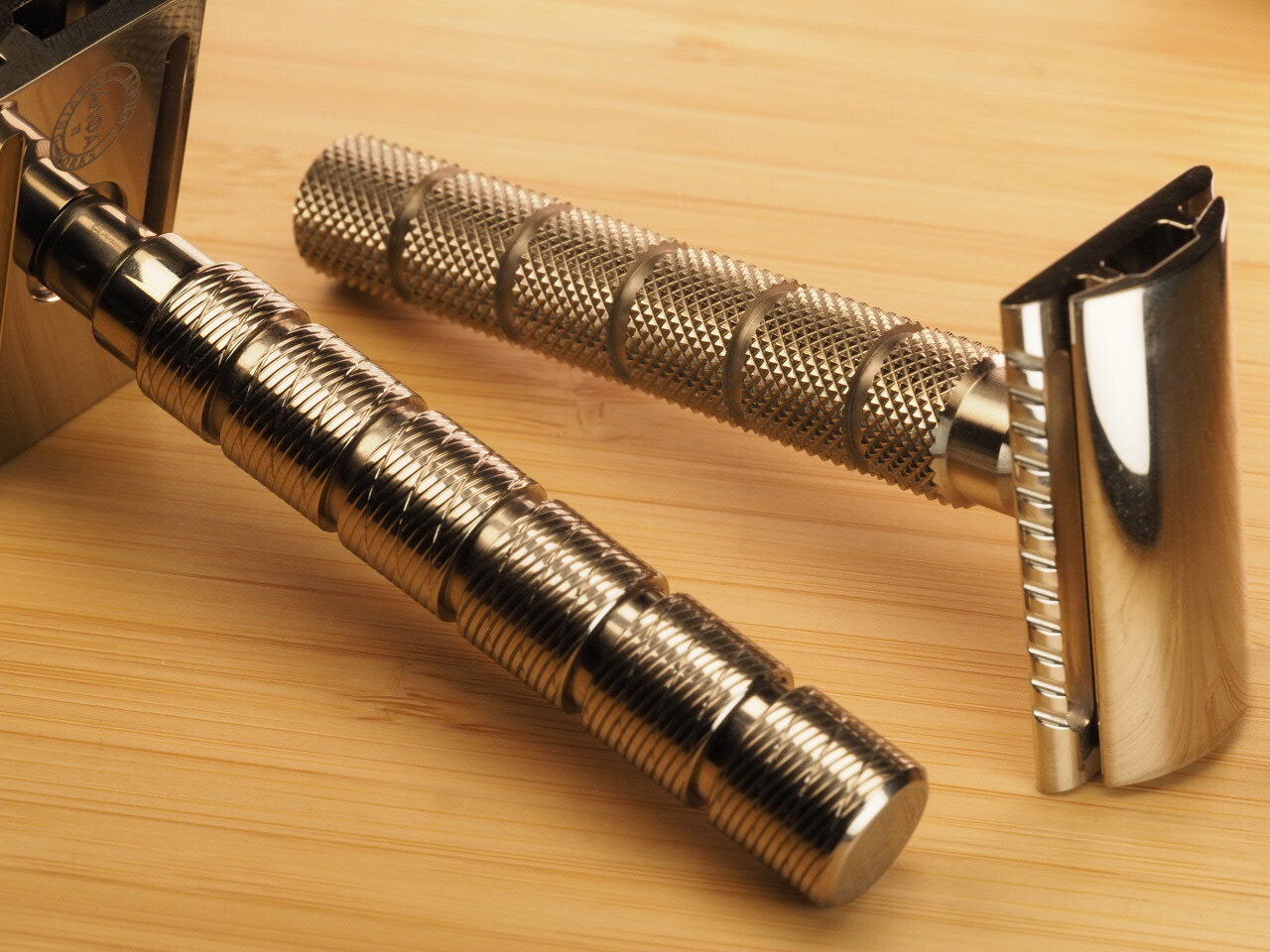
The original Bravo lived up to its name with its knurling. It featured a knurling pattern that would look good on any dumbbell or Olympic barbell. Industrial-grade and well-defined, it offered plenty of friction. It would never, ever slip, but that also made it less comfortable.
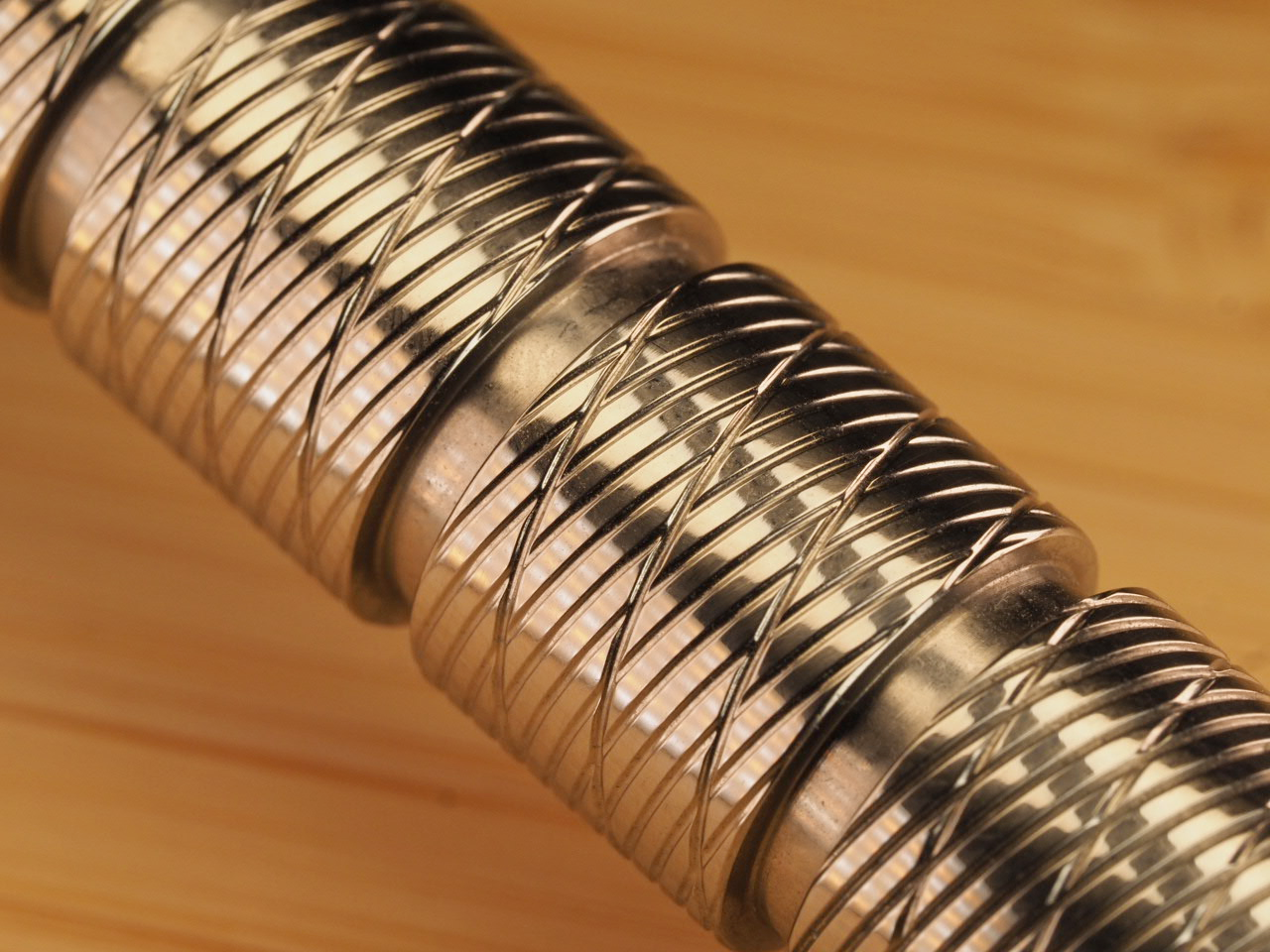
This new handle features a more elegant and less industrial design that is significantly more comfortable without sacrificing the grip necessary for handling the razor effectively in any situation. The five grooves along the handle still provide ample texture for placing your fingertips and finding a secure grip. The knurling consists of a double spiral, each spiral running in opposite directions. One spiral runs from top left to bottom right and the other from top right to bottom left. This pattern is also seen on the Barberpole handles of the Guido and the Barberpole handles of the Timeless razors, but it is somewhat finer. It results in a very good grip without the roughness of the knurling. It's been replaced by added friction on the handle's surface, which works very well and isn't bothersome. Furthermore, because it's a double spiral, if you twist the handle between your fingers, the lines appear to move. A very well-executed pattern, as you'd expect from a design based on the Barberpole, arguably the best handle design ever created.


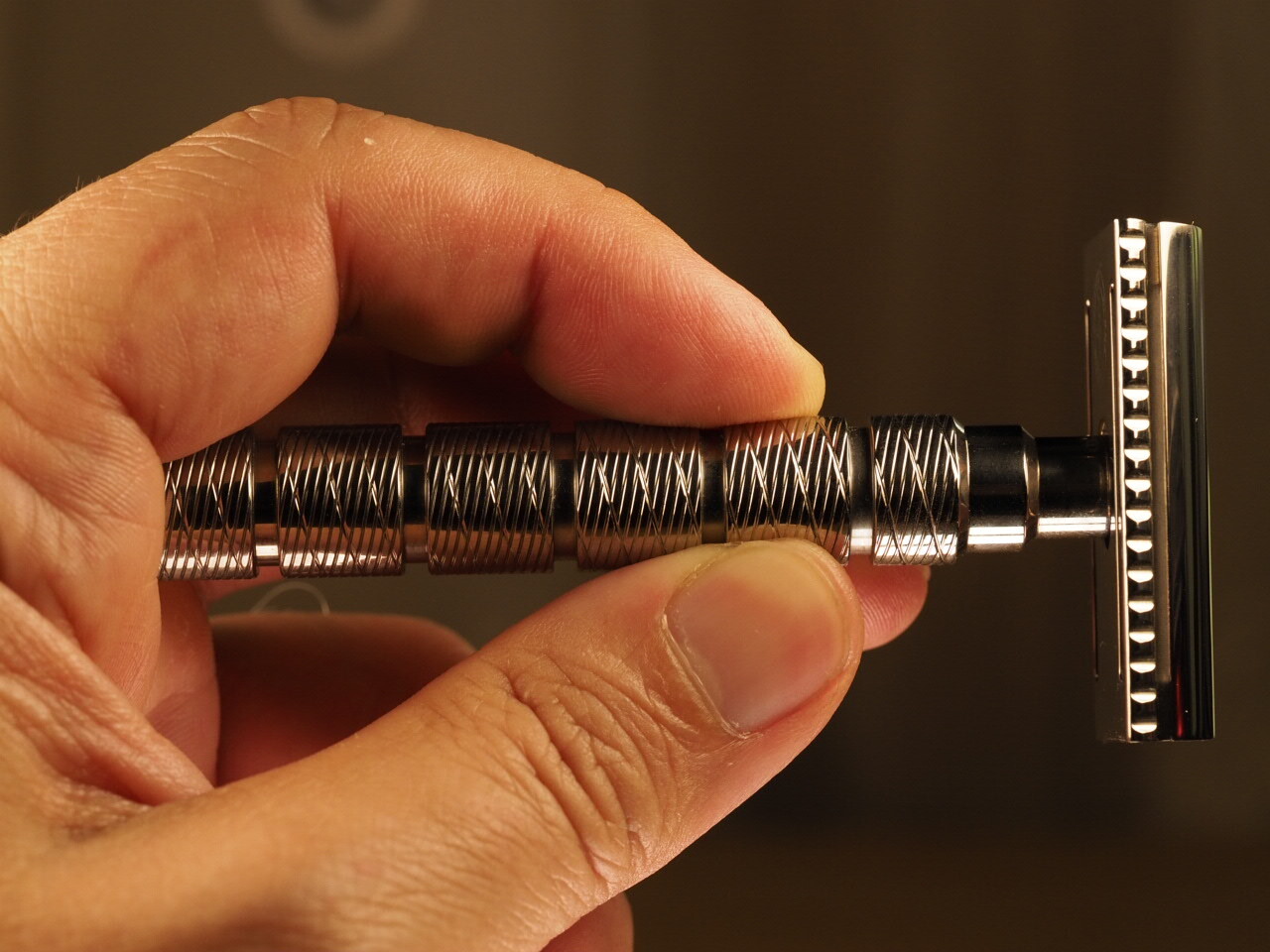
For me, an 85 mm handle is roughly the minimum size I like to use. It gives me enough length to comfortably use a three-finger grip. There's enough surface area with grooves and knurling to change grips without losing control, resulting in effortless inverted and horizontal grips.

The mirror-polished cap, the grooved bar and the forgiving geometry allow the razor head to glide effortlessly over the skin. The bar provides lubrication right up to the cut and the cap offers no resistance whatsoever. This is one of those razors that makes you check if you've actually inserted a blade when you start shaving. You all know what I mean... you feel nothing during the pass and you doubt yourself...until you realize the blade is mounted and your skin is impeccably shaved. You just didn't feel it.
Score: 20 points
Dry/Wet: 5
Comfort: 5
Control: 5
Head slide: 5
Handling
The weight is in line with a titanium razor, around 65 grams. That's considerably less than the 100-gram mark we typically use for steel razors and well above the 40 grams that an aluminum razor can weigh. This is another advantage of titanium. It combines the two best properties of these metals: the lightness of one and the strength of the other.
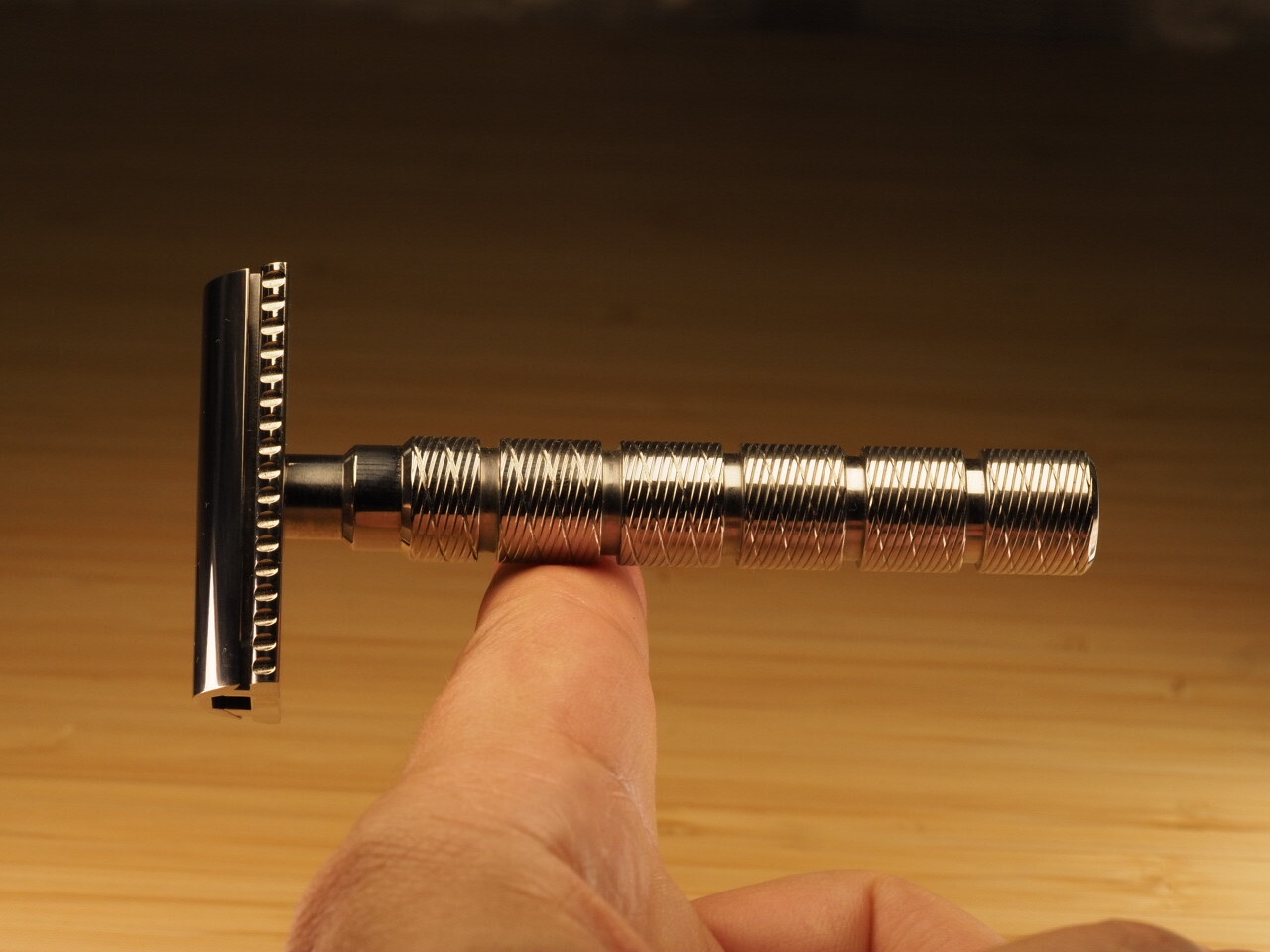
And even though the weight is low, a well-placed balance point is still necessary. In the case of the Outlaw Evo Ti, that point is located in the handle section where we place our thumb and forefinger. It needs to be there to feel balanced during movements. The reduced weight would help minimize the effect of a poorly placed balance point, but in this case, it's perfectly placed.

Changing the blade is easy. The handle's (un)screwing action is very smooth and the sides of the head offer a good grip. The blade fits quite snugly inside the cap and may not move after use. As always, every advantage has its disadvantage. If you want tight tolerances (yes, please!), the blade might get stuck when changing it (I'm okay with that...). Cleaning is also relatively easy. There aren't too many obstacles and the straight angles make it easy to clean thoroughly. The bar accepts a cloth through its channel and the lid, with its three columns, is the part that will take the longest to clean. Nothing too complicated. Titanium seems to behave differently with fingerprints. Fingerprints don't appear as noticeable on titanium as they do on steel. Titanium's color is also a bit more blue-grayish, which helps to camouflage them better.
Score: 18
Balance: 5
Weight: 5
Model: 4
Cleaning: 4
Shaving

And what happens in the interaction between edge and skin when we bring all this analysis together and put it to the test in reality? Because many theories sound great on paper but then crumble in practice. But there are also others where reality surpasses them. What will the outcome be this time?
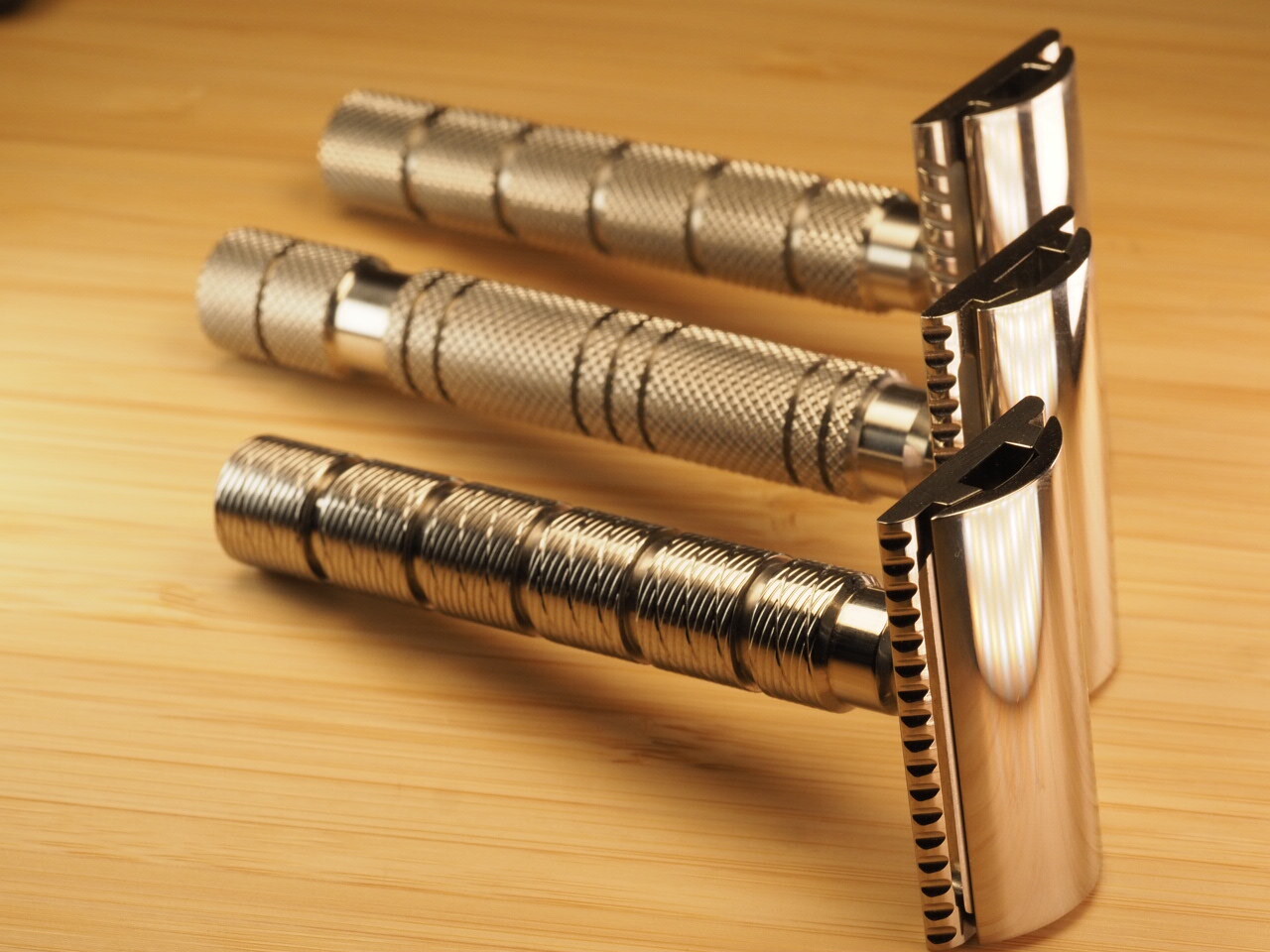
When I reviewed the Outlaw Evolution SS, I said it shaved better than the original Outlaw. This was to be expected, as the razor head had received several essential improvements. More clamping surface, clamping closer to the cutting edge and less blade to be covered by the cap. These three elements made the shave much more "serious" and precise compared to the more "playful" character of the original Outlaw. She would sing like Aretha while mowing down hairs. This one hums...if that. The main difference with this Outlaw Evo Ti is the material. And yes, I can say that the shave is better than the stainless steel version. Even with the same head, same dimensions and same geometry, the titanium adds more mobility and lightness to the movements. The improved Evo geometry already provided a smooth yet powerful cut and this (moderate) weight reduction makes it even smoother.

This geometry and weight allow for different shaving modes. Want an autopilot shave? Just run the razor over your skin in two passes without pressure and you're done. Want to have fun and feel the razor cut every hair it encounters? Then lower the speed, add some pressure, or play with the angles and open your senses. Want an incredibly close shave? Choose the angle that works best for you, combine it with the necessary pressure and concentrate to get maximum efficiency with each pass. And if you want, touch-ups or a third pass... just for the fun of it.

This Alpha razor is incredibly versatile and the main reason lies in its geometry. The slightly domed cap, neutral exposure, moderate gap, reduced cutting angle and well-lubricated, wide and comfortable shaving surface make it a delight to use. It's true that the taller cap can be a bit of a nuisance when shaving under the nose, or that you have to apply some pressure to overcome the neutral exposure when trying to reach "hidden" areas of your skin, but these minor drawbacks are overshadowed by its other major advantages. Any blade you mount in the razor will offer a similar result. Normally, when the razor exposes the blade, it puts it front and center, giving it a lot of freedom with a more distant clamping point from the edge; that's where the character of each blade is most noticeable. This Outlaw Evo Ti eliminates that exposure and places the blade in a logical position so it can do its job comfortably.
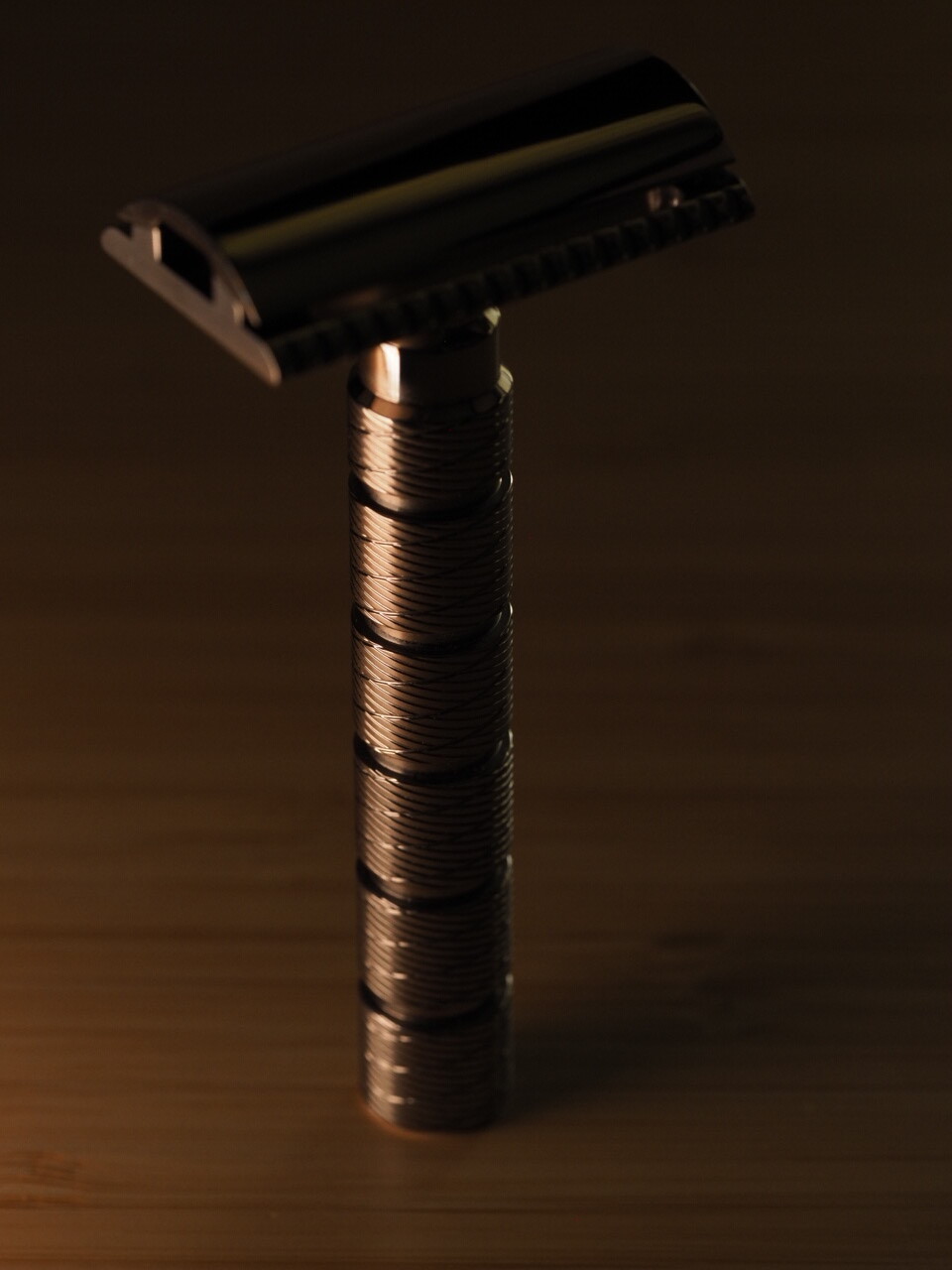
You can cut yourself with any razor; writing that isn't exactly groundbreaking, we've all been there. But it's also true that some razors make it easier to get a good shave than others. This Alpha offers a lot of indulgence and I've already mentioned the reasons why. The Outlaw Evo already offered this and by reducing the weight in this Ti version, it's even more forgiving because it exerts less pressure on the skin.
Score: 19 points
Score: 5
Head control: 4
Blade: 5
Indulgent: 5
Quality/Price
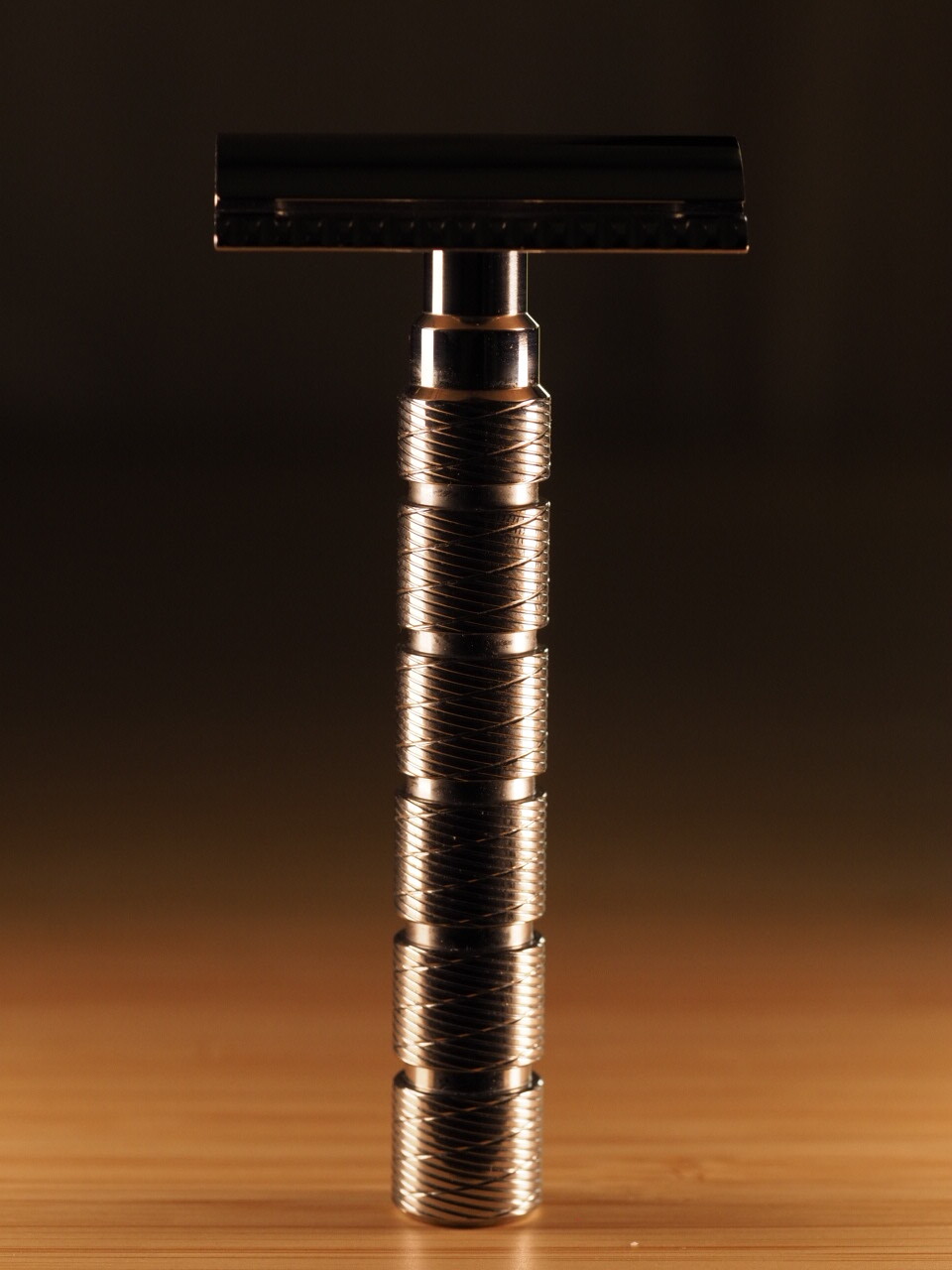
This razor is gorgeous. The head design is modern and sleek. The handle is beautiful with its combination of rings and that double spiral. The mirror polish is stunning. Modern designs can sometimes be overwhelming, but I think this Outlaw razor combines that modern look with timeless simplicity. It will always look good on any shelf. Clean, simple and functional lines. To measure the reward a razor offers, we always have to consider its technical performance, its aesthetics and its price. What does it do, how does it do it and how much does it cost to do it? If we look at the prices of mirror-polished titanium razors, this razor is a complete exception. For 250 Euros, you get a razor of exceptional quality and beauty. Steve knows the immense respect I have for his work and the work of Theodoros at Lambda and if I compare this razor to the polish Theo offers, it's almost on par with that level. The fact that I dare to compare the Outlaw Evo Ti to Lambda razors... that says it all.

The value in 25 years isn't going to go down, but I don't see it going up much either. Alpha, for whatever reason, isn't the first brand that comes to mind when starting a razor collection. Perhaps precisely because they're timeless designs that deliver such great shaves with so little fanfare, they don't attract as much attention as, say, a Blackbird with its supersonic spy jet shape. Let there be no doubt that I could fully commit to this razor until death do us part. And I'm sure it will outlive me by many decades.
Score: 18 points
Aesthetics: 5
Reward: 5
Value in 25: 3
Single razor: 5
Conclusion
I've always said that the material a razor is made of is the most crucial factor in (almost) all of its characteristics. And this Outlaw Evo Ti has confirmed that for me once again, with even more details. The material has a significant impact, mostly positive rather than negative.

And I say this because we have many razors made of less "noble" materials that shave wonderfully. There are some that work flawlessly and are made of zinc alloy, aluminum, bronze, steel (of course) and even plastic, as the Filomatic has been demonstrating for decades for example.

But I think I can increasingly argue that my preferred material for a safety razor is titanium. Its weight, feel, grayish sheen, bio compatibility and durability make it perfectly suited for everything a razor needs. Its biggest drawback is its price. But to overcome that obstacle, there's this Outlaw Evo Ti, which is more than reasonably priced. If I didn't already own it, it would be a titanic purchase.
Final score: 95 points
Introduction
Steve Tinter owns Alpha Shaving, based in Hong Kong. He started the business because he loved (and still loves) brushes and decided to make them himself. Gradually, he also ventured into designing and manufacturing razors. And not without success. His name is associated with razors like the original Outlaw, the Spirit AC, the Claymore Evo AC, the Eclipse and several custom models he produced for different groups of enthusiasts. Examples include the Cape Cod, the Shave Dad, the Lone Star, the UKWSS and the Gloria. These razors use the same base but are completely different from one another.
Today we're focusing on a razor that uses the design that has most influenced Steve as a razor maker: the Alpha Shaving Outlaw Evo Ti. This razor shares the same basic design as the steel Outlaw Evo SS, which is based on the original design of the first Outlaw.
This design incorporates a few specific elements that define the razors’ shaving character. While these elements clearly define much of the razor, they aren't the whole picture. To complete the overall razor experience, more elements are needed. Good geometry alone isn't enough. What choices did Steve make for the other elements and what was the final result? We'll analyze everything in detail!
Construction
The Outlaw Evo Ti is a three-piece DE razor manufactured from Grade 5 titanium using CNC machining. Titanium is significantly more resistant to impacts and scratches than stainless steel, despite having a lower density, adapts more quickly to temperature changes and is bio compatible. Titanium components are used in many surgical procedures for example.
While steel is already an excellent material for razor manufacturing, titanium, with all its additional properties, is even better. But as always, there's a catch. Titanium is also more expensive. It's more difficult to mine, more difficult to transform into base material and much more difficult to machine and polish once it's used in manufacturing. We could say that the only point where it's cheaper in the entire supply chain is in transportation because it's lighter. Something is better than nothing I guess.
Furthermore, pure titanium does not exist in nature and is extracted from two minerals (ilmenite and rutile) that contain higher concentrations of the ore. After these minerals are separated from the soil, rock, sludge and/or sand in which they are found, they must be refined using the Kroll process, which is very labor- and energy-intensive. Base titanium ready for manufacturing already costs more than, for example, steel. In the world of shaving, many different materials are used to manufacture razors. Since the beginning of time, manufacturers have always had to adapt to two basic elements in their choice of material. The most important thing of all was (and still is) to choose from the available manufacturing materials. It's pointless to want to make a razor from a moon rock if those rocks can't be obtained on Earth. And related to this, the manufacturers also had to have the ability to work that material and shape it into a tool that served its purpose. Diamonds existed in prehistoric times, as did iron, but no one knew how to work them. The type of material and the ability to work it always determined the creation of different tools. Availability and ability to work it were and still are, critical choices.
And the second basic element in choosing the material for a shaving tool has always been (and still is) the characteristics that material needs to have to perform a certain function. Wood is a widely available material and very early on it also became a material that could be easily manipulated and shaped. But it's not suitable for a razor because it lacks the necessary characteristics.
This is why we've seen shaving tools change in design and materials throughout history. The earliest designs were always sharp blades. Sometimes made of copper, sometimes bronze and sometimes gold for nobles. Even though this last one didn't hold its edge very well at least it would look good. Then came the domination of straight razors with their carbon steel, which still dominate much of the market today and of course, came the "safety" razors with their stainless steel blades.
These razors were initially made of brass with a nickel coating. Gold and chromium were also used as coatings. Aluminum also began to be used for handles and simpler heads. Later, with the introduction of CNC machines, a whole new world opened up, the one we find ourselves in today.
The range of materials that have been used over time has continued to expand. Various types of stainless steel, copper, bronze, aluminum, carbon fiber, titanium, steel damascus, titanium damascus and some other exotic materials have been used for special projects, such as the Sapphire Iridium. This razor, made of iridium with platinum screws and sapphire blades, costs $100,000—a minor drawback.
It's no secret that, in my opinion, Grade 5 titanium is the material that combines the most characteristics necessary to create a quality razor. It's resistant to impacts, scratches and corrosion. It's lightweight, but not excessively so. It's hypoallergenic, bio compatible and withstands temperature changes well. It's more difficult to machine and polish, which makes it more expensive. Even so, I believe the advantages far outweigh the disadvantages (yes, that’s an intended pun...). So why all this talk about the material used for this razor? Well, because I've already reviewed its stainless steel counterpart and it received a very high rating. The head is practically identical. How much difference can there be between the two? And where would we find those differences? We'll see soon.
Material: Titanium Gr.5
Finish: Mirror polished
Handle length: 85 mm
Handle diameter: 13 mm
Total length of the razor: 93 mm
Total weight: 64.8 gr
Head weight: 22.5 gr
Height of cover: 5 mm
Lid width: 19.88 mm
Gap: 0,70 mm
Exposure: neutral
The top of the cap displays the same pronounced curve that characterizes the Outlaw Evo. It's a taller cap than average, providing a bit more clearance for the blade inside. What also stands out is the mirror polish. And what a polish it is! It rivals other brands that offer this kind of polish for 200-300 Euros more. Just for the polish! What others charge for a fancy polish, Alpha Shaving charges for the entire razor.
The profile of the cap clearly shows its curvature. Very few razors use such a pronounced curve. I've gathered a few razors with a cut/geometry that we could consider smooth and they don't curve the blade this much. What we can also clearly see in the profile of the cap are the two large clamping surfaces. Later, we'll see how these work in conjunction with the base plate mounting rails to delve deeper into its shaving performance.
Inside the cap, we can clearly see the large mounting surfaces, which are also polished. It's not a perfect mirror finish, but it's very close. Some manufacturers don't polish because they don't want to alter the tolerances, while others take that into account when machining the parts. The central body contains some machining marks but they are barely visible and we see the two cylindrical guides with a beveled top and the central thread also with a beveled top and somewhat square thread fillets for better joining and (un)screwing action.
Things are always better understood by comparison. Are there more luxurious razor caps? Yes, there are. This cap is from the Lambda Athena SS. The Athena is one of the most "luxurious" razors I know in terms of manufacturing. Yes, Theodoros, you've set a new standard in that regard. It has mirror-polished mounting surfaces and its logo is engraved on the top of the guides. Pure luxury.
But the rest of the cap is identical to that of the Outlaw Evo. Both have a mirror polish, similar threads, similar finishes and similar tolerances. And I'm comparing two different materials to try and get a better price point because the Athena SS (steel!) costs 100 Euros more than the Outlaw Evo in polished titanium…
Inside the base plate, the high definition of the shapes is striking. Steve explained to me that when he modified the design of the original Outlaw to the Evolution, he decided to give it a more modern look. To achieve this, he increased the precision of the machining. All the angles and edges are now more defined than on the Outlaw. This is particularly noticeable in all the corners formed by the two rails at the top and at the joint with the base plate. The central body has been machined by removing all the core material to significantly reduce the head's weight. The hole entrances are chamfered and the guide holes are blind, preventing the guides from passing through the base plate. This is another element that modernizes the razor’s appearance, as it gives it a flat base plate on its underside.
And speaking of the underside, this is where we see another benefit of not allowing the guides to extend beyond the base plate. It provides space for a logo next to the central hole, which has a recess. The logo includes a small "Ti" to indicate the material the razor is made of. We also see the comb's rinsing channels, which almost completely cover the entire edge of a razor blade. The rest of the plate is smooth and flat.
The razor's finish is of a very high standard. The mirror polish of the titanium is impressive, especially considering how difficult it is to achieve. The corners are well-rounded and the edges are neatly defined. The goal of modernizing the razor's appearance was achieved and everything is crisp and clean. Even the grooves in the safety bar (which I'll discuss in a moment) are well-defined and well-finished.
The laser-engraved logo on the plate is repeated on the base of the handle. Another nice touch. The tolerances are also very well achieved. The guides and the central thread fit perfectly within their holes. The thread has a better (un)screwing action than the steel versions. The blade is also perfectly positioned. Tolerances on par with the material’s quality.
The bar also evolved from the original version, which had diagonal grooves, to these much straighter grooves. The grooves are oval-shaped and quite deep, creating 19 small ridges that separate the bar from the skin and allow lubrication to pass through their valleys. This is visually noticeable when you make a pass and lift the razor. You'll see the grooves marked in the lather. This is proof that the grooves are deep enough to allow lubrication to pass through and reduce resistance during gliding.
The grooves and the ridges are also an integral part of the shaving plane. It's not a bar that complicates the point of contact with the skin. This is the surface which is used for support and occupies the entire "front" of the bar. In combination with the curved cap, this bar forms a very gentle and comfortable shaving surface. It accurately defines the angle, is wide and comfortable and provides a smooth glide thanks to its polishing and lubrication capacity.
Score: 20 points
Material/Construction: 5
Finish: 5
Tolerances: 5
Head/comb shape: 5
Grip
The handle on this razor is the Bravo 85 Spiral. This handle was also offered on the Outlaw and the Evo, but here it's called Spiral. It has the same general shape but with a different knurling pattern.
The original Bravo lived up to its name with its knurling. It featured a knurling pattern that would look good on any dumbbell or Olympic barbell. Industrial-grade and well-defined, it offered plenty of friction. It would never, ever slip, but that also made it less comfortable.
This new handle features a more elegant and less industrial design that is significantly more comfortable without sacrificing the grip necessary for handling the razor effectively in any situation. The five grooves along the handle still provide ample texture for placing your fingertips and finding a secure grip. The knurling consists of a double spiral, each spiral running in opposite directions. One spiral runs from top left to bottom right and the other from top right to bottom left. This pattern is also seen on the Barberpole handles of the Guido and the Barberpole handles of the Timeless razors, but it is somewhat finer. It results in a very good grip without the roughness of the knurling. It's been replaced by added friction on the handle's surface, which works very well and isn't bothersome. Furthermore, because it's a double spiral, if you twist the handle between your fingers, the lines appear to move. A very well-executed pattern, as you'd expect from a design based on the Barberpole, arguably the best handle design ever created.
For me, an 85 mm handle is roughly the minimum size I like to use. It gives me enough length to comfortably use a three-finger grip. There's enough surface area with grooves and knurling to change grips without losing control, resulting in effortless inverted and horizontal grips.
The mirror-polished cap, the grooved bar and the forgiving geometry allow the razor head to glide effortlessly over the skin. The bar provides lubrication right up to the cut and the cap offers no resistance whatsoever. This is one of those razors that makes you check if you've actually inserted a blade when you start shaving. You all know what I mean... you feel nothing during the pass and you doubt yourself...until you realize the blade is mounted and your skin is impeccably shaved. You just didn't feel it.
Score: 20 points
Dry/Wet: 5
Comfort: 5
Control: 5
Head slide: 5
Handling
The weight is in line with a titanium razor, around 65 grams. That's considerably less than the 100-gram mark we typically use for steel razors and well above the 40 grams that an aluminum razor can weigh. This is another advantage of titanium. It combines the two best properties of these metals: the lightness of one and the strength of the other.
And even though the weight is low, a well-placed balance point is still necessary. In the case of the Outlaw Evo Ti, that point is located in the handle section where we place our thumb and forefinger. It needs to be there to feel balanced during movements. The reduced weight would help minimize the effect of a poorly placed balance point, but in this case, it's perfectly placed.
Changing the blade is easy. The handle's (un)screwing action is very smooth and the sides of the head offer a good grip. The blade fits quite snugly inside the cap and may not move after use. As always, every advantage has its disadvantage. If you want tight tolerances (yes, please!), the blade might get stuck when changing it (I'm okay with that...). Cleaning is also relatively easy. There aren't too many obstacles and the straight angles make it easy to clean thoroughly. The bar accepts a cloth through its channel and the lid, with its three columns, is the part that will take the longest to clean. Nothing too complicated. Titanium seems to behave differently with fingerprints. Fingerprints don't appear as noticeable on titanium as they do on steel. Titanium's color is also a bit more blue-grayish, which helps to camouflage them better.
Score: 18
Balance: 5
Weight: 5
Model: 4
Cleaning: 4
Shaving
And what happens in the interaction between edge and skin when we bring all this analysis together and put it to the test in reality? Because many theories sound great on paper but then crumble in practice. But there are also others where reality surpasses them. What will the outcome be this time?
When I reviewed the Outlaw Evolution SS, I said it shaved better than the original Outlaw. This was to be expected, as the razor head had received several essential improvements. More clamping surface, clamping closer to the cutting edge and less blade to be covered by the cap. These three elements made the shave much more "serious" and precise compared to the more "playful" character of the original Outlaw. She would sing like Aretha while mowing down hairs. This one hums...if that. The main difference with this Outlaw Evo Ti is the material. And yes, I can say that the shave is better than the stainless steel version. Even with the same head, same dimensions and same geometry, the titanium adds more mobility and lightness to the movements. The improved Evo geometry already provided a smooth yet powerful cut and this (moderate) weight reduction makes it even smoother.
This geometry and weight allow for different shaving modes. Want an autopilot shave? Just run the razor over your skin in two passes without pressure and you're done. Want to have fun and feel the razor cut every hair it encounters? Then lower the speed, add some pressure, or play with the angles and open your senses. Want an incredibly close shave? Choose the angle that works best for you, combine it with the necessary pressure and concentrate to get maximum efficiency with each pass. And if you want, touch-ups or a third pass... just for the fun of it.
This Alpha razor is incredibly versatile and the main reason lies in its geometry. The slightly domed cap, neutral exposure, moderate gap, reduced cutting angle and well-lubricated, wide and comfortable shaving surface make it a delight to use. It's true that the taller cap can be a bit of a nuisance when shaving under the nose, or that you have to apply some pressure to overcome the neutral exposure when trying to reach "hidden" areas of your skin, but these minor drawbacks are overshadowed by its other major advantages. Any blade you mount in the razor will offer a similar result. Normally, when the razor exposes the blade, it puts it front and center, giving it a lot of freedom with a more distant clamping point from the edge; that's where the character of each blade is most noticeable. This Outlaw Evo Ti eliminates that exposure and places the blade in a logical position so it can do its job comfortably.
You can cut yourself with any razor; writing that isn't exactly groundbreaking, we've all been there. But it's also true that some razors make it easier to get a good shave than others. This Alpha offers a lot of indulgence and I've already mentioned the reasons why. The Outlaw Evo already offered this and by reducing the weight in this Ti version, it's even more forgiving because it exerts less pressure on the skin.
Score: 19 points
Score: 5
Head control: 4
Blade: 5
Indulgent: 5
Quality/Price
This razor is gorgeous. The head design is modern and sleek. The handle is beautiful with its combination of rings and that double spiral. The mirror polish is stunning. Modern designs can sometimes be overwhelming, but I think this Outlaw razor combines that modern look with timeless simplicity. It will always look good on any shelf. Clean, simple and functional lines. To measure the reward a razor offers, we always have to consider its technical performance, its aesthetics and its price. What does it do, how does it do it and how much does it cost to do it? If we look at the prices of mirror-polished titanium razors, this razor is a complete exception. For 250 Euros, you get a razor of exceptional quality and beauty. Steve knows the immense respect I have for his work and the work of Theodoros at Lambda and if I compare this razor to the polish Theo offers, it's almost on par with that level. The fact that I dare to compare the Outlaw Evo Ti to Lambda razors... that says it all.
The value in 25 years isn't going to go down, but I don't see it going up much either. Alpha, for whatever reason, isn't the first brand that comes to mind when starting a razor collection. Perhaps precisely because they're timeless designs that deliver such great shaves with so little fanfare, they don't attract as much attention as, say, a Blackbird with its supersonic spy jet shape. Let there be no doubt that I could fully commit to this razor until death do us part. And I'm sure it will outlive me by many decades.
Score: 18 points
Aesthetics: 5
Reward: 5
Value in 25: 3
Single razor: 5
Conclusion
I've always said that the material a razor is made of is the most crucial factor in (almost) all of its characteristics. And this Outlaw Evo Ti has confirmed that for me once again, with even more details. The material has a significant impact, mostly positive rather than negative.
And I say this because we have many razors made of less "noble" materials that shave wonderfully. There are some that work flawlessly and are made of zinc alloy, aluminum, bronze, steel (of course) and even plastic, as the Filomatic has been demonstrating for decades for example.
But I think I can increasingly argue that my preferred material for a safety razor is titanium. Its weight, feel, grayish sheen, bio compatibility and durability make it perfectly suited for everything a razor needs. Its biggest drawback is its price. But to overcome that obstacle, there's this Outlaw Evo Ti, which is more than reasonably priced. If I didn't already own it, it would be a titanic purchase.
Final score: 95 points

