

This review is about the Lambda Ares v2

Introduction
Lambda Razors is Theodoros Dragonas's company and is located in the northern part of the peninsula located west of Athens. This region, bordered by the Gulf of Corinth, boasts endless beaches and picturesque locations—an inspiring landscape.

The engineers at Grand Seiko, a highly prestigious watch brand in Japan (and everywhere else except Switzerland), have their design studio in the city of Shizukuishi in Iwate Prefecture, a region with breathtaking scenery.

When you strive for a very high level of quality, every detail matters. There's little to no room for error because at that level, every detail is magnified, whether good or bad.
I've already reviewed the Ares v2.'s sister razor, the Athena, and for me, it's the best razor I know. How will Athena's older sister fare?
Construction

The Lambda Ares v2 is a three-piece razor made from a special alloy using CNC machining. It's a bronze alloy (not brass) which contains aluminum and nickel. The difference between brass and bronze in composition is that brass contains copper (90%) and zinc (10%), while bronze contains copper (88%) and tin (12%). The resulting alloy surpasses copper in strength, hardness, and durability. For this reason, it's used in foundries, as an electrical conductor, and as an essential material in the shipbuilding, railway, and automotive industries. It's also widely used in the wind energy sector, mining, and metal fabrication. By creating bronze alloys, the material can be further specialized for its intended use. Adding between 5 and 11% aluminum to the alloy results in improved wear and tensile strength. It also further enhances bronze's already high corrosion resistance. This makes aluminum bronze suitable for use in the shipbuilding industry. This is due to the thin protective layer that aluminum forms upon contact with oxygen, which protects it from saline elements. Adding nickel makes this alloy even more corrosion-resistant and gives it even greater strength. In short, bronze itself is already a highly suitable material for use in a razor. Adding aluminum (for corrosion resistance and weight reduction) and nickel (for increased strength and corrosion resistance) only makes it more effective.
Total length: 101 mm
Handle length: 95 mm
Total weight: 98 gr
Head weight: 30 gr
Cap height: 5.3 mm
Handle diameter: 11 mm
Gap: 0.22 mm (own measurement)
Exposure: neutral
The specifications are slightly different from those of the Athena. There are a few things that stand out. First, the overall length, handle length, and head weight are the same. Second, it weighs just under the "magic" 100-gram mark. Third, the cap is very tall—the tallest I've ever measured, if I'm not mistaken. Fourth, the gap is incredibly tight. You couldn't fit a pin in there. We'll analyze all these elements point by point.

The finish, as with the Athena, is phenomenal. The mirror polish is beautiful and very well done. There are no imperfections on any part. I've used this razor quite a bit and haven't noticed any reduction in shine or scratches. I bought a slightly polishing paste from Dursol that was recommended by Theo himself, but I haven't found the need to use it yet. You can see the razor after normal use for 6 months. The bronze in the alloy obviously tends to develop a patina, but so far I haven't noticed any darkening. One day I'll polish it with the paste and buff it with a Dremel to see if the finish changes significantly.
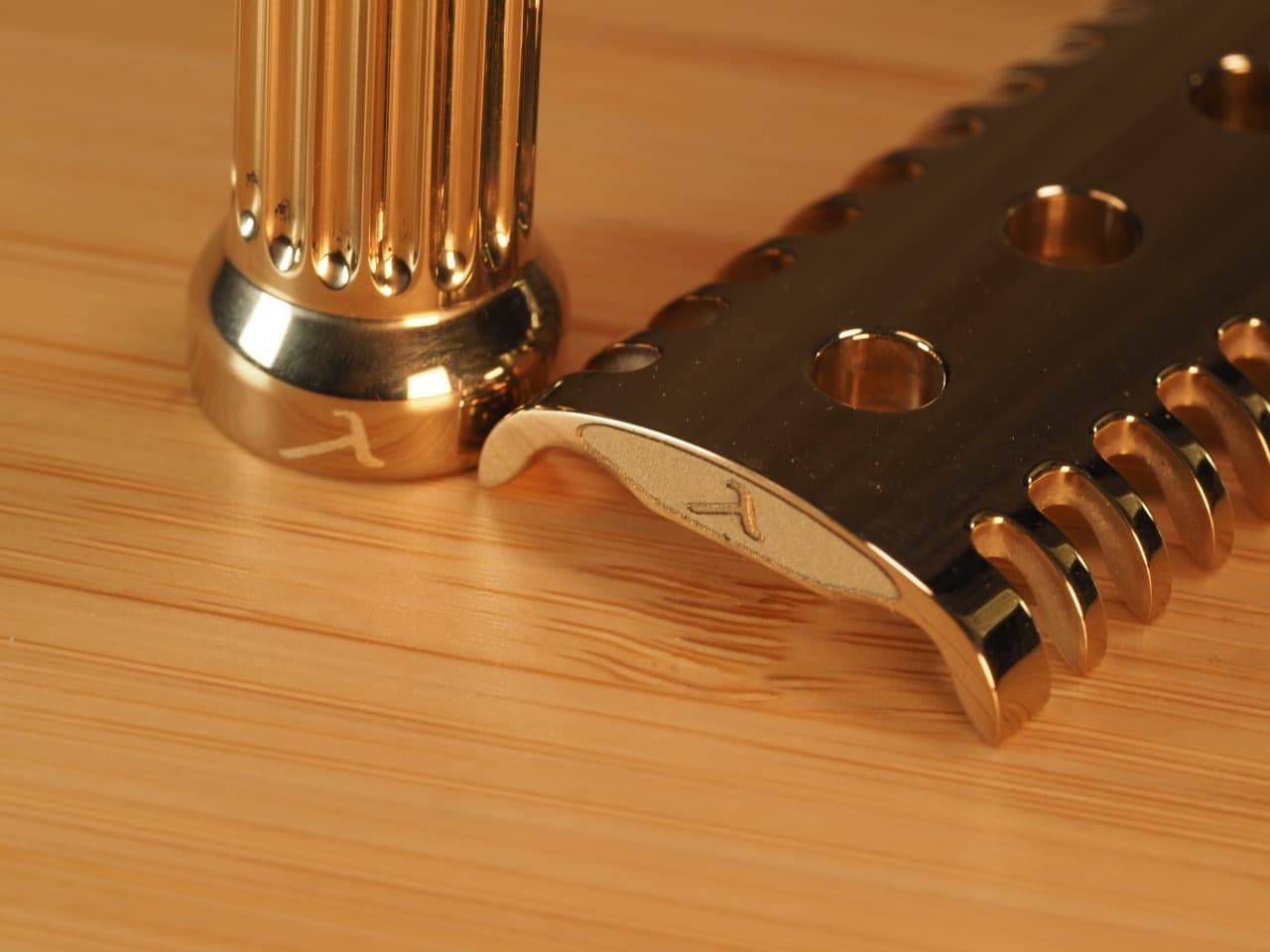
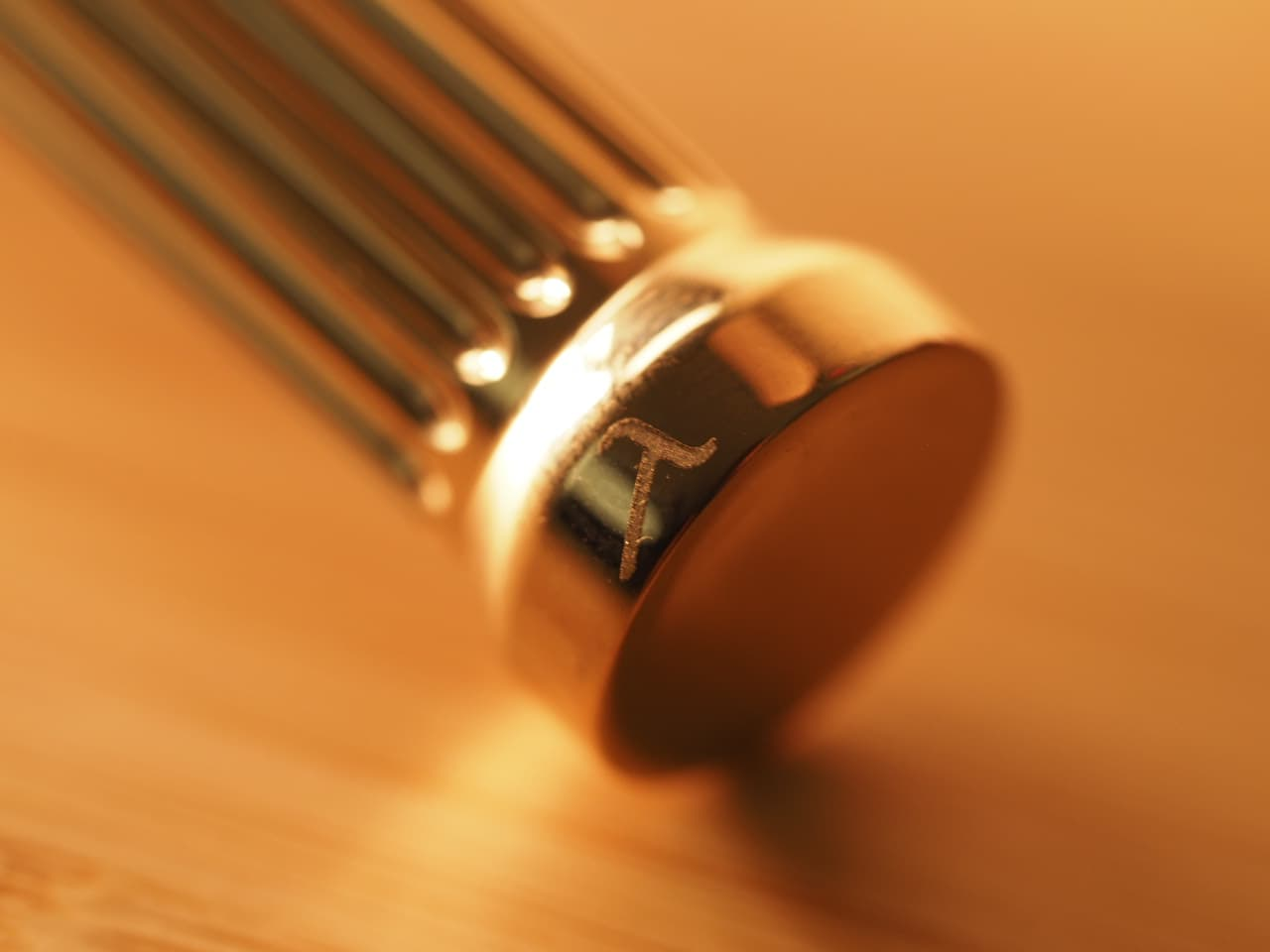
All pieces feature the Lambda logo in one or more places. The handle has the logo and name engraved on its base.
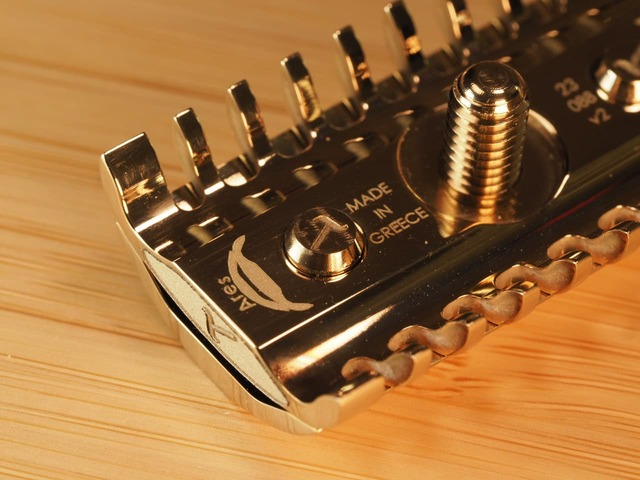
The top surface of the cap's blade guides is engraved with the Lambda logo. Unlike the Athena, where the guides are inserted into a base plate that conceals them, the Ares v2's cap has holes that allow the guide rails to protrude, revealing the two logos. The guides extend slightly above the base plate. A detail I appreciate.

The base plate features the razor's name and silhouette on its underside, along with the serial number engraved on the left and right edges. The serial number always begins with the number of the year in which the razor was produced. Additionally, the Ares version (v2) is engraved. The Lambda logo, with a different textured background, is engraved on the two short sides. The Lambda logo is smaller than the one on the Athena because the Athena's base plate is thicker than the Ares v2's, resulting in less space. "Made in Greece" completes the information.
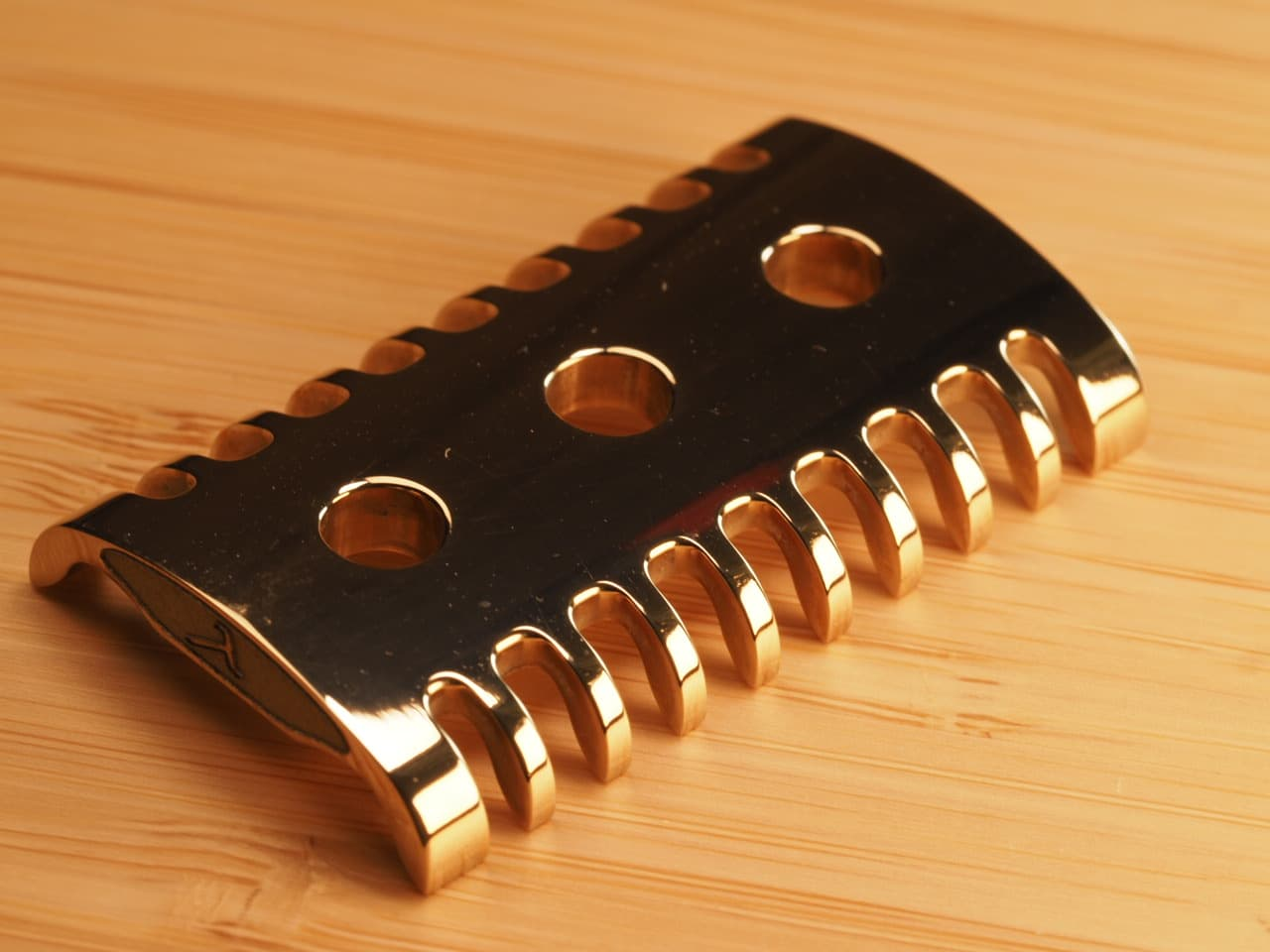
The inside of the base plate is completely smooth. It offers a large surface area for attaching the blade. This is the design I call the "Tech" type. Tech razors also have a curved, smooth plate to provide good support for the blade. The Tech design was actually a necessity when it was created. The blades were tempered but not relaxed and were very stiff and brittle. This means they could not be bent a lot. The Tech razor head design gave them just enough bend to exit the head at a usable angle. The outside of the Tech head did the rest.

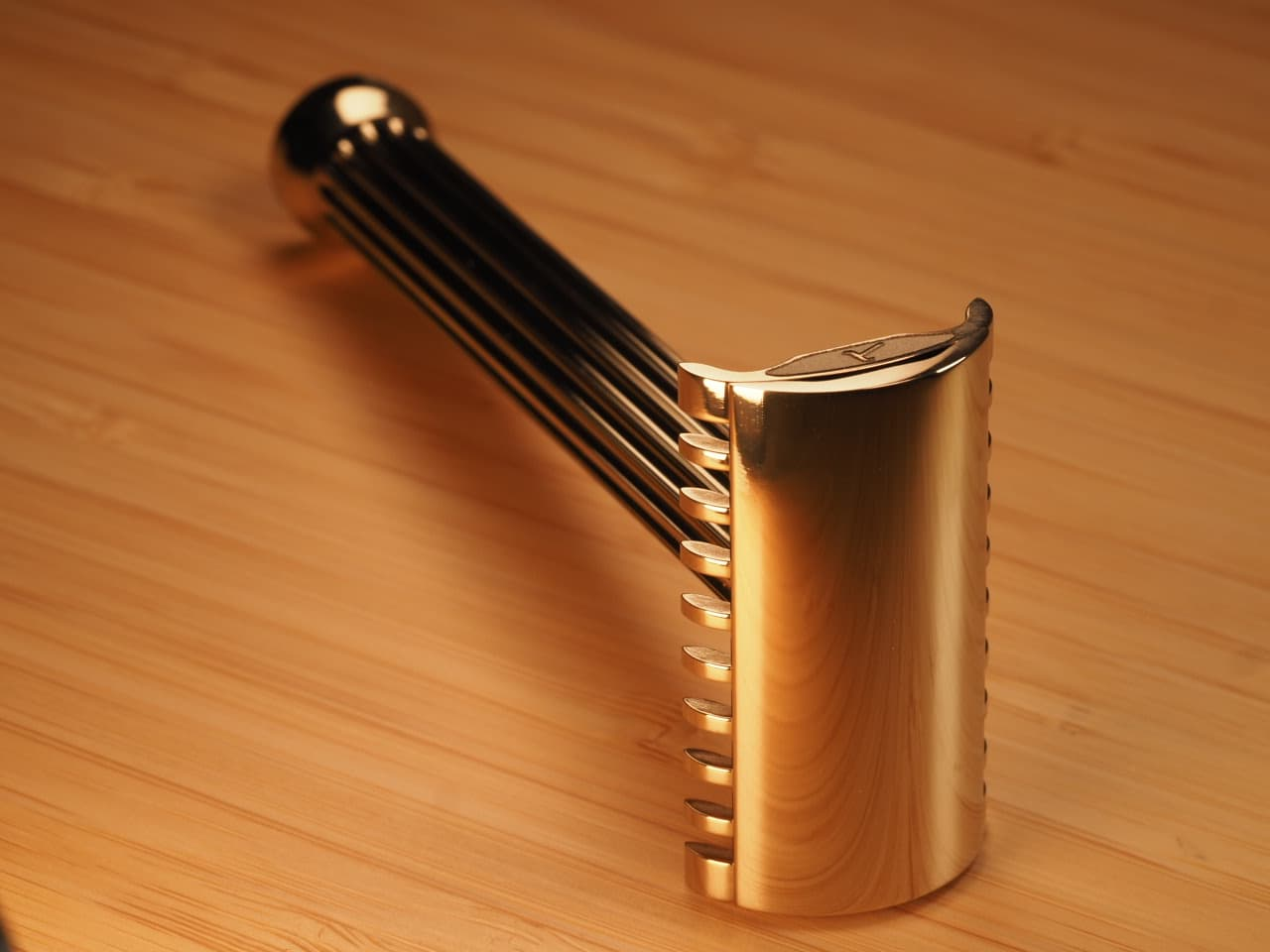
The lower part of the base plate also uses a simple yet effective design. The base of the teeth has a recess to hold more shaving cream, and in the center, there's a recess for the handle. The most striking feature of this part is the length and angle of the comb's teeth. The teeth are relatively long and angled downwards, unlike the teeth that typically extend from a base plate.
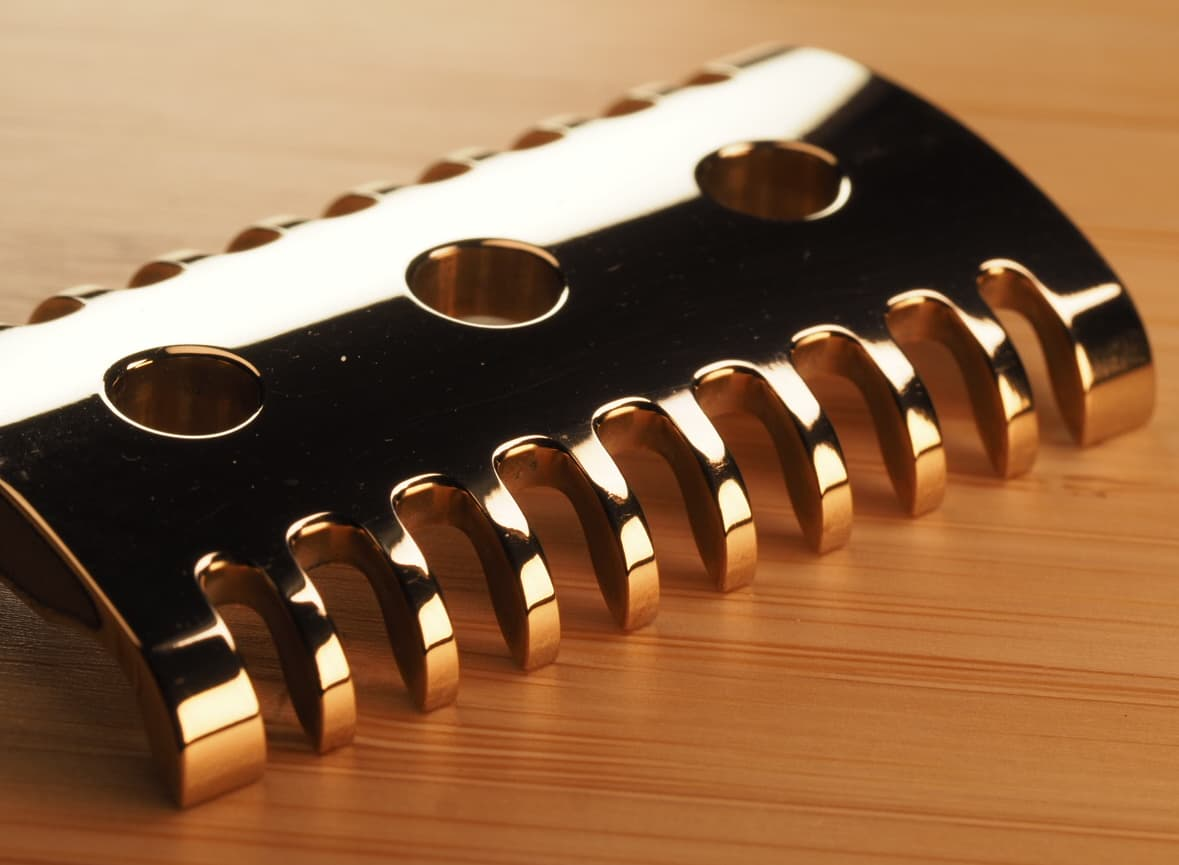
The Ares v2 is a razor with an open comb, that much is clear. Each side has 10 teeth. This means the comb is quite open. There are combs with 12 or 13 teeth. We also have the JAWS GC68 with only 9 teeth. Less teeth normally means more space for the blade.
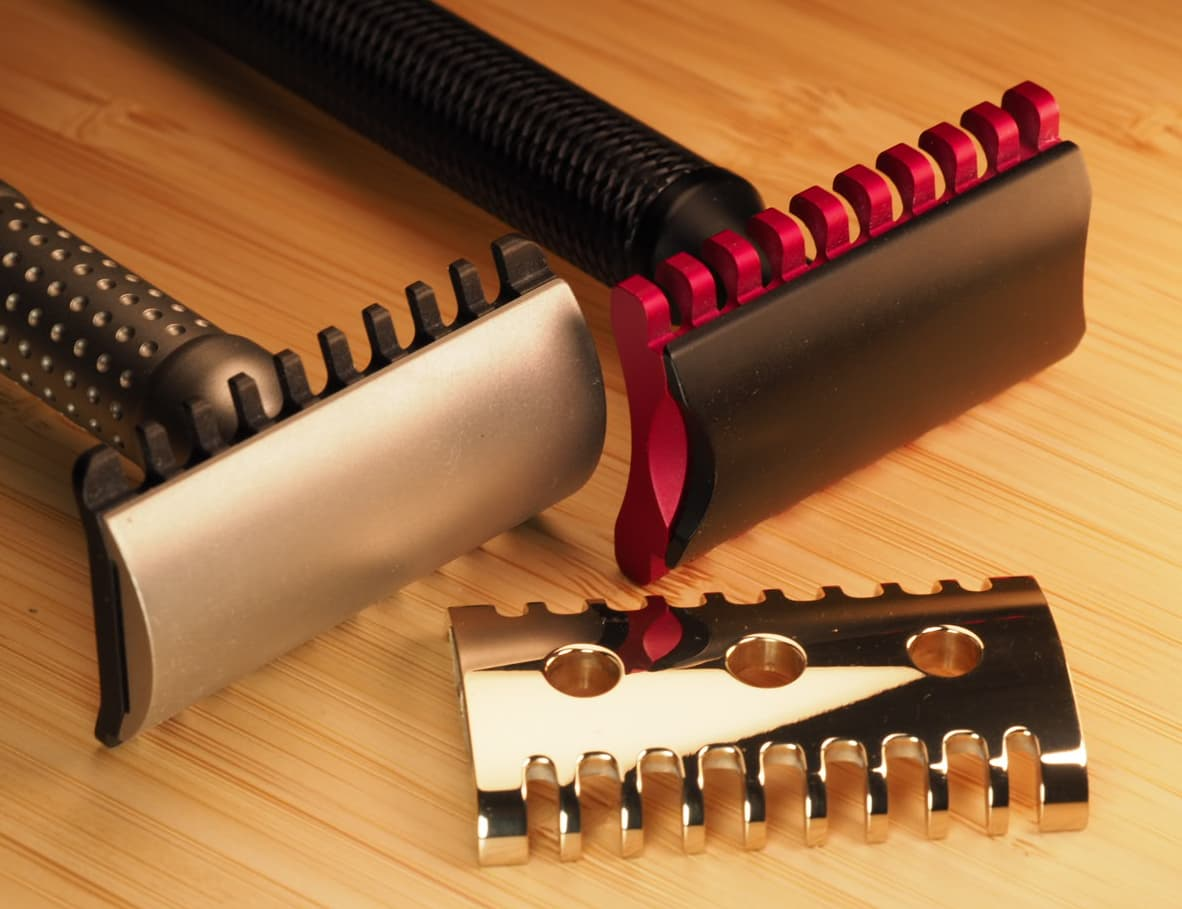
The number of teeth doesn't tell the whole story though; the width of each tooth is also important. The wider a tooth, the less space there is between the teeth. More teeth mean a flatter shave. Narrower teeth mean less resistance and allow you to pack more teeth into the comb. Fewer teeth mean less resistance during shaving and more space for the hairs. Each configuration has advantages and disadvantages. Which configuration did the Ares v2 use? The Ares v2's configuration combines a small number of teeth (10) with relatively large spacing between them (2.7 mm). For comparison, this is similar to two other 10-tooth combs, the Tatara Nodachi and the Karve Christian Bradley. The Tatara, which I consider one of the most aggressive razors available, has a tooth spacing of 2.4 mm. The Karve, a very efficient razor but not as aggressive as the Tatara, has a tooth spacing of 2.1 mm. It's true that the three combs have completely different shapes. The Tatara has straight, thin, and short combs that curve outwards. The Karve has combs that curve downwards, are square, and thick. And the Lambda has long, thin combs with a downward curve (not a bend). It creates a very wide shaving plane due to the length of its teeth and a very shallow cutting angle. We'll see the effect this has on shaving later.
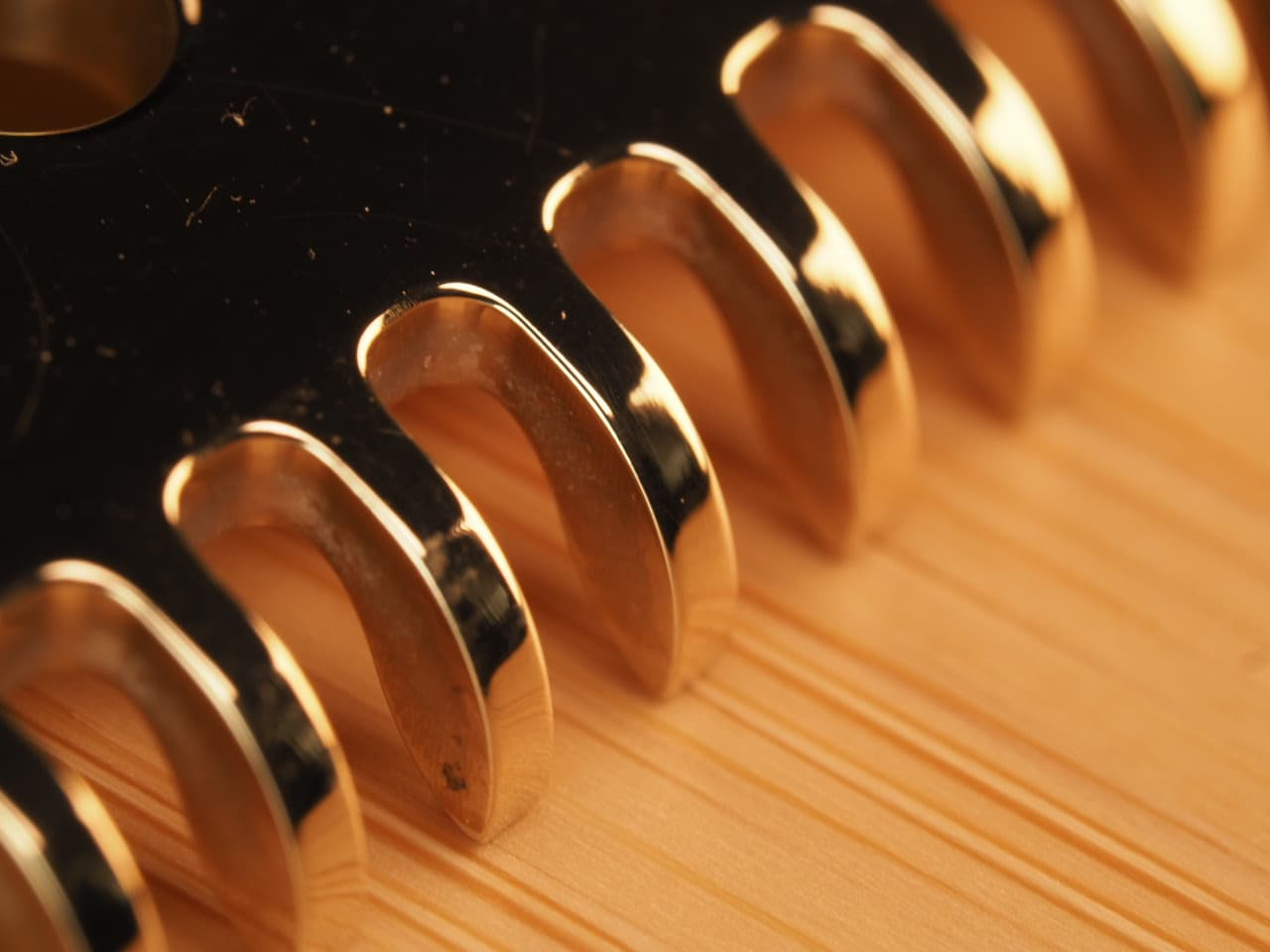
The entire razor is mirror-polished. Every single bit. Visible parts and hidden parts alike. And not only the polishing but also the potentially sharp edges have a flawless finish. The teeth of the comb are all angled at the outer corners. And if that weren't enough, they're angled at the inner corners as well. The tips of the teeth are angled downwards, away from the user's skin, and although they have an angled point, they're only minimally sharpened. Running your finger over them, you can feel just the tip of the tooth without it causing any discomfort. Defined, but not sharp.
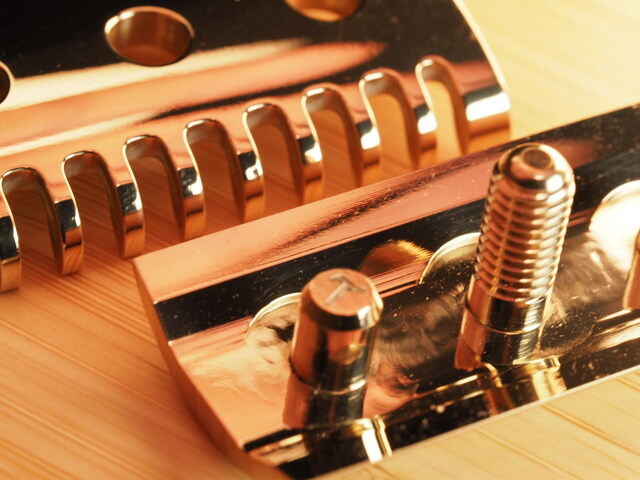
This may all seem logical, but polishing the entire razor, including the mounting surfaces and other parts that benefit from tight tolerances (guides, center thread, base plate), can compromise these tolerances.

This is not the case with the Ares v2. Everything fits perfectly. The guides fit perfectly into their corresponding holes. There's a margin of less than half a millimeter, just like on the Athena. The central thread is much the same. There, the tolerances are even tighter, just like on the Athena. Speaking of the central thread, we can appreciate its profile. It's the type where the thread isn't pointed but has a slightly more square profile. This significantly improves the connection, the function, and the (un)screwing action.

The short sides of the razor are also very well finished. On these sides, we see the Lambda logo machined into a textured surface. The edges are well-defined and contoured to avoid irritation. They work perfectly for removing foam from the sideburns when preparing for the first pass.

Looking at the comb's teeth in profile, one might think they bend downwards, creating a stepped effect. However, when the cover is assembled, this is not the case.
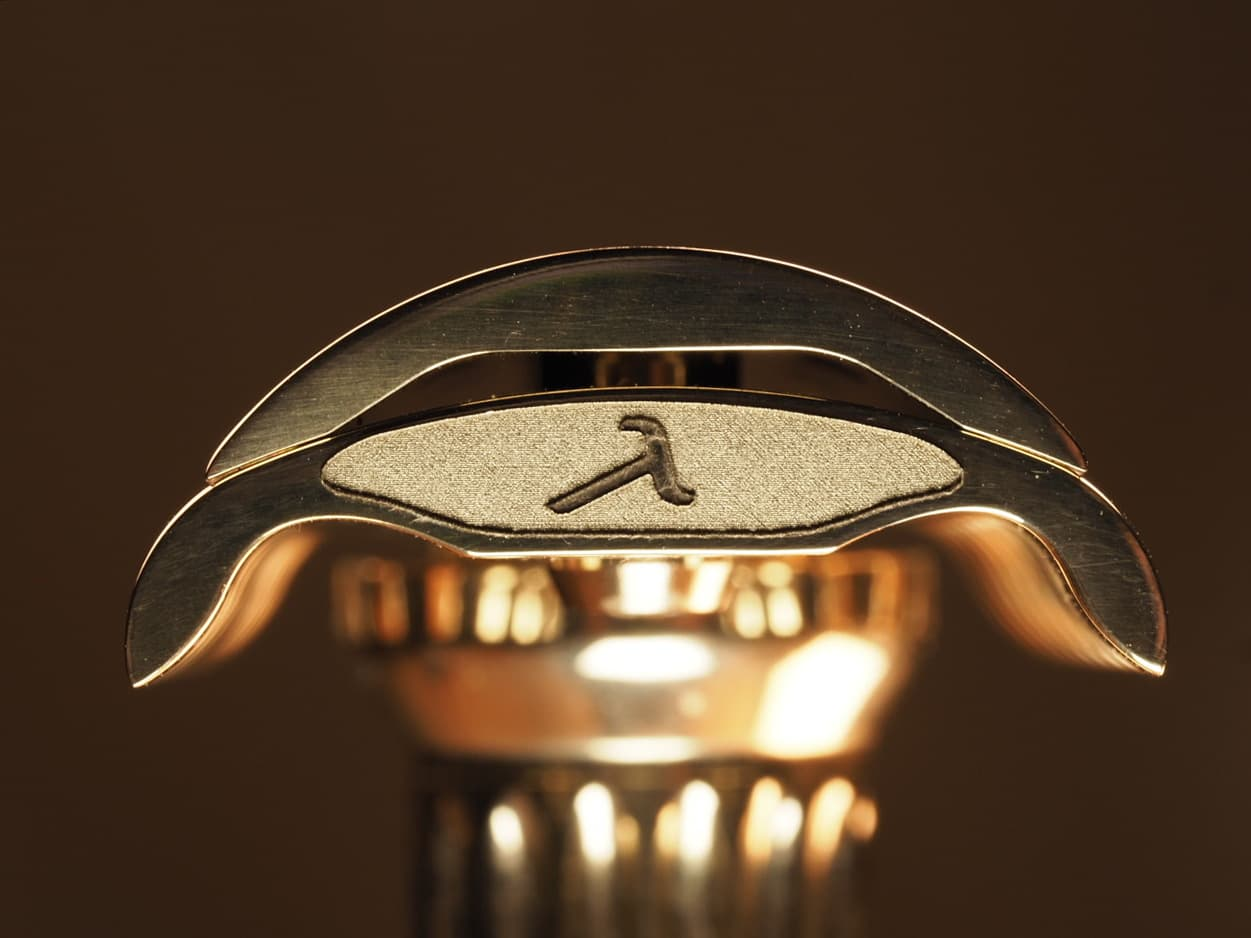
The cap's angle continues into the angle of the comb's teeth. It's a smooth, uninterrupted surface. I say this because the gap is the smallest I've ever measured. The entire cap and the long teeth form a smooth, supportive, and guiding surface. The cap's height is also the greatest I've ever measured (5.3 mm). This allows for the downward curve of the blade, in line with the cap and comb. It hardly matters what technique you use when making the passes. You can use a little more cap or a little more comb to modify the cutting angle, but at any angle. This razor cuts. (-Doug Marcaida-). In the case of the Athena, I mentioned the R41 and the Babysmooth to compare different elements of the razor. The Athena's comb has many similarities to the R41's, and its geometry also benefits from the same advantages as the R41's head.

The Ares v2 is more similar to the Razorock Babysmooth. I don't know of any other razor that creates such a wide, smooth shaving plane with such a tight cutting angle as the Ares v2. The Babysmooth is very similar, especially in the smooth line between the cap and the comb, but it doesn't have an open comb and has a wider gap because it allows more of the blade to extend. The closed comb and the larger shaving volume provide a different feel.

Shaving volume is not the same as gap. Gap is simply a line determined by the distance (measured parallel to the handle) between the cutting edge and the comb. Shaving volume is a triangular area comprised of the space between the comb and the blade. In the case of the Babysmooth, we have a shaving volume, but in the case of the Ares v2, this volume is almost reduced to zero. This has advantages in blade clamping.
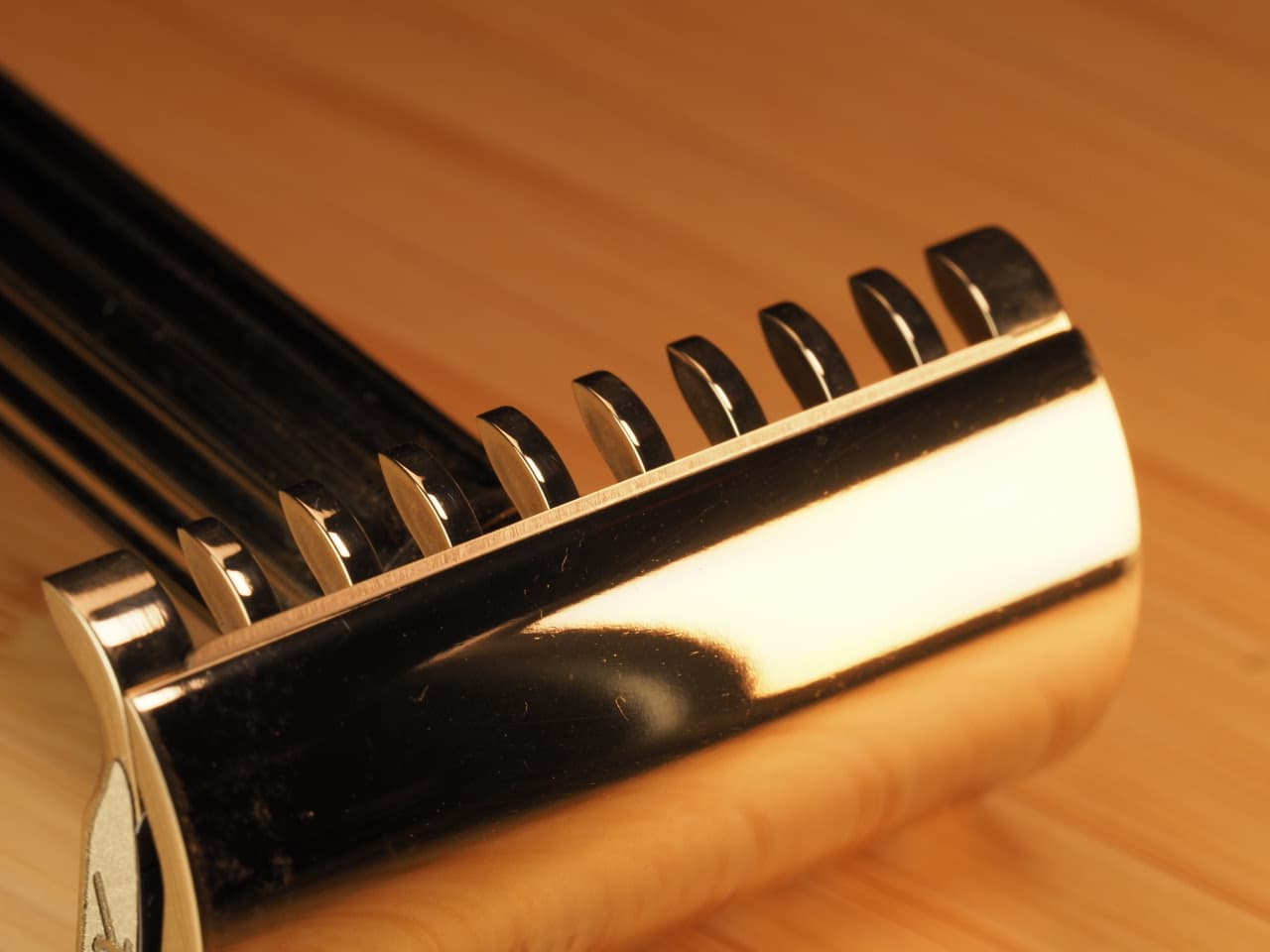
The Ares v2 secures the blade almost at the very edge. The blade barely protrudes and is also secured above and below at that point on the blade's tip. The clamping surface is very large. The consequence of all this is the following:
1. The blade is clamped over a very wide surface.
2. Only the blade edge protrudes from that clamping area.
3. The cap does not overlap the blade and there is no space below the blade to the comb.
The attachment is airtight above and below the blade at the same point. The blade's edge receives unbeatable support, creating a super-rigid cutting edge. Furthermore, the razor only exposes the portion of the blade that needs to do the job, nothing more. And all of this is packaged in a wide shaving plane with a reduced cutting angle. You can imagine where this is going…
Material: 5
Finish: 5
Tolerances: 5
Head/Comb Shape: 5
Total: 20 points
Grip

A good handle does two things. It gives us control over the movement of the head in the horizontal/vertical plane and along the longitudinal axis. When we are able to control that movement in all situations, we can say that a handle perfectly fulfills its purpose. Handles have two qualities that provide control over these movements: the friction of the material and the knurling or other textures. These two factors must provide the necessary control. In the case of the Ares, the friction of the material is negligible. The material's polish is very uniform and smooth, and there is almost no grip caused by friction.
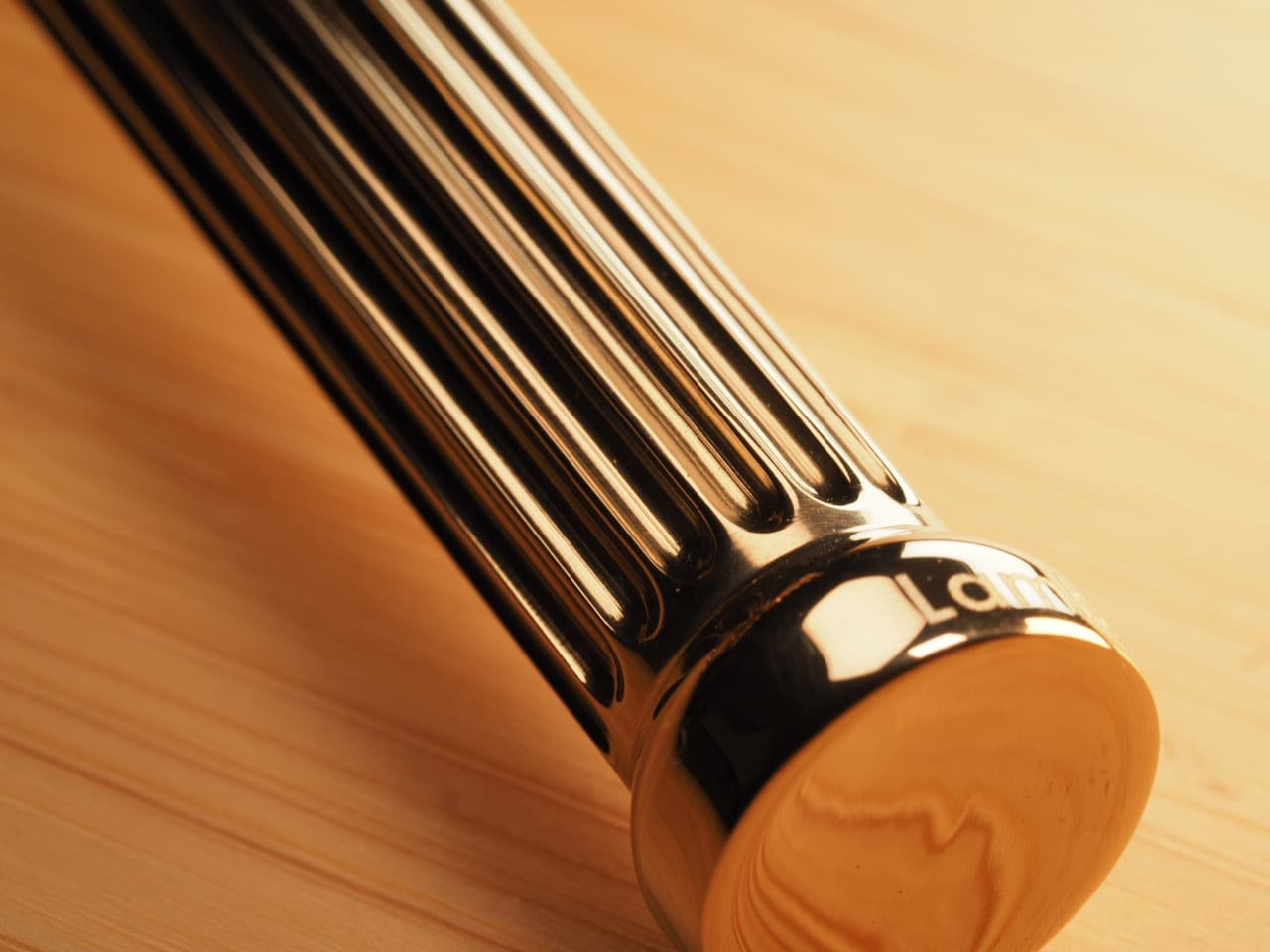
But all the grip it needs is generated by its shapes. The handle is shaped like an Ionic column with thin, flat longitudinal lines at its highest point. This ensures perfect control of the movement along the longitudinal axis.
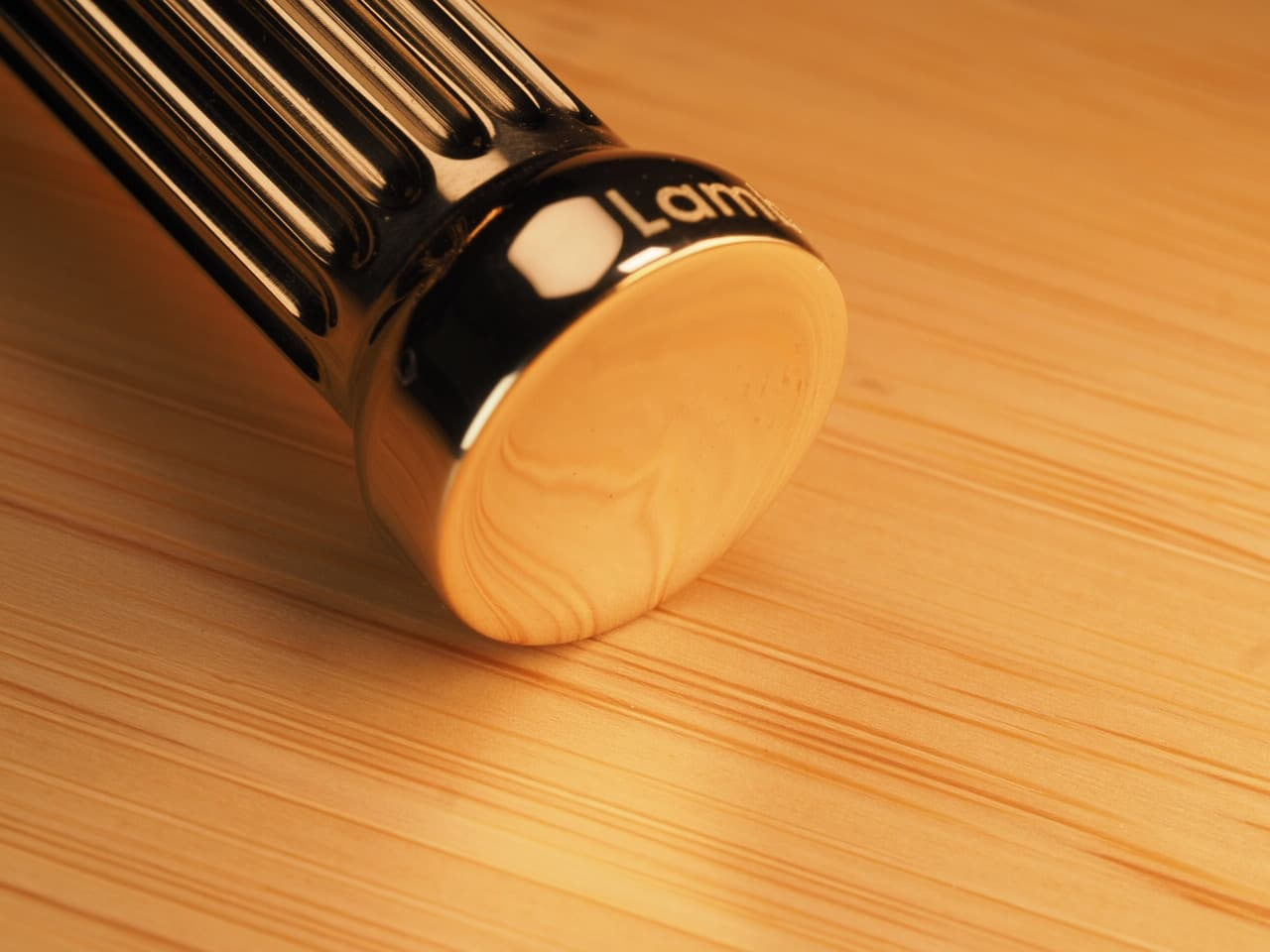
To control horizontal/vertical movement, we found a perfectly shaped pommel. The base of the pommel is not flat but concave.

This gives it a perfect shape to fit the central joint of the little finger. The convex joint engages the concave surface and eliminates any possibility of horizontal slippage. The pommel is also ideally positioned to prevent vertical movement; it cannot go down but also cannot go up (the edge of the pommel would hit the ring finger). When I lather my fingers, I can still shave well, but you can tell the grooves and the pommel are working hard. And when you can tell something is working, it's because there's a reason for it. The handle is perfect both wet and dry. With soap, it's “simply” very good. Thanks to the shape of the longitudinal lines, the spacing between them, and the polished material, this handle offers sublime comfort. It's a delight to hold. The longitudinal lines provide a gentle massage to the fingers, and the material has a "warm" feel that steel lacks. Aluminum also has a similar, somewhat velvety feel, but in the case of the Ares v2, it's silkier.

The control is perfect, too. The lines offer grip in any position, and the pommel also works well upside down. In that case, the top edge is used to rest on the index finger and slow the vertical movement.
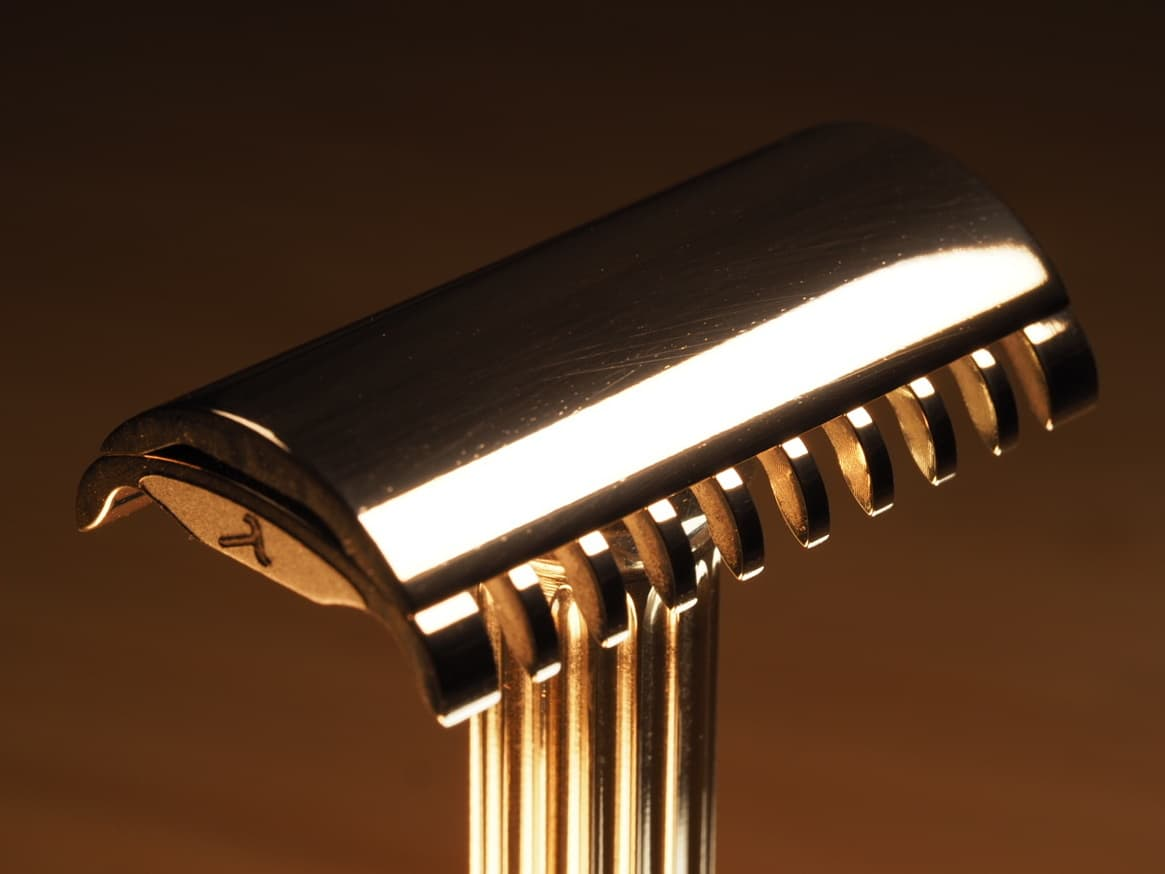
With its mirror-like finish, wide shaving surface, long, fine comb teeth, and high-quality materials, you can imagine how smoothly the head glides. It's also perfect. There's no surface, shape, or obstacle to hinder the head's movement over the skin.
Dry/Wet: 4
Comfort: 5
Razor control: 5
Head slide: 5
Total: 19 points
Handling
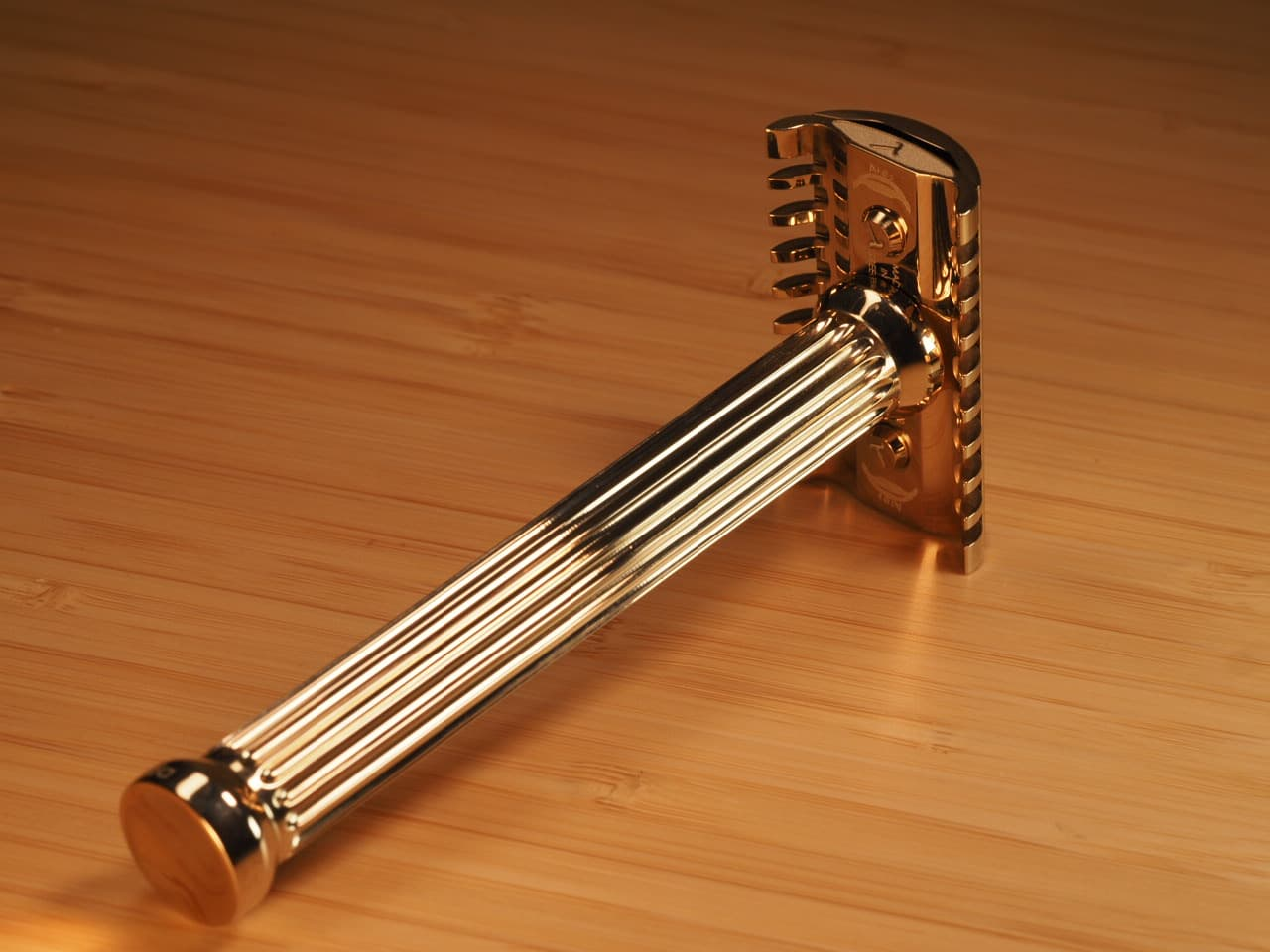
The razor weighs 98 grams, with 30 of those grams located in the head. This gives it a weight distribution of 33/67%. In the Athena, the mathematical distribution was 25/75, but the actual distribution is more like 30/70, also due to the shape of its handle. This weight distribution already worked perfectly in the Athena (which weighs 120 grams), and it works even better in the Ares v2. Its low weight, so close to that "magical" 100 grams, is a huge advantage. It's an agile and maneuverable razor without being compact. It's a razor of more than reasonable proportions (it's not small) but it's not overly heavy. I'd even say that its weight is low compared to razors of the same size. Where the Athena had a slight head forward tilt, the Ares v2 has a perfectly balanced weight distribution. The center of gravity is located between the index and middle fingers, the perfect spot to feel what's happening at the head. At the same time, its weight helps us make strokes with ease and fluidity.
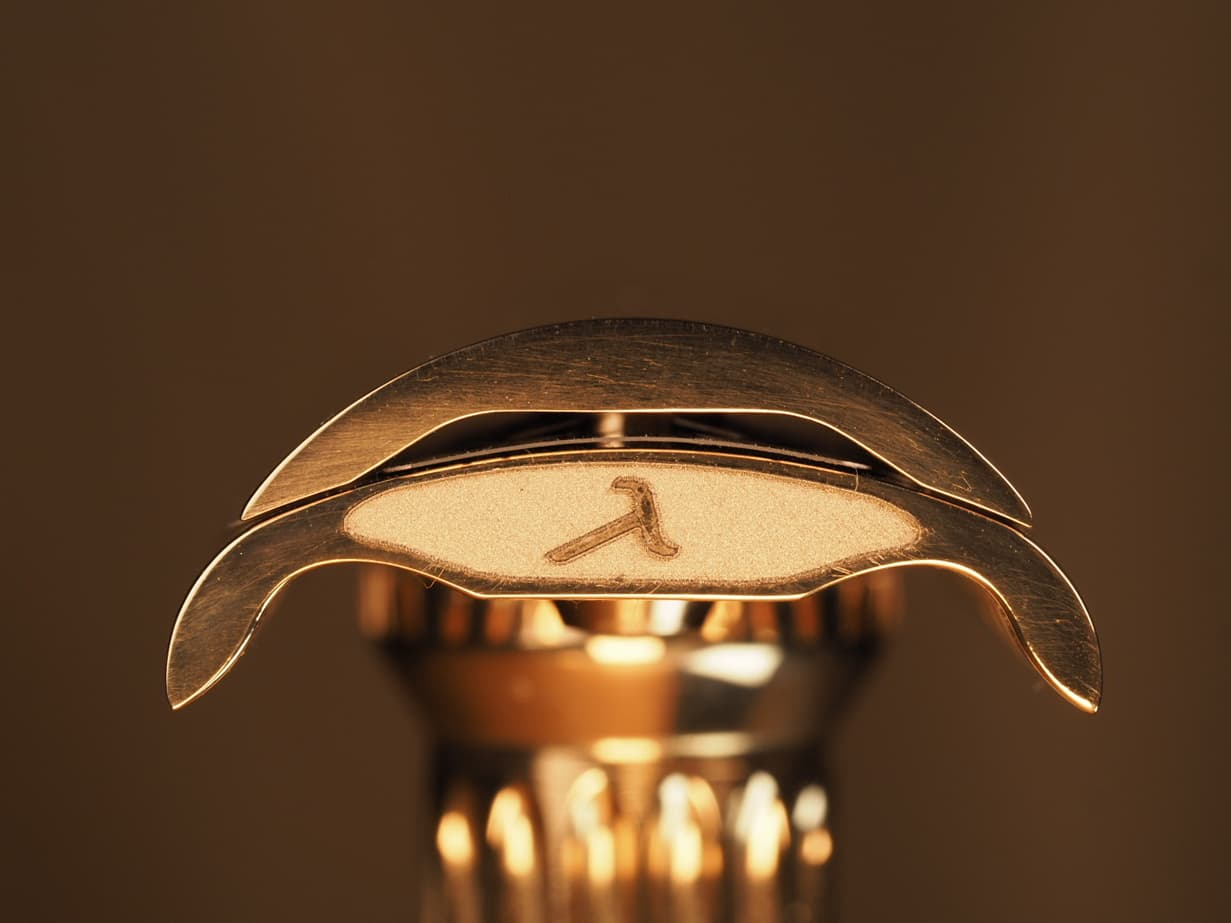
A three-piece razor always requires us to reach close to the head to attach or detach the blade, which always carries a risk of cuts. With this razor, that risk is minimal thanks to the smooth and solid operation of its central screw, the well-defined and textured sides that offer a secure grip, and the fact that the blade remains fixed in the cap when it's attached or detached. The cap's guides are precisely sized and hold the blade securely in place. I usually deduct a point for three-piece razors, but in this case, the design does everything right, and I don't foresee any danger in changing the blade. The comb’s teeth offer an even more pronounced extension of the gripping area, but it really didn't need more. Everything fits together perfectly; nothing moves when it shouldn't, and the parts that do move do so with impeccable composure.
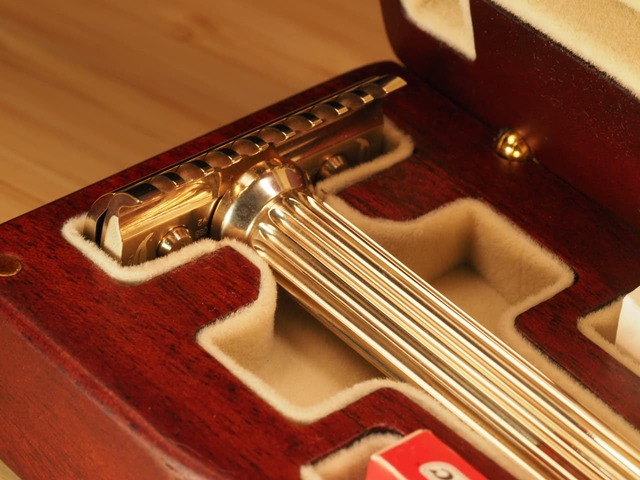
Normally, with heads that curve the blade more than usual, we have to screw it on feeling like we're compressing the blade into place. With the Ares v2, we also feel that sensation, but due to the very tight tolerances, it only lasts for half a turn of the handle. That's where we need a little more force. Unscrewing is the same. That first half turn releases the pressure on the head/blade assembly, and from then on, we only feel the smooth movement of the central thread. Cleaning the comb head is easy. First, rinse it. The bottom of the comb is wide and holds a lot of lather. This can be an advantage as long as the lather doesn't interfere with your grip. That's one of the reasons I do the soapy handle test. It depends a bit on the type of lather you prefer, but the lather doesn't fall off. I usually shave the surface of my cheek with one part of the razor and the area below my jawline with the other. That's a lot of lather. The Ares v2 stores it all. The inside of the base plate is smooth and unobstructed, making it perfect for cleaning. The inside of the cap is also easy to clean. The underside of the base plate is also free of obstructions. The comb teeth are fine, and it's relatively easy to insert a thick cloth or towel between them for cleaning. The material isn't a fingerprint magnet, but when something is so smooth and shiny, there's always a chance of getting a fingerprint, especially on the cap. There are no fingerprints on the handle. The solution is easy. Clean everything and reassemble the razor. While holding it by the handle, clean the head and put it back in its case.
Balance: 5
Weight: 5
Security: 5
Cleaning: 4
Total: 19 points
Shaving
To describe Athena's shave, I said this:“This razor is divine”. And history repeats itself with the Ares v2. The definition of a "good" shave must always encompass two things: hair removal and the absence of dermatological problems. In the latter, I include cuts, irritation, stinging, red spots, and all the other things that make our skin feel bad. Let's start with the first: hair removal.
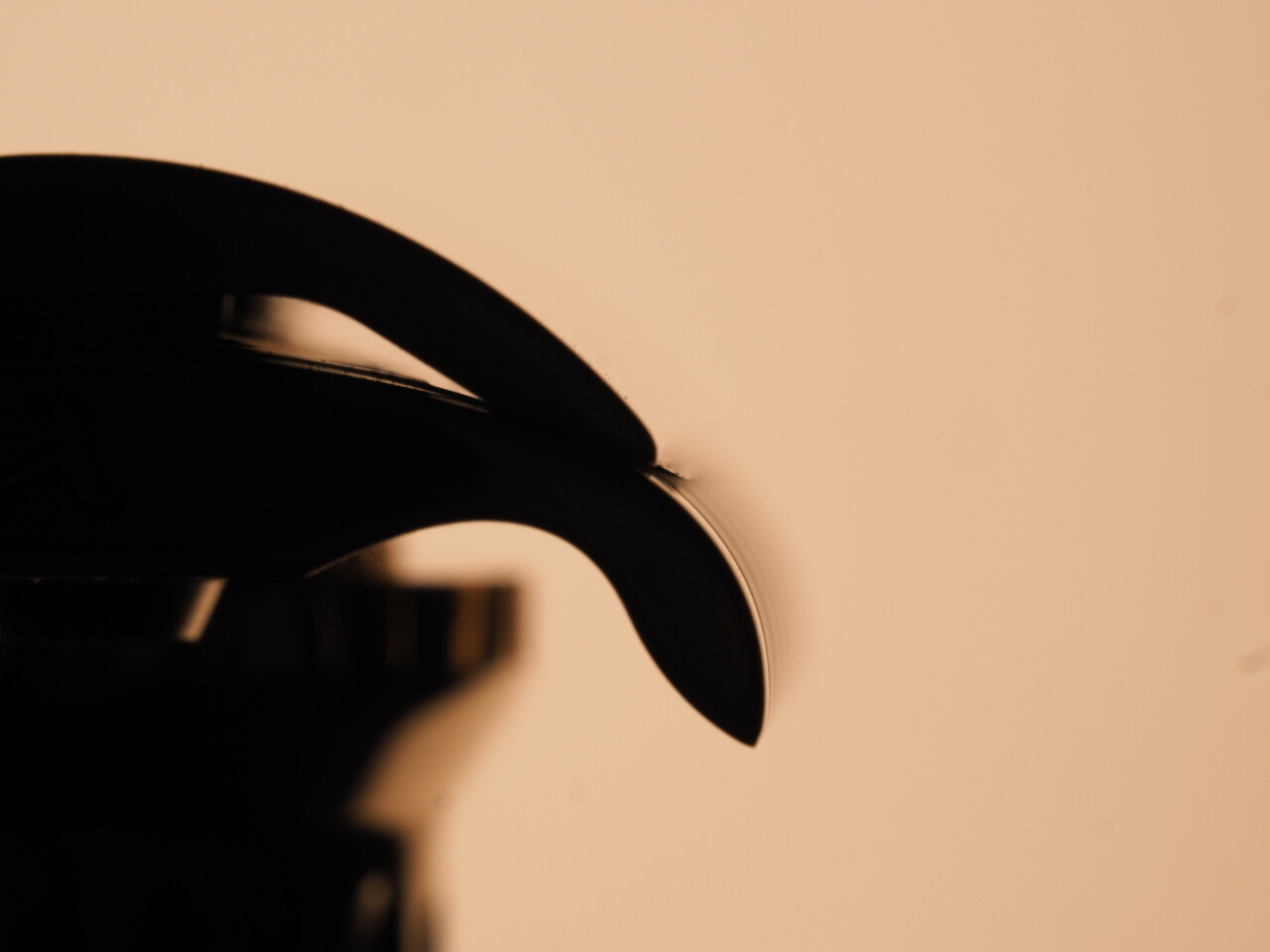 With this razor, I don't need to explain that it gives me a close shave in two passes; that's a fact that other razors also offer and receive 5 points for closeness and efficiency. But this razor goes even further. In perfumes, we have two important terms that describe a fragrance's performance: projection and longevity. A perfume might smell wonderful, but if no one but you can smell it and the scent only lasts an hour, its performance isn't very good. Well, it's more or less the same with shaving. A shave needs to be close, but it also needs to last. If you shave and then your beard grows back after six hours, it's not very effective. To put things in context, my beard grows quite quickly. If I shave at 8 a.m., I could shave again around 8 p.m. I'm already scratching after 12 hours. This week I shaved before going to bed. A clean shave right before going to bed. When it was time for my next shave, again before bed, 24 hours had passed and my beard was in about the same condition as it would have been with another razor after 12 hours. I don't know why, but this razor shaves the hair really close without irritating my skin at all. "It'll be very aggressive," I hear you thinking? Quite the opposite. And this is the second key factor for a good shave with both the Ares v2 and the Athena. Their ability to offer a super-efficient cut, but with the blade positioned in a way that doesn't cause any aggression towards the skin. The Babysmooth is very smooth but not as sharp. The Timeless Ti95 is very sharp but not as smooth. And these two I'm mentioning, are among the best out there! When I say that one isn't as sharp and the other isn't as smooth, I can only say that in comparison to the Ares v2. And the Athena... but with a nuance. I'll explain later.
 In my top 20 ranking, there are no bad razors. They're all fantastic. And in the top 10, well, that's another story. Each razor in the top 10 has nuances where one does this a little better and another does that a little better, but the differences are minimal. That there are differences is a given, but to detect them you have to look very closely and in the end, they’re all extremely good. With the Ares v2, the differences seem amplified, and everything is much clearer. I'm not saying the Ares v2 is 20 points better than the next model, but the feeling it gives of a razor capable of doing everything well is very prominent. It's excellent, and it's very easy to see that in every single detail.
 And now we come to the Derby test. I always say that one of the most important things about shaving is the blade we use. After all, it's what touches our skin. It's the element that does the work. It's where the real work is done. And I still think that when it comes to all other razors. Not anymore with the Ares v2. The blade's stability, the rigid edge it presents us with, and the shaving surface with so much room to maneuver mean that any blade will do the job well. I also used a Lord and a Rapira but I shaved with the Derby as if it were just another one. Obviously, I also used a Feather. To appreciate a blade that doesn't cut anything (Derby), you have to use a blade that cuts everything (Feather). There's very little difference. The Feather is slightly more effective when I make a horizontal pass just below the jawline in the concave area under the ear. There, I shave at very low speed, and the blade has to do all the work. I don't assist with speed or pressure. The Feather melts the hairs, and the Derby cuts them. Since the Ares v2 (and the Athena), I'm convinced that in 90% of cases, the blade is the most important part of the shave; in the other 10%, use an Ares v2 or an Athena.
 Returning to the shaving plane, I want to highlight the range of maneuverability it offers. The razor cuts at a handle angle between 45 and 20 degrees. When the handle is at 45 degrees, the cut is incredibly smooth. We don't lose efficiency due to the blade's position. By lowering the handle towards the skin, we slightly change the angle of the blade. We're increasing the cutting angle with the skin, always within a controlled exposure, with no gap and a wide shaving plane. This allows us to increase efficiency a little with a slightly steeper cutting angle, but with the same safety measures. This change of angle is very useful in areas where we need that extra bit of efficiency. It's not necessary on the cheeks, but we all have areas on our face where the hairs are farther away, hidden, or twisted. In those cases, lowering the handle increases efficiency by a little more.
Efficiency: 5
Head control: 5
Blade influence (Derby Test): 5
Indulgent: 5
Total: 20 points
Quality/Price
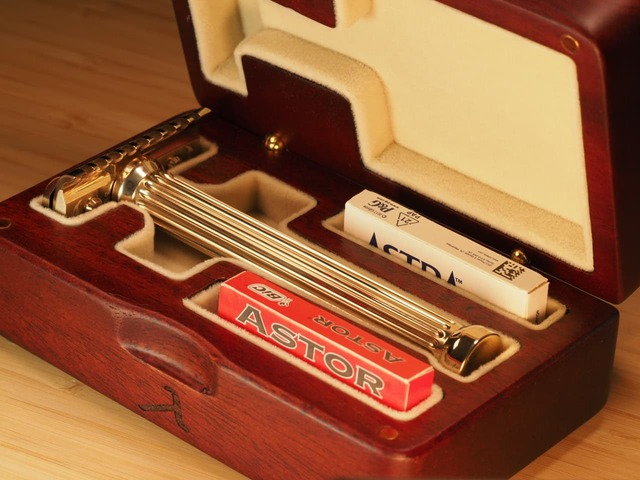
This razor is gorgeous. Made by the Greek gods themselves, even if this one's name is Theodoros. And that's not all. The razor comes in a solid mahogany box. The name and profile are engraved on the front, and the brand and year of production are on the top. The interior is completely lined with a soft material to prevent scratches. There are also two compartments for carrying two boxes of blades. When you receive the razor, it already comes with two boxes of blades: Astra Blue (which I really like) and BIC Astor, which I've never tried. The razor resting in its box is a picture that speaks volumes.
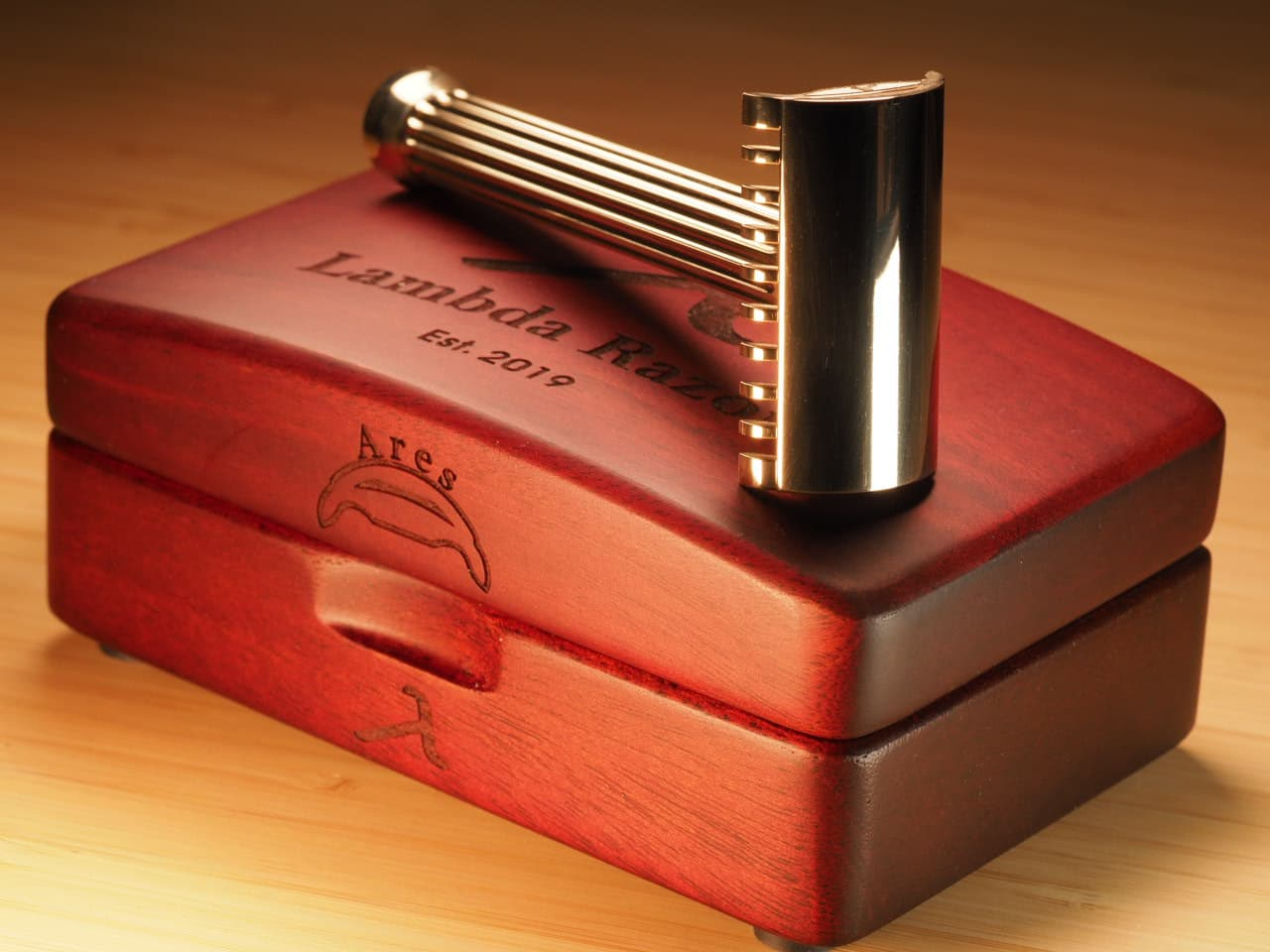 What kind of reward does this razor offer? It's almost scandalous. We have a razor that works like a charm. It's also made of an exclusive, beautiful, and highly functional material. The design is a real achievement. It shaves like an angel. And on top of all that, it comes in a luxurious mahogany box with two boxes of blades. For less money than you'd pay for razors that don't even come close to this kind of reward. I'm speechless at the quality/price ratio of this gem. It's simply wonderful.
(This next part is all a copy of the Athena review. I can't think of anything different to say...)
The value will only increase in the future. I can't imagine Theodoros being able or willing to scale up production to industrial levels. Currently, there are waiting lists for his products, and he only produces a small number of razors each period. The limited supply benefits the owners, not the manufacturer. Something I'd like to add to what I said about Athena. I've noticed that Theo has raised the prices of their razors. Even so, the new prices seem reasonable for what they offer, but this reinforces my belief that the prices of these razors are only going to increase. They are very high-quality products.
 I've had several conversations with Theodoros, and he's always told me he'd rather not send anything at all than send something that doesn't meet the highest quality standards he demands of his products and himself. I believe him. Why do I believe him? The reality of his razors tells me that's true. His actions speak louder than any words can. Could I live with this razor as my only razor for the rest of my life? It's impossible to give a more resounding YES than on this occasion. I would only regret one thing: if I couldn't use any other razor...
And here I have to add something to what I said before about the Athena. The only downside to having to use the Athena as my only razor for the rest of my life is...not being able to use the Ares v2 in that case. And vice versa. They're that good. I have a lot of razors in my collection but these are the only two I would save from a fire...although I have a pretty good idea that they would survive it on their own too. Hephaestus has nothing on them.
Aesthetics: 5
Reward: 5
Value in 25: 5
Single razor: 5
Total: 20
Conclusion
I see the Athena and the Ares v2 as being on the same level in terms of quality and performance. But I also see differences. The biggest difference is the aesthetic and technical design. The shapes are different, and the shaving geometries are completely different.
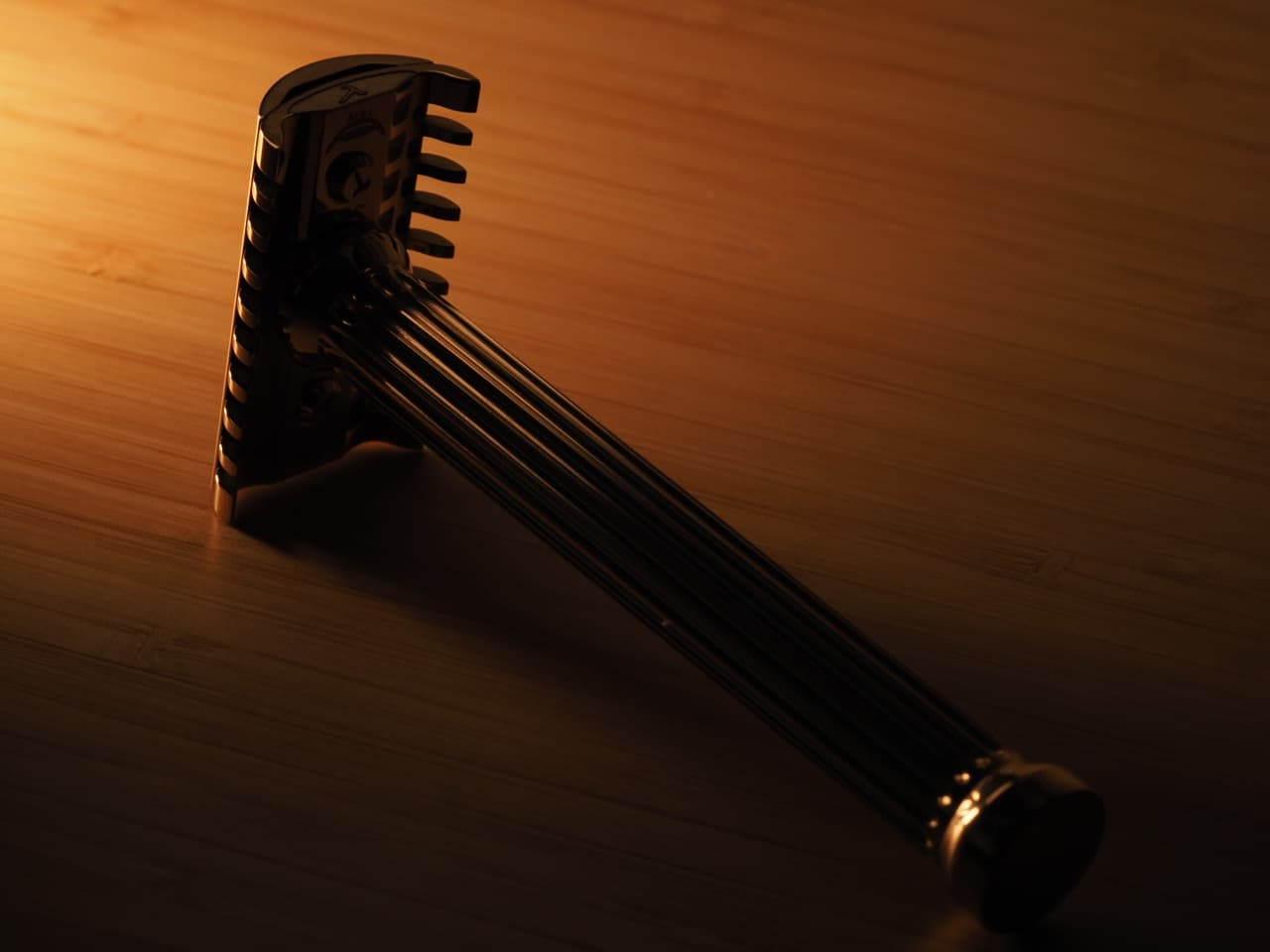 Even so, these are the two best razors I know. Two different designs, two different styles to cover different preferences and needs, but with the same exceptional quality. This is the nuance I mentioned earlier: the Ares has an open comb design, and the Athena has a closed comb design. Finding one good razor in your life is wonderful, but finding two is a miracle.
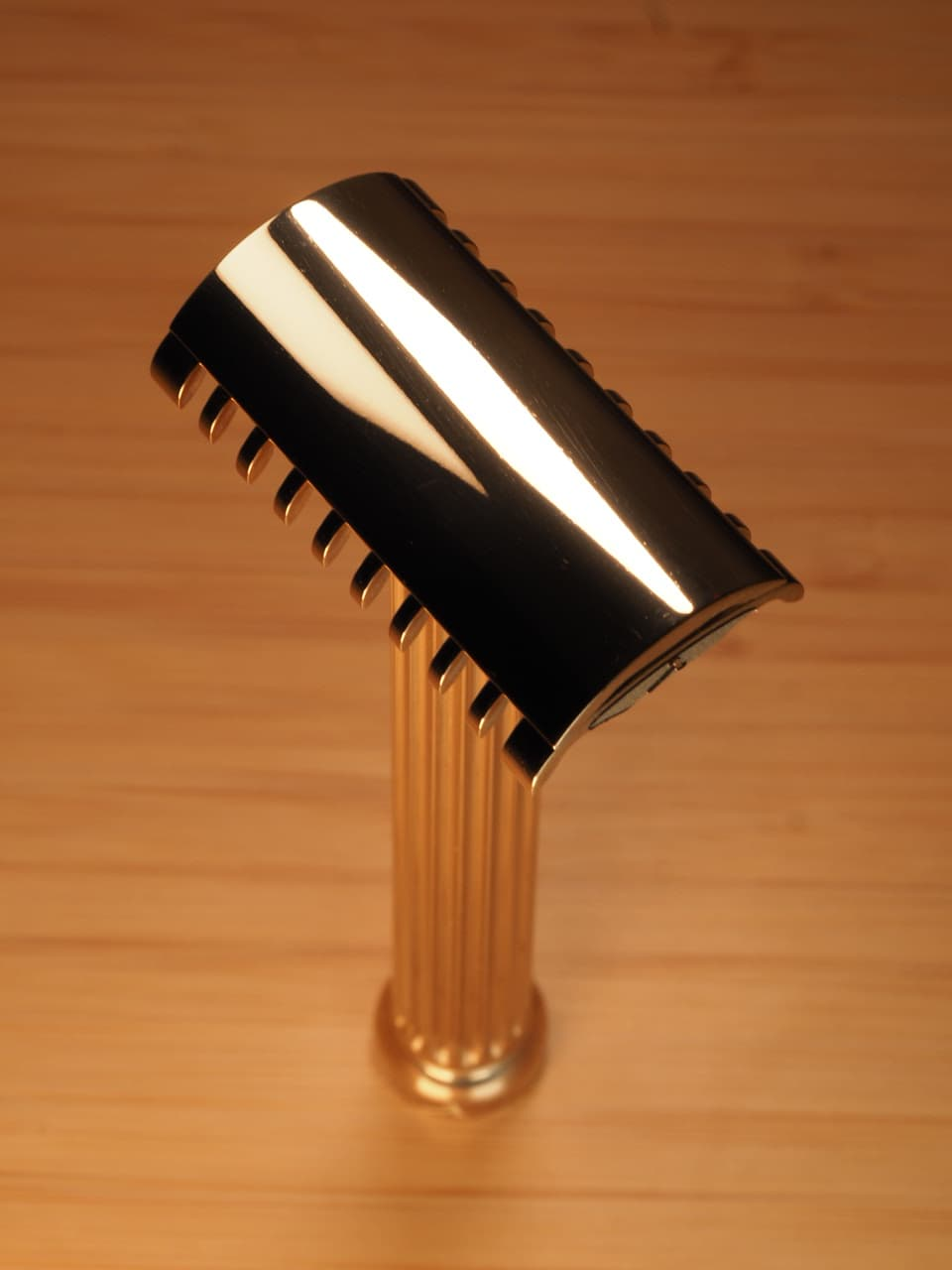 In the end, I can't, and don't want to, choose the best between the two; it would be like deciding which child you love more. And it doesn't make much sense to choose one when you can enjoy both. At this level of quality and performance, choosing one as better is missing out on half the magic. For me, it would be like choosing between Iniesta's goal at Stamford Bridge (which ultimately resulted in six trophies) or the goal he scored that won the World Cup for Spain. Two true miracles, just like these razors.
Total score: 98
Introduction
Lambda Razors is Theodoros Dragonas's company and is located in the northern part of the peninsula located west of Athens. This region, bordered by the Gulf of Corinth, boasts endless beaches and picturesque locations—an inspiring landscape.
The engineers at Grand Seiko, a highly prestigious watch brand in Japan (and everywhere else except Switzerland), have their design studio in the city of Shizukuishi in Iwate Prefecture, a region with breathtaking scenery.
When you strive for a very high level of quality, every detail matters. There's little to no room for error because at that level, every detail is magnified, whether good or bad.
I've already reviewed the Ares v2.'s sister razor, the Athena, and for me, it's the best razor I know. How will Athena's older sister fare?
Construction
The Lambda Ares v2 is a three-piece razor made from a special alloy using CNC machining. It's a bronze alloy (not brass) which contains aluminum and nickel. The difference between brass and bronze in composition is that brass contains copper (90%) and zinc (10%), while bronze contains copper (88%) and tin (12%). The resulting alloy surpasses copper in strength, hardness, and durability. For this reason, it's used in foundries, as an electrical conductor, and as an essential material in the shipbuilding, railway, and automotive industries. It's also widely used in the wind energy sector, mining, and metal fabrication. By creating bronze alloys, the material can be further specialized for its intended use. Adding between 5 and 11% aluminum to the alloy results in improved wear and tensile strength. It also further enhances bronze's already high corrosion resistance. This makes aluminum bronze suitable for use in the shipbuilding industry. This is due to the thin protective layer that aluminum forms upon contact with oxygen, which protects it from saline elements. Adding nickel makes this alloy even more corrosion-resistant and gives it even greater strength. In short, bronze itself is already a highly suitable material for use in a razor. Adding aluminum (for corrosion resistance and weight reduction) and nickel (for increased strength and corrosion resistance) only makes it more effective.
Total length: 101 mm
Handle length: 95 mm
Total weight: 98 gr
Head weight: 30 gr
Cap height: 5.3 mm
Handle diameter: 11 mm
Gap: 0.22 mm (own measurement)
Exposure: neutral
The specifications are slightly different from those of the Athena. There are a few things that stand out. First, the overall length, handle length, and head weight are the same. Second, it weighs just under the "magic" 100-gram mark. Third, the cap is very tall—the tallest I've ever measured, if I'm not mistaken. Fourth, the gap is incredibly tight. You couldn't fit a pin in there. We'll analyze all these elements point by point.
The finish, as with the Athena, is phenomenal. The mirror polish is beautiful and very well done. There are no imperfections on any part. I've used this razor quite a bit and haven't noticed any reduction in shine or scratches. I bought a slightly polishing paste from Dursol that was recommended by Theo himself, but I haven't found the need to use it yet. You can see the razor after normal use for 6 months. The bronze in the alloy obviously tends to develop a patina, but so far I haven't noticed any darkening. One day I'll polish it with the paste and buff it with a Dremel to see if the finish changes significantly.
All pieces feature the Lambda logo in one or more places. The handle has the logo and name engraved on its base.
The top surface of the cap's blade guides is engraved with the Lambda logo. Unlike the Athena, where the guides are inserted into a base plate that conceals them, the Ares v2's cap has holes that allow the guide rails to protrude, revealing the two logos. The guides extend slightly above the base plate. A detail I appreciate.
The base plate features the razor's name and silhouette on its underside, along with the serial number engraved on the left and right edges. The serial number always begins with the number of the year in which the razor was produced. Additionally, the Ares version (v2) is engraved. The Lambda logo, with a different textured background, is engraved on the two short sides. The Lambda logo is smaller than the one on the Athena because the Athena's base plate is thicker than the Ares v2's, resulting in less space. "Made in Greece" completes the information.
The inside of the base plate is completely smooth. It offers a large surface area for attaching the blade. This is the design I call the "Tech" type. Tech razors also have a curved, smooth plate to provide good support for the blade. The Tech design was actually a necessity when it was created. The blades were tempered but not relaxed and were very stiff and brittle. This means they could not be bent a lot. The Tech razor head design gave them just enough bend to exit the head at a usable angle. The outside of the Tech head did the rest.
The lower part of the base plate also uses a simple yet effective design. The base of the teeth has a recess to hold more shaving cream, and in the center, there's a recess for the handle. The most striking feature of this part is the length and angle of the comb's teeth. The teeth are relatively long and angled downwards, unlike the teeth that typically extend from a base plate.
The Ares v2 is a razor with an open comb, that much is clear. Each side has 10 teeth. This means the comb is quite open. There are combs with 12 or 13 teeth. We also have the JAWS GC68 with only 9 teeth. Less teeth normally means more space for the blade.
The number of teeth doesn't tell the whole story though; the width of each tooth is also important. The wider a tooth, the less space there is between the teeth. More teeth mean a flatter shave. Narrower teeth mean less resistance and allow you to pack more teeth into the comb. Fewer teeth mean less resistance during shaving and more space for the hairs. Each configuration has advantages and disadvantages. Which configuration did the Ares v2 use? The Ares v2's configuration combines a small number of teeth (10) with relatively large spacing between them (2.7 mm). For comparison, this is similar to two other 10-tooth combs, the Tatara Nodachi and the Karve Christian Bradley. The Tatara, which I consider one of the most aggressive razors available, has a tooth spacing of 2.4 mm. The Karve, a very efficient razor but not as aggressive as the Tatara, has a tooth spacing of 2.1 mm. It's true that the three combs have completely different shapes. The Tatara has straight, thin, and short combs that curve outwards. The Karve has combs that curve downwards, are square, and thick. And the Lambda has long, thin combs with a downward curve (not a bend). It creates a very wide shaving plane due to the length of its teeth and a very shallow cutting angle. We'll see the effect this has on shaving later.
The entire razor is mirror-polished. Every single bit. Visible parts and hidden parts alike. And not only the polishing but also the potentially sharp edges have a flawless finish. The teeth of the comb are all angled at the outer corners. And if that weren't enough, they're angled at the inner corners as well. The tips of the teeth are angled downwards, away from the user's skin, and although they have an angled point, they're only minimally sharpened. Running your finger over them, you can feel just the tip of the tooth without it causing any discomfort. Defined, but not sharp.
This may all seem logical, but polishing the entire razor, including the mounting surfaces and other parts that benefit from tight tolerances (guides, center thread, base plate), can compromise these tolerances.
This is not the case with the Ares v2. Everything fits perfectly. The guides fit perfectly into their corresponding holes. There's a margin of less than half a millimeter, just like on the Athena. The central thread is much the same. There, the tolerances are even tighter, just like on the Athena. Speaking of the central thread, we can appreciate its profile. It's the type where the thread isn't pointed but has a slightly more square profile. This significantly improves the connection, the function, and the (un)screwing action.
The short sides of the razor are also very well finished. On these sides, we see the Lambda logo machined into a textured surface. The edges are well-defined and contoured to avoid irritation. They work perfectly for removing foam from the sideburns when preparing for the first pass.
Looking at the comb's teeth in profile, one might think they bend downwards, creating a stepped effect. However, when the cover is assembled, this is not the case.
The cap's angle continues into the angle of the comb's teeth. It's a smooth, uninterrupted surface. I say this because the gap is the smallest I've ever measured. The entire cap and the long teeth form a smooth, supportive, and guiding surface. The cap's height is also the greatest I've ever measured (5.3 mm). This allows for the downward curve of the blade, in line with the cap and comb. It hardly matters what technique you use when making the passes. You can use a little more cap or a little more comb to modify the cutting angle, but at any angle. This razor cuts. (-Doug Marcaida-). In the case of the Athena, I mentioned the R41 and the Babysmooth to compare different elements of the razor. The Athena's comb has many similarities to the R41's, and its geometry also benefits from the same advantages as the R41's head.
The Ares v2 is more similar to the Razorock Babysmooth. I don't know of any other razor that creates such a wide, smooth shaving plane with such a tight cutting angle as the Ares v2. The Babysmooth is very similar, especially in the smooth line between the cap and the comb, but it doesn't have an open comb and has a wider gap because it allows more of the blade to extend. The closed comb and the larger shaving volume provide a different feel.
Shaving volume is not the same as gap. Gap is simply a line determined by the distance (measured parallel to the handle) between the cutting edge and the comb. Shaving volume is a triangular area comprised of the space between the comb and the blade. In the case of the Babysmooth, we have a shaving volume, but in the case of the Ares v2, this volume is almost reduced to zero. This has advantages in blade clamping.
The Ares v2 secures the blade almost at the very edge. The blade barely protrudes and is also secured above and below at that point on the blade's tip. The clamping surface is very large. The consequence of all this is the following:
1. The blade is clamped over a very wide surface.
2. Only the blade edge protrudes from that clamping area.
3. The cap does not overlap the blade and there is no space below the blade to the comb.
The attachment is airtight above and below the blade at the same point. The blade's edge receives unbeatable support, creating a super-rigid cutting edge. Furthermore, the razor only exposes the portion of the blade that needs to do the job, nothing more. And all of this is packaged in a wide shaving plane with a reduced cutting angle. You can imagine where this is going…
Material: 5
Finish: 5
Tolerances: 5
Head/Comb Shape: 5
Total: 20 points
Grip
A good handle does two things. It gives us control over the movement of the head in the horizontal/vertical plane and along the longitudinal axis. When we are able to control that movement in all situations, we can say that a handle perfectly fulfills its purpose. Handles have two qualities that provide control over these movements: the friction of the material and the knurling or other textures. These two factors must provide the necessary control. In the case of the Ares, the friction of the material is negligible. The material's polish is very uniform and smooth, and there is almost no grip caused by friction.
But all the grip it needs is generated by its shapes. The handle is shaped like an Ionic column with thin, flat longitudinal lines at its highest point. This ensures perfect control of the movement along the longitudinal axis.
To control horizontal/vertical movement, we found a perfectly shaped pommel. The base of the pommel is not flat but concave.
This gives it a perfect shape to fit the central joint of the little finger. The convex joint engages the concave surface and eliminates any possibility of horizontal slippage. The pommel is also ideally positioned to prevent vertical movement; it cannot go down but also cannot go up (the edge of the pommel would hit the ring finger). When I lather my fingers, I can still shave well, but you can tell the grooves and the pommel are working hard. And when you can tell something is working, it's because there's a reason for it. The handle is perfect both wet and dry. With soap, it's “simply” very good. Thanks to the shape of the longitudinal lines, the spacing between them, and the polished material, this handle offers sublime comfort. It's a delight to hold. The longitudinal lines provide a gentle massage to the fingers, and the material has a "warm" feel that steel lacks. Aluminum also has a similar, somewhat velvety feel, but in the case of the Ares v2, it's silkier.
The control is perfect, too. The lines offer grip in any position, and the pommel also works well upside down. In that case, the top edge is used to rest on the index finger and slow the vertical movement.
With its mirror-like finish, wide shaving surface, long, fine comb teeth, and high-quality materials, you can imagine how smoothly the head glides. It's also perfect. There's no surface, shape, or obstacle to hinder the head's movement over the skin.
Dry/Wet: 4
Comfort: 5
Razor control: 5
Head slide: 5
Total: 19 points
Handling
The razor weighs 98 grams, with 30 of those grams located in the head. This gives it a weight distribution of 33/67%. In the Athena, the mathematical distribution was 25/75, but the actual distribution is more like 30/70, also due to the shape of its handle. This weight distribution already worked perfectly in the Athena (which weighs 120 grams), and it works even better in the Ares v2. Its low weight, so close to that "magical" 100 grams, is a huge advantage. It's an agile and maneuverable razor without being compact. It's a razor of more than reasonable proportions (it's not small) but it's not overly heavy. I'd even say that its weight is low compared to razors of the same size. Where the Athena had a slight head forward tilt, the Ares v2 has a perfectly balanced weight distribution. The center of gravity is located between the index and middle fingers, the perfect spot to feel what's happening at the head. At the same time, its weight helps us make strokes with ease and fluidity.
A three-piece razor always requires us to reach close to the head to attach or detach the blade, which always carries a risk of cuts. With this razor, that risk is minimal thanks to the smooth and solid operation of its central screw, the well-defined and textured sides that offer a secure grip, and the fact that the blade remains fixed in the cap when it's attached or detached. The cap's guides are precisely sized and hold the blade securely in place. I usually deduct a point for three-piece razors, but in this case, the design does everything right, and I don't foresee any danger in changing the blade. The comb’s teeth offer an even more pronounced extension of the gripping area, but it really didn't need more. Everything fits together perfectly; nothing moves when it shouldn't, and the parts that do move do so with impeccable composure.
Normally, with heads that curve the blade more than usual, we have to screw it on feeling like we're compressing the blade into place. With the Ares v2, we also feel that sensation, but due to the very tight tolerances, it only lasts for half a turn of the handle. That's where we need a little more force. Unscrewing is the same. That first half turn releases the pressure on the head/blade assembly, and from then on, we only feel the smooth movement of the central thread. Cleaning the comb head is easy. First, rinse it. The bottom of the comb is wide and holds a lot of lather. This can be an advantage as long as the lather doesn't interfere with your grip. That's one of the reasons I do the soapy handle test. It depends a bit on the type of lather you prefer, but the lather doesn't fall off. I usually shave the surface of my cheek with one part of the razor and the area below my jawline with the other. That's a lot of lather. The Ares v2 stores it all. The inside of the base plate is smooth and unobstructed, making it perfect for cleaning. The inside of the cap is also easy to clean. The underside of the base plate is also free of obstructions. The comb teeth are fine, and it's relatively easy to insert a thick cloth or towel between them for cleaning. The material isn't a fingerprint magnet, but when something is so smooth and shiny, there's always a chance of getting a fingerprint, especially on the cap. There are no fingerprints on the handle. The solution is easy. Clean everything and reassemble the razor. While holding it by the handle, clean the head and put it back in its case.
Balance: 5
Weight: 5
Security: 5
Cleaning: 4
Total: 19 points
Shaving
To describe Athena's shave, I said this:“This razor is divine”. And history repeats itself with the Ares v2. The definition of a "good" shave must always encompass two things: hair removal and the absence of dermatological problems. In the latter, I include cuts, irritation, stinging, red spots, and all the other things that make our skin feel bad. Let's start with the first: hair removal.
Efficiency: 5
Head control: 5
Blade influence (Derby Test): 5
Indulgent: 5
Total: 20 points
Quality/Price
This razor is gorgeous. Made by the Greek gods themselves, even if this one's name is Theodoros. And that's not all. The razor comes in a solid mahogany box. The name and profile are engraved on the front, and the brand and year of production are on the top. The interior is completely lined with a soft material to prevent scratches. There are also two compartments for carrying two boxes of blades. When you receive the razor, it already comes with two boxes of blades: Astra Blue (which I really like) and BIC Astor, which I've never tried. The razor resting in its box is a picture that speaks volumes.
(This next part is all a copy of the Athena review. I can't think of anything different to say...)
The value will only increase in the future. I can't imagine Theodoros being able or willing to scale up production to industrial levels. Currently, there are waiting lists for his products, and he only produces a small number of razors each period. The limited supply benefits the owners, not the manufacturer. Something I'd like to add to what I said about Athena. I've noticed that Theo has raised the prices of their razors. Even so, the new prices seem reasonable for what they offer, but this reinforces my belief that the prices of these razors are only going to increase. They are very high-quality products.
And here I have to add something to what I said before about the Athena. The only downside to having to use the Athena as my only razor for the rest of my life is...not being able to use the Ares v2 in that case. And vice versa. They're that good. I have a lot of razors in my collection but these are the only two I would save from a fire...although I have a pretty good idea that they would survive it on their own too. Hephaestus has nothing on them.
Aesthetics: 5
Reward: 5
Value in 25: 5
Single razor: 5
Total: 20
Conclusion
I see the Athena and the Ares v2 as being on the same level in terms of quality and performance. But I also see differences. The biggest difference is the aesthetic and technical design. The shapes are different, and the shaving geometries are completely different.
Total score: 98
